

Softest Fabric for Toddler Sensitive Skin: What to Choose
Softness is only part of the picture: smooth, good-quality cotton is a practical starting point when choosing the softest fabric for a toddler’s sensitive skin. Bamboo-derived fabric can also feel soft and breathable, with moisture-wicking properties that may help your child stay comfortable in warm weather.
If your toddler tugs at a top, avoids certain outfits or develops irritation, fabric may not be the only factor. Seams, labels, snug waistbands and scratchy trims can all affect how clothing feels against delicate skin.
This guide compares cotton and other soft-feeling fabrics, explains how bamboo-derived fabric can feel in warm weather, and highlights clothing details that may make dressing more comfortable. You’ll also find practical pointers for eczema-prone skin, from choosing a soft layer to noticing which textures your child prefers. A few thoughtful choices can make getting dressed gentler, whether it’s time for play, rest or a little adventure.
Key Takeaways
- Compare fabric feel and construction, not just the fibre name; smooth, well-finished cotton can be a practical everyday choice.
- Consider how your toddler responds to different textures, and introduce a new fabric with one garment before choosing more.
- Look inside clothing for details that may rub, such as raised seams, scratchy trims, labels and snug waistbands.
- For eczema-prone skin, notice whether clothing seems to worsen discomfort and keep garments clean with a gentle washing routine.
1. What Fabrics Are Best for Kids with Sensitive Skin?
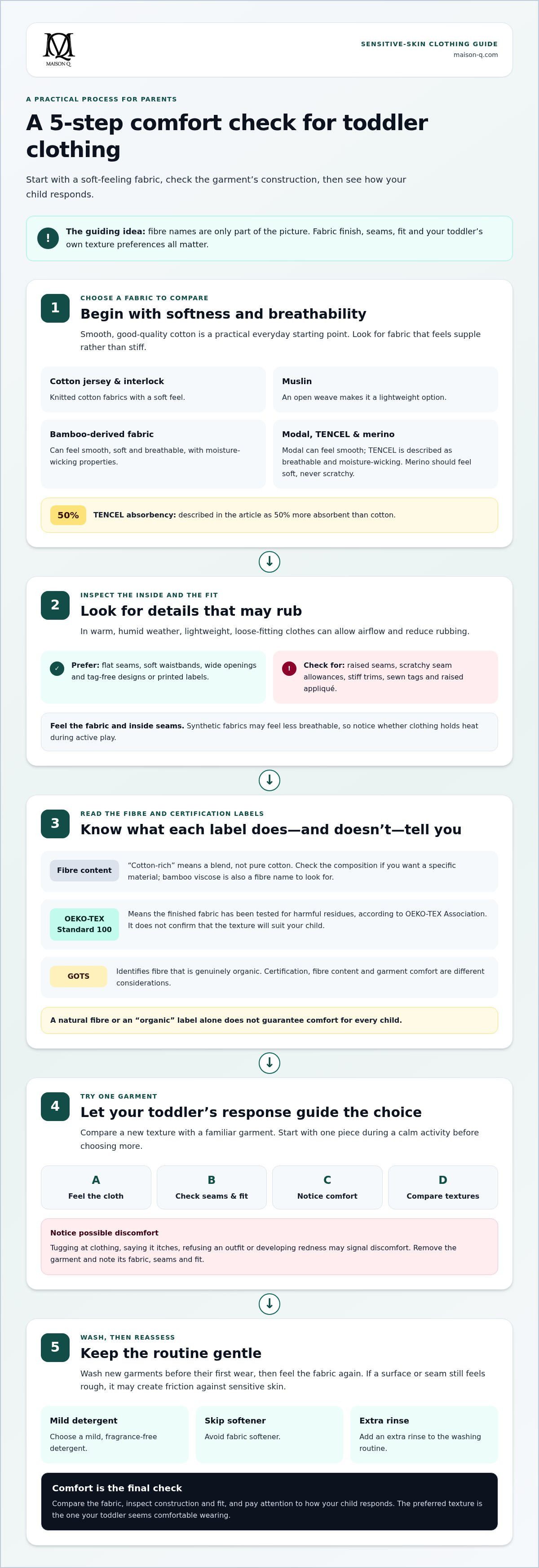
Smooth, good-quality cotton is a practical starting point for babies and toddlers with sensitive skin. Its breathable, lightweight feel suits everyday clothing, and durable cotton can handle regular wear. Choose fabric that feels supple rather than stiff, since roughness can increase friction and discomfort. Cotton jersey and interlock are knitted fabrics with a soft feel, while muslin’s open weave makes it a lightweight option. The best texture still depends on how your child responds to the garment.
Organic cotton is another breathable option, grown and processed without harsh chemicals. This may help limit exposure to manufacturing residues. Bamboo viscose is also chosen for its soft, breathable feel, but check the label to see which fibre it names. “Cotton-rich” means a blend, not pure cotton, so review the composition if you want a specific material. A natural fibre or an “organic” label alone does not guarantee comfort for every child.
For eczema-prone toddlers, modal and breathable TENCEL are fabric options; merino wool should feel soft, never scratchy, against the skin. TENCEL is described as breathable and naturally hypoallergenic, and as 50% more absorbent than cotton. Modal can feel smooth, while wool’s rougher fibres may cause itching. Choose a gentle next-to-skin layer and notice whether your child seems comfortable in it.
For a softer cotton finish, look for combed or pre-washed fabric. Combing removes shorter fibres, helping create a smoother surface; ring-spun cotton is also a soft, durable choice. A well-constructed ring-spun cotton T-shirt can retain its shape, colour and softness through roughly 50 home launderings. Wash new garments with mild detergent before wear, then feel the fabric again. If a seam or surface feels rough after washing, it may still create friction against sensitive skin. A simple touch test can help narrow the choice: compare cotton jersey, muslin and a soft organic cotton garment, then let your toddler wear the preferred texture during a calm activity. Parents looking to bring that same high standard of combed cotton into household bedding and towels can explore options from specialists like kingofcotton.com.
2. Bamboo fabric softness and temperature regulation
Bamboo-derived fabric can feel smooth and soft against a toddler’s skin. Its breathable, moisture-wicking properties can help move dampness away from the body during play. If your child dislikes scratchy textures, compare it with a familiar cotton garment. Softness depends on the finished textile and its construction, not just the fibre named on the label.
In Singapore’s warm, humid climate, breathable fabrics can feel more comfortable than heavy layers that hold heat. Bamboo-derived fabric is breathable and moisture-wicking, and may suit everyday outfits or sleepwear. Moisture-wicking can help a child feel drier after active play, but change damp clothing. Try a lightweight bamboo-derived top during a calm activity and notice whether your toddler tugs at it or seems comfortable.
You can compare bamboo-derived fabrics with other fabrics to see which feels most comfortable. TENCEL is described as breathable, moisture-wicking and thermoregulating. Bamboo-derived fabric is also soft, breathable and moisture-wicking. These names refer to different textile materials, so read the fibre-content label instead of relying on a broad “eco” or “natural” claim. A soft feel matters, but seams and fit also affect comfort.
For certifications, OEKO-TEX Standard 100 means the finished fabric has been tested for harmful residues, according to OEKO-TEX Association. GOTS certification identifies fibre that is genuinely organic. These labels address different aspects of a textile, so check which certification appears on the specific garment.
Silver-infused fabrics add another label detail, not a guarantee of softness. Look for the stated fibre content and whether silver is described as a finish; then feel the cloth for scratchy areas. If you’re weighing fabric and style together, browse reversible dresses as another wardrobe option.
3. Sensitive-skin clothing labels, seams, dyes, and finishes
In Singapore’s warm, humid climate, choose lightweight clothing with a loose fit. Airflow helps reduce trapped warmth, while less rubbing can limit irritation. Look for flat seams, tag-free designs, printed labels, soft waistbands and wide openings. OEKO-TEX Standard 100 confirms finished fabric was tested for harmful residues, according to OEKO-TEX Association. This certification addresses residues, not whether a garment’s texture suits your child.
For less irritating contact, try smooth cotton jersey or muslin with flat or seamless stitching. Check inside garments for scratchy seam allowances, stiff trims and raised appliqué. A printed label avoids a sewn tag rubbing at the neckline. Synthetic fabrics may feel less breathable, so consider whether a garment holds heat during active play. Dye and finish claims are separate from fibre content, so read the label instead of relying on colour or a “gentle” description.
Notice how your child responds after getting dressed. Tugging at clothing, saying it itches, refusing an outfit or developing redness may signal discomfort. Remove the garment and note its fabric, seams and fit. For washing, use mild, fragrance-free detergent, avoid fabric softener and add an extra rinse. Wash new garments before their first wear to help remove surface residue.
Where can Singapore parents buy these clothes, and what do they cost? Look for toddler garments through Singapore retailers, online or in-store, and compare fibre labels, construction and care instructions. Prices vary by material, design and construction, so compare items with similar features. No fibre label can replace a touch test: feel the fabric and inside seams, then see how your child responds while wearing it.
Sensitive and eczema-prone baby skin
Children’s skin is described as 20-30% thinner than adult skin, and the first seven years can be a period of greater sensitivity. For a toddler with eczema-prone skin, a scratchy cuff or rough seam can add friction where the skin already feels delicate. Choose smooth, lightweight fabric against the skin, then assess the whole garment, including seams and labels.
In Singapore’s warm climate, layers make it easier to adjust clothing during the day. Choose a soft, breathable base layer beneath a sweater or jacket, and avoid wearing rough wool directly against the skin. Fleece can hold heat and irritate sensitive skin in warmer weather. If you use fleece, choose a thin outer layer that can be removed. Polyester may also irritate some infants, so notice how your child responds to synthetic fabrics.
Look for clues during dressing and play: repeated tugging, complaints of itching, refusal of a particular outfit or visible redness. Let your child touch different fabrics and say what feels comfortable. Testing textures against the inside of the wrist can help with comparison; try one garment in a new fabric before choosing a full set. Notice whether discomfort follows a particular material, seam, trim or close fit.
If your baby’s skin stays red, cracked or weeping, or does not improve, consult a paediatrician or dermatologist. Silk can be an alternative for infants who have difficulty with other fabrics. Keep the priority simple: a smooth surface, a comfortable fit and a layer that doesn’t trap excess warmth. For toddler outfit options, explore reversible dresses and consider how their feel and fit suit your child’s preferences.
Maison Q: Single Side Dresses (8Y-16Y)
Maison Q offers a next step for families choosing children’s clothing after considering fabric feel, fit and construction. Its range includes Baby Onesies (6M-1Y), Reversible Dresses (1Y-7Y), Reversible Shirts (1Y-7Y) and Single Side Dresses (8Y-16Y). Choose by your child’s age and the kind of garment you need, then review the individual piece’s fabric details and finish to see whether they suit your child’s preferences. For younger children, the onesies and reversible styles provide clothing options across baby and toddler ages; the single-side dresses extend the range for older children.
Explore Maison Q’s children’s clothing at maison-q.com.
Make room for comfort in every little adventure
Choosing the softest fabric for your toddler’s sensitive skin is a useful start, but comfort also depends on noticing your child’s cues. Let them move, play and settle in an outfit, then observe what they reach for or want to take off. These small preferences can guide future clothing choices better than a label alone.
As your child grows, their favourite textures and routines may change. Keep a simple note of fabrics and garment details that seem comfortable, especially when choosing pieces for warm days, active play or special occasions. Maison Q offers Reversible Shirts (1Y-7Y), Reversible Dresses (1Y-7Y) and Single Side Dresses (8Y-16Y) for different stages and moments. Explore the range and share your questions with Maison Q through contact Maison Q.
A little observation can make everyday dressing a more comfortable part of your child’s story.
Frequently Asked Questions
What Fabrics Are Best for Kids with Sensitive Skin?
Smooth cotton, including jersey or interlock, is a practical first choice for sensitive skin. Check the garment’s fibre label and feel the inside surface, especially around the collar and armholes. Two cotton tops, for example, can feel quite different because of their finish and construction. Choose the one your child tolerates comfortably instead of relying on the fibre name alone.
What Sets Tencel Apart from Other Fabrics When It Comes to Baby Clothing?
TENCEL is a branded fibre made from sustainably sourced wood, with moisture-wicking and thermoregulating properties. Its fibre source and stated performance qualities distinguish it from cotton and bamboo, but don’t guarantee that every garment feels the same. Check whether the label names TENCEL or a blend, then assess the finished fabric’s feel and care instructions before choosing baby clothing.
Why Is It So Important to Choose the Best Fabrics for Babies with Eczema Prone Skin?
Clothing that rubs, holds heat or stays damp can add discomfort for a baby with eczema-prone skin. Note which garment was worn when irritation appeared, including its fabric, fit and trim. This can reveal patterns, such as discomfort under a tight cuff or after active play, and guide more comfortable clothing choices. Fabric choice is not a substitute for medical care.
Does seamless clothing help with sensory sensitivity?
It can, because fewer raised seams mean fewer points pressing against the skin. Seamless construction isn’t essential for every child: a flat seam, soft label and flexible waistband may also feel comfortable. Try one garment during a relaxed activity and watch for tugging or repeated adjustments. This can help distinguish seam discomfort from sensitivity to fabric, fit or other details.
Is 100% cotton or bamboo better for babies?
Neither is automatically better for every baby. Choose 100% cotton when you want a clearly labelled, familiar fibre; consider bamboo-derived fabric if your baby prefers its particular surface feel. In Singapore’s warm conditions, compare how each garment feels during ordinary play and whether it becomes damp or uncomfortable. The best choice is the one your baby wears comfortably, with a fit and finish that suit them.
What fabrics are softest for toddlers with sensitive skin?
To find the softest fabric for a toddler’s sensitive skin, start by comparing smooth cotton jersey, interlock, muslin and bamboo-derived fabric. Softness varies between garments, so feel the fabric and inspect the inside finish rather than choosing by name alone. If your toddler is unsure, offer two clean options and let them choose. Their response while wearing each can help you find a comfortable favourite.