

Soft cotton festive wear for kids with sensitive skin
Cotton can feel comfortable against sensitive skin, especially when it is lightweight and breathable. Soft cotton festive wear for kids with sensitive skin can help limit heat and moisture build-up, but the garment’s finish, seams and fit also affect how it feels.
For a special occasion, comfort matters as much as the details that make an outfit feel festive. Soft fabric is a good start, but scratchy labels, rough seams or a snug fit can still cause rubbing.
Here, you’ll learn what to look for on fabric and care labels, which design details may feel gentler, and how to choose a fit that lets your child move comfortably through the celebration.
Key Takeaways
- Lightweight, breathable cotton can be a comfortable festive choice, but a fabric’s feel and finish matter as much as its fibre.
- Read clothing labels for fabric details, and wash new outfits before their first wear to soften them and remove leftover finishes.
- Look for smooth seams, gentle labels and a relaxed fit; watch for tugging, itchiness or redness that may signal discomfort.
- For a special-occasion outfit, explore Maison Q’s dresses, reversible shirts and baby onesies while keeping comfort close to the skin.
1. Soft and breathable fabric choices for sensitive skin
Yes, cotton can suit delicate skin. Lightweight, breathable cotton allows air to circulate and absorbs moisture, helping reduce heat and dampness during Singapore celebrations. It can also be soft and durable for repeated wear, though fabric quality and garment finish matter too.
For eczema-prone children, the National Eczema Society recommends bamboo, silk and 100% cotton as fabric choices. Organic cotton is another option to consider: its production uses fewer chemical treatments than conventional cotton clothing. If a label says “certified organic,” look for the certification details so you understand what the claim covers. GOTS, for example, covers environmental and social criteria across the supply chain.
Choose festive clothes that feel light and breathable rather than heavy. Thick layers can hold warmth close to the body, while a lightweight cotton dress or shirt may feel cooler during a long gathering. Softness is personal, too. Let your child touch the fabric and notice whether they tug at it or move comfortably.
Where can you buy soft cotton festive outfits for kids in Singapore? Look for children’s clothing retailers that state the fabric content, then consider the garment’s weight and finish in light of your child’s comfort needs. A cotton label alone doesn’t tell you exactly how an outfit will feel.
What Singapore retailers offer easy returns or size exchanges for kids’ festive clothing? Policies vary, so read the retailer’s published exchange information to understand the process before choosing a size. This can help you plan if the outfit doesn’t fit as expected.
Before the event, wash a new outfit with fragrance-free detergent and let it dry fully. This may soften the garment and remove leftover manufacturing finishes. If your child has eczema, note which fabrics feel comfortable and keep those preferences in mind when choosing their next special-occasion outfit.
2. Children’s skin sensitivity and clothing-related irritation
For children prone to itching, trapped heat, damp fabric or repeated rubbing can contribute to irritation. Babies may find tight waistbands and rough garment interiors uncomfortable during a long celebration. Choose a relaxed fit that allows movement without excess fabric bunching at the waist or under the arms.
Bamboo fabric is another option for sensitive or eczema-prone skin. Its soft feel, breathability and temperature-regulating properties can make it comfortable for everyday outfits and festive layers. Compare the fibre content on each garment’s label, since a bamboo blend isn’t the same as a garment made entirely from bamboo.
For organic cotton, GOTS certification covers environmental and social criteria through the supply chain. Check the certification wording in the product information rather than relying on “organic” as a general description. A printed label can avoid a scratchy tag at the neck, while smooth or covered seams can reduce rubbing at the shoulders and sides.
What are the prices of children’s cotton festive wear in Singapore? Prices vary with a garment’s fabric, construction and decorative details. Compare the stated price and fabric composition of each outfit rather than assuming all cotton pieces cost the same.
Which festive wear brands in Singapore offer 100% cotton clothing for kids? Look for brands that state the fibre content on each individual garment. A brand name alone doesn’t show whether every style is 100% cotton, so check the product label before choosing.
To check whether a festive outfit is truly 100% cotton, read its fibre-composition label and look for that exact wording. If the label lists other fibres, it’s a blend. Also inspect trims and linings, since the main fabric description may not describe every part touching the skin.
Before first wear, wash the outfit with fragrance-free detergent, skip fabric softener and use an extra rinse. Let it dry fully before dressing your child. These steps may remove leftover finishes and detergent residue that can contribute to discomfort.
3. What fabrics don't cause skin irritation?
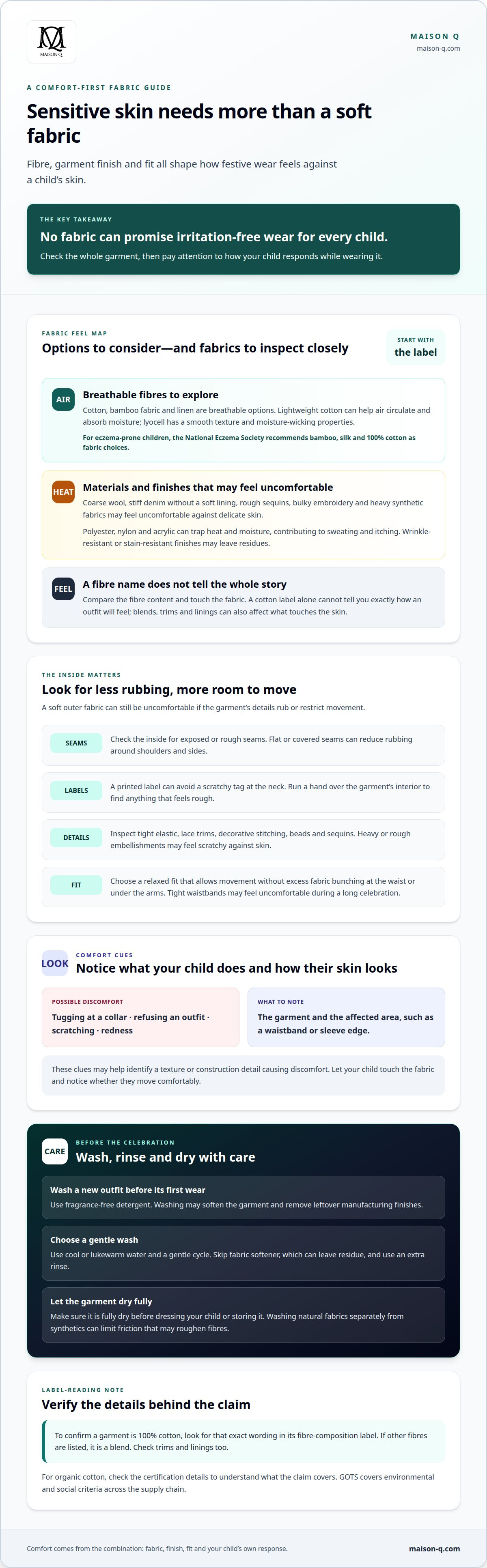
No fabric can promise irritation-free wear for every child. When choosing soft cotton festive wear for kids with sensitive skin, assess the whole garment, not just its fibre. Watch for tugging at a collar, refusing an outfit, scratching or redness. Note the garment and affected area, such as a waistband or sleeve edge. These clues may help identify a texture or construction detail causing discomfort.
Coarse wool, stiff denim without a soft lining, rough sequins, bulky embroidery and heavy synthetic fabrics may feel uncomfortable against delicate skin. Polyester, nylon and acrylic can trap heat and moisture, contributing to sweating and itching. Wrinkle-resistant or stain-resistant finishes may leave residues, so consider simpler fabrics and finishes for a long celebration.
Soft natural fibres offer alternatives to consider. Cotton, bamboo fabric and linen are breathable options; lyocell has a smooth texture and moisture-wicking properties. Bamboo-based fabrics can feel silky, while cotton is familiar, durable and easy to wear. Compare the fabric content and feel, then notice whether your child stays comfortable as the outfit warms during activity.
Construction matters as much as fabric. Run your hand over the garment’s inside: exposed seams, tags, tight elastic, lace trims and decorative stitching can rub during movement. Flat seams and minimal interior embellishments create a gentler finish. Soft cotton festive wear for kids with sensitive skin still needs a smooth interior, so check details around your child’s arms and neck. Heavy beads or sequins may look festive, but can feel scratchy against skin.
After washing, check whether the fabric still feels smooth. Use cool or lukewarm water and a gentle cycle; avoid fabric softener, which can leave residue. Wash natural fabrics separately from synthetics to limit friction that may roughen fibres. If a garment air-dries, let it dry fully before storing it to help prevent mould. These checks can help keep favourite outfits comfortable through repeated wear.
4. Tagless labels, flat seams, and relaxed fits
A garment can feel soft yet cause discomfort where stitching or labels rub. Turn it inside out and run your fingers along the neckline, shoulder seams and side seams. A raised edge or scratchy tag may irritate delicate skin, especially during hours of movement. Tagless designs or softly printed labels keep contact with the skin smoother.
Flat or covered seams can reduce roughness against the body. French seams enclose raw edges inside the seam for a smooth interior finish. Check where a seam crosses the shoulder or sits under an arm, and look for loose threads or bulky stitching. These small details can matter more than an elaborate outer finish.
What festive outfit styles are comfortable for kids with eczema or sensitive skin? Choose breathable clothing with a relaxed shape, soft seams and minimal decoration against the skin. A lightweight cotton dress or shirt, for example, may feel less restrictive than a stiff, heavily embellished outfit.
Fit matters in both directions. Tight sleeves, waistbands or neck openings can increase friction; oversized clothing may bunch and rub during play. Let your child raise their arms, sit and walk in the outfit before the celebration. Check that closures lie flat and elastic feels gentle rather than pinching.
Singapore’s warm weather makes breathable construction especially useful during gatherings. To assess an outfit, inspect its neckline, seams, closures and waistband, then watch for tugging or repeated adjustments. If irritation appears where the fabric touches, note the location before choosing the next outfit. Familiar comfort cues can guide a festive wardrobe refresh without sacrificing movement.
Explore festive dress styles with these comfort details in mind, then choose a silhouette that lets your child move freely.
Maison Q: Single Side Dresses (8Y-16Y)
Maison Q offers children’s festive clothing for families choosing an occasion-ready look. Its Single Side Dresses (8Y-16Y) suit older children, while Reversible Dresses (1Y-7Y) and Reversible Shirts (1Y-7Y) offer options for younger wearers. Baby Onesies (6M-1Y) complete the selection for little ones.
As you browse, use the comfort checks in this guide: read the fabric label, feel the inside seams and consider how the fit lets your child move. These details can help you decide whether a style suits your child’s skin and the celebration. Maison Q offers clothing in different styles and sizes for children at various stages, with practical comfort in mind.
For a festive outfit that balances a special look with your child’s comfort needs, explore Maison Q’s clothing or contact Maison Q.
Make the celebration feel like theirs
The best festive outfit is one your child enjoys wearing, not simply one that looks good in the wardrobe. Include them in the final choice: let them pick the colour or silhouette, then notice which option they move and smile in most naturally. Their reactions can help you choose soft cotton festive wear for kids with sensitive skin that reflects both comfort and personality.
Before the occasion, try the outfit during an ordinary moment at home. A little time sitting, reaching and walking can reveal whether anything distracts your child from play. Keep their response in mind when planning future celebrations, so each new look feels personal and thoughtfully chosen.
If you’d like help exploring a special-occasion style, contact Maison Q for outfit help. May the next celebration bring a little sparkle, plenty of movement and a look your child feels lovely wearing.
Frequently Asked Questions
Is cotton good for sensitive skin?
Yes, cotton is often a comfortable choice because it feels soft and allows airflow. If your child reacts to clothing, assess the whole garment, not just its fibre: a cotton top with a rough neckline can still bother them. Try the outfit at home on a calm day and notice whether your child repeatedly adjusts it or avoids wearing it.
What fabrics don't cause skin irritation?
No fabric can guarantee that irritation won’t occur for every child. Soft cotton, bamboo, silk and linen are breathable options to consider, while smooth lyocell may suit children who dislike rough textures. Match the choice to your child’s reactions: note whether discomfort appears with a particular fibre, a warm room or a specific area of the garment.
What fabrics should I avoid with eczema?
For children prone to eczema, coarse wool and heat-trapping synthetics such as polyester, nylon and acrylic can feel uncomfortable. Stiff fabric or a rough lining can also rub during play. If an outfit causes persistent scratching, change into a familiar, comfortable garment and note what touched the irritated area. This can help you compare fabric and construction choices next time.
What fabrics are soft, breathable, and suitable for children with sensitive skin?
Lightweight cotton, bamboo, silk and linen are breathable options often considered for delicate skin. The weave and weight affect how a garment feels, so compare pieces rather than relying only on fibre names. A light cotton shirt, for instance, may feel more comfortable in a warm room than a heavy, layered outfit. Let your child move in it before the event.
Are organic cotton or OEKO-TEX certified kids' festive clothes available in Singapore?
When buying in Singapore, check each garment’s product description and label for the specific claim. Organic cotton describes the fibre, while OEKO-TEX is a separate textile certification claim; one does not establish the other. Look for the claim attached to the particular outfit, including its fabric details, rather than assuming every item from a brand or collection shares that status.
Which dyes, trims, seams, and labels can irritate sensitive skin?
Dark or heavily dyed fabrics, scratchy labels, exposed seams and tight elastic can feel uncomfortable for some children. Rough sequins, beads, thick embroidery and lace may rub against the skin. Before dressing your child, inspect the neckline, waist and underarm areas inside out. If a decoration feels rough against your hand, keep it away from direct skin contact.