

Quick change outfits for messy toddlers that balance style and practicality
The best quick change outfits for messy toddlers are clothes you’re happy to see covered in paint, food or mud. Choose washable pieces with simple fastenings, then add a removable layer such as a bib or smock for extra coverage. Keep a spare set close by for especially messy adventures.
It’s natural to want everyday outfits to look lovely and stand up to busy play. Aim for practical clothes that are easy to change, comfortable to move in and simple to care for, with colours and playful details that feel special. Fabric matters too: polyester blends and specially treated cotton are options to consider when spills are part of the day.
This guide covers easy-on, easy-off layers, fabric and stain-care choices, and packing a change of clothes for outings. You’ll also find ways to balance hard-working basics with charming everyday pieces, so messy play can stay joyful rather than turn into a wardrobe crisis.
Key Takeaways
- Choose washable everyday pieces you’re comfortable getting messy, then add a removable bib or smock when play calls for extra coverage.
- Look for polyester blends or specially treated cotton as fabric options that may be easier to clean after spills.
- Layer clothes so you can remove a messy outer piece without changing the entire outfit.
- Prioritise simple fastenings and comfortable fits to make outfit changes easier for both you and your toddler.
- Pack a change of clothes for outings, adjusting what you bring to the activities planned and the chance of spills or messy play.
1. Balancing practical basics with stylish clothes
For messy play, dress toddlers in older clothes you’re happy to see stained. An old T-shirt and soft shorts work well for finger painting, garden play or a lunch with tomato sauce. Keep a smarter set aside for outings where paint, mud or food spills are less likely. This simple split lets children explore without making every favourite piece feel off-limits.
Make a practical outfit feel special with colour, print or a playful detail. A bright top with plain leggings looks thoughtfully put together, while stretchy joggers leave room for climbing and squatting. A washable bib or smock adds a removable layer for crafts or meals. For childcare, label a dedicated play outfit, or let your toddler choose between two suitable options, such as striped pyjamas or a soft T-shirt.
Check the care label before choosing clothes for frequent changes. Machine-washable pieces can go straight into the regular laundry, and quick-drying fabrics help when you need a clean outfit again soon. Hang damp bibs, jackets and trousers on a drying rack or clothesline. Air-drying can also reduce wear from frequent tumble drying. A small rotation of practical basics makes it easier to keep a clean set ready.
Choose detergent with your toddler’s skin in mind. A gentle formula without dyes, fragrances or harsh chemicals is a sensible option for frequently washed clothes. Use the amount stated on the packaging, and rinse thoroughly if detergent remains in the fabric. After a paint or juice spill, remove the garment and rinse the stained area under cold water. This can help stop the stain setting before laundry day.
For a quick change in a public restroom or changing area, lay out the clean outfit before removing the dirty clothes. Use a changing mat or clean, dry surface, then dress your toddler in simple pieces without complicated fastenings. If a public changing space is occupied, a stroller can be a practical alternative when it offers a stable, clean spot for the change.
Put wet or dirty clothes in a sealable reusable bag inside your outing bag, separate from the spare outfit. Change your toddler out of damp or soiled fabric promptly, since trapped moisture and friction can irritate skin. Gently clean and dry the affected area before dressing them again. In Singapore, build an affordable spare set from clothes already in rotation, hand-me-downs or local clothing swaps, and keep wipes and a spare bag with it.
A toddler wardrobe can balance inexpensive basics caregivers do not mind getting messy alongside higher-quality clothes. The author's 6-year-old daughter wears old clothes or old pyjamas for messy play, a practical example of keeping favourite outfits out of the mess. For childcare, send children in old clothes, or set aside work clothes specifically for attending the childcare centre. Machine-washable, quick-drying pieces can make frequent outfit changes easier to manage; think of children and clothing as 100% washable.
2. Stain-resistant fabrics
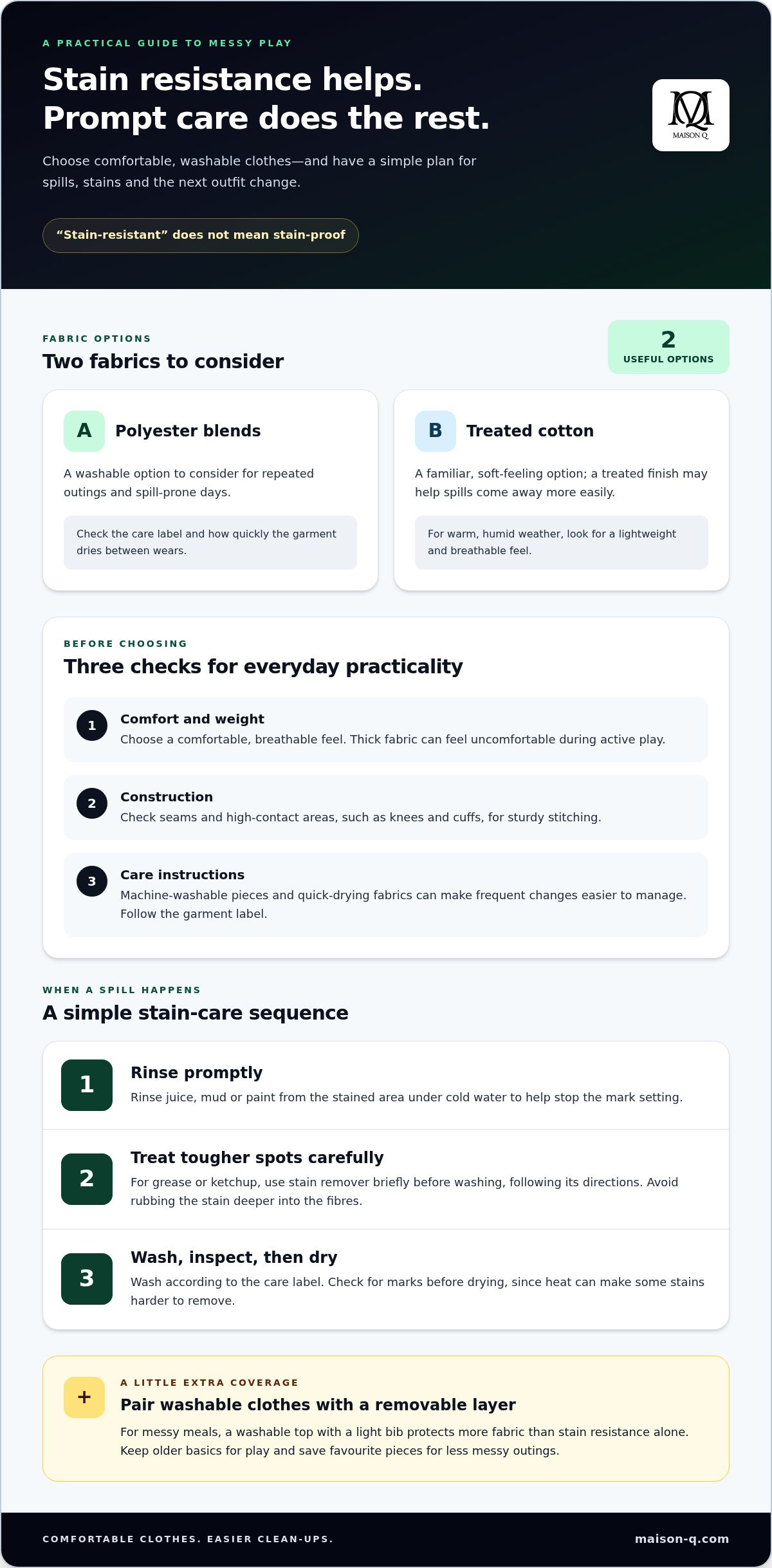
For spills, polyester blends and specially treated cotton are useful fabric options. In Singapore’s hot, humid weather, choose lightweight clothes with a comfortable, breathable feel. Check the care label before buying, since easy laundering matters as much as stain resistance. A light cotton top with a treated finish, for example, can suit warm play and messy snacks. The fabric still needs prompt cleaning after spills.
“Stain-resistant” doesn’t mean stain-proof. A fabric treatment may help spills come away more easily, but food, paint and mud can still leave marks. Look for care instructions that allow machine washing, then consider how quickly the item dries between wears. A washable polyester blend may be practical for repeated outings, while treated cotton is another option if you prefer a familiar, soft feel.
Compare a garment’s weight and construction, not just its fibre name. Thick fabric can feel uncomfortable during active play, while a loose, lightweight piece may be easier to wear in warm conditions. Check seams and high-contact areas, such as knees and cuffs, for sturdy stitching. For a messy meal, a washable top with a light bib protects more fabric than stain resistance alone.
Care instructions are a useful test of everyday practicality. If a garment needs special handling, it may be less convenient for paint, juice or lunch spills. Choose pieces that tolerate regular machine washing, and air-dry them on a clothesline or drying rack. Quick-drying clothes help keep a clean outfit ready for another play session. Follow the label’s washing guidance to care for the fabric and finish.
Act promptly after a spill. Rinse juice, mud or paint from the stained area under cold water to help prevent the mark from setting. For tougher spots, such as grease or ketchup, apply stain remover and leave it briefly before washing, following the product directions. Keep a portable stain stick or stain-removal wipes in your outing bag for spills away from home. Avoid rubbing the stain deeper into the fibres.
A practical wardrobe can mix treated pieces with older basics reserved for messy play. For example, wear a treated cotton top on an outing and keep an old pair of shorts for painting at home. Wash stained items soon, and let them dry fully before storing. If a mark remains after washing, inspect it before drying, as heat can make some stains harder to remove. These choices simplify outfit changes without requiring every piece to resist every mess.
3. What are the fastest ways to change a messy toddler's outfit?
Layering makes a quick change simpler because you can remove the messy outer piece first. Take off a paint-splashed smock or cardigan before changing a stained shirt. Keep the clean replacement within reach, so your toddler isn’t left waiting while you search through a bag. A simple sequence reduces fuss: prepare, remove, clean, dress.
Before leaving home, pack a small change kit in one pouch. Put a clean top, bottoms and underwear together, with wipes and a sealable bag beside them. Store the pouch near the top of your diaper bag, not beneath snacks or toys. At a park or café, you can retrieve the whole set in one go.
- Prepare the clean clothes: Open the shirt and loosen waistbands before undressing your toddler.
- Remove the messiest layer: Take off a bib, smock or outer layer first to avoid transferring paint or food.
- Clean the affected area: Use wipes for a small spill, or a clean damp cloth when more coverage is needed.
- Dress from the bottom up: Put on fresh bottoms before the top if your child is standing or wriggling.
Choose simple openings for the clean outfit. A stretchy waistband is easier to pull on than trousers that need several buttons. A roomy neckline helps a top pass over your toddler’s head without tugging. If a garment has multiple fastenings, open them before changing, then close them once your child is comfortable.
For a change in a public restroom, lay out the clean clothes on a dry surface before removing the dirty outfit. Use a changing mat if you’ve packed one, and keep wipes ready beside it. If your toddler can stand steadily, invite them to hold a clean top or lift their arms. This gives their hands a simple task while you work.
Contain wet clothing straight away. Turn a messy shirt inward as you remove it, place it in a sealable bag, and keep it separate from the clean outfit. If juice or mud has stained the fabric, rinse the area under cold water when practical. A portable stain stick or wipes can help treat a spill before you get home.
At home, put the spare outfit back in the same pouch after washing and drying it. Replenish the wipes and sealable bag together, so the kit is ready for the next outing. For quick change outfits for messy toddlers, the simplest solution is a prepared set, accessible layers and a clear changing sequence.
4. What clothes are easiest to put on and take off a toddler?
Choose clothes with wide openings, stretchy fabric and few fastenings. A T-shirt with a roomy neckline slips on more easily than a fitted top. Elastic-waist shorts or leggings are simpler to pull down than trousers with buttons and a belt. These details matter during a quick change, especially when your toddler is wriggling or eager to get back to play.
Separate pieces are often practical for everyday spills. If only a top gets wet, you can change the shirt without replacing clean trousers. A simple outfit of a soft top and elastic-waist bottoms also makes dressing in a public changing area more straightforward. Check the fit while your child sits and moves; tight cuffs or a narrow neck can make an otherwise easy garment frustrating.
For babies during messy play, a vest or nappy alone may be enough. This keeps extra fabric out of the way during water or food activities and makes cleanup simpler. Keep a clean vest and nappy together in the change bag for afterwards. For toddlers who prefer more coverage, a loose T-shirt can be pulled off quickly when splashes reach the hem or sleeves.
Consider how each garment opens before packing it. A top that stretches over the head can be quicker to change than one with several closures. If you choose a shirt with buttons or snaps, open them before the change begins. Pull-on bottoms with a flexible waistband help when your child can stand, while a loose pair is easier to manage during a seated change.
Layering also makes changing simpler. A lightweight shirt over a vest can be removed without taking off every piece of clothing. During meals or crafts, a washable bib or smock provides a removable outer layer. After an activity, lift it away first, then check whether the sleeves, neckline or trousers need changing. This quick check avoids replacing clean pieces unnecessarily.
Let your toddler practise with easy clothes at home. Offer a loose T-shirt and elastic-waist shorts, then invite them to push their arms through the sleeves or pull up their bottoms. Give one clear instruction at a time, such as “arms up” or “step in.” A familiar routine can make changes calmer and help your child take part in getting dressed.
Before an outing, test the spare outfit by dressing your child in it at home. Check whether the neckline passes comfortably, the waistband moves easily and the fastenings are simple to reach. Pack the complete set together rather than choosing unfamiliar clothes during a messy moment. The best change outfit is one you can put on smoothly and your toddler can move in comfortably.
5. How many spare outfits should parents pack for a toddler outing?
Pack a complete change of clothes for a toddler outing, then adjust the contents to the day’s plans. A spare top and bottoms cover the basics after a spill or messy activity. Add underwear or a clean vest if your child wears them. For painting, splash play or a long day away from home, consider whether extra pieces would help.
The right amount depends on what your toddler will do and how easy it is to return home. A short café visit may call for a simple change set. A morning at the playground followed by lunch brings more chances for muddy knees, food spills or wet sleeves. Pack for the activities, rather than filling the bag with outfits your child may not need.
For childcare or an early childhood setting, keep a spare set there too. Your child can then change into clean clothes if an outfit becomes particularly messy during the day. Check the set periodically and replace anything that no longer fits or suits the weather. In Singapore, lightweight, washable pieces can be practical for warm outdoor play and indoor activities.
Keep the spare clothes together in a pouch so you can reach them quickly. A useful outing kit can include:
- One complete outfit: Pack a top and bottoms that are easy to put on.
- Wipes: Bring them for cleaning sticky hands or a small spill.
- A sealable bag: Use it to separate wet or dirty clothes from clean items.
- A bib or smock: Add one when meals or crafts are part of the plan.
Before leaving, match the spare set to the activity. For a meal out, choose clothes that are simple to change if sauce lands on a shirt. For a park visit, pack bottoms suitable for sitting on grass or sand. If your toddler is still in nappies, keep the clean clothes accessible alongside the usual changing essentials.
After an outfit change, place the soiled clothes in the separate bag and check the pouch before the next outing. Replace used wipes and return a clean outfit once laundry is done. This small reset keeps the kit ready without adding unnecessary bulk. Choose easy-care spare pieces from your toddler’s regular wardrobe, then explore playful outfit ideas for everyday changes.
When messy play is planned, treat the spare outfit as part of your preparation, not an afterthought. Bringing a change of clothes and possibly baby wipes is suggested for messy-play sessions. Choose pieces from the regular wardrobe that are easy to change into, and keep them together so you can find them when needed. Keep the wipes with the spare set for easy access.
A quick check before leaving confirms that the kit suits the activity and that used items from a previous outing have been replaced. If messy play isn’t planned, the same basic change can be your starting point, with additions guided by the outing rather than a fixed number of outfits. This keeps preparation proportionate and avoids packing clothes without a clear purpose.
Maison Q: Single Side Dresses (8Y-16Y)
Maison Q offers children’s clothing for families who want practical wardrobe choices alongside playful style. For toddler years, Reversible Dresses and Reversible Shirts (1Y-7Y) offer two sides to enjoy in one garment, while Baby Onesies (6M-1Y) suit younger little ones. Single Side Dresses (8Y-16Y) are available for older children. These pieces can complement a separate rotation of everyday clothes reserved for messy play, meals and outings. Choose the style that fits your child’s age and the kind of dressing routine you’re building, then keep easy-care basics on hand for paint, snacks and muddy adventures. Visit maison-q.com to explore Maison Q’s children’s clothing.
Make room for everyday adventures
Let your toddler’s wardrobe reflect the days they actually live: curious, colourful and wonderfully unpredictable. A few practical choices can make getting dressed feel less like a task and more like part of the day’s small rituals. When planning quick change outfits for messy toddlers, consider which pieces suit your child’s age and the occasions you’re dressing for.
Maison Q offers Reversible Shirts and Reversible Dresses for children aged 1Y-7Y, alongside Single Side Dresses for ages 8Y-16Y. These options can help you choose a piece that brings a little delight to an everyday wardrobe. Explore the styles, then decide what feels right for your family’s routine.
Contact Maison Q for outfit advice and take the next step toward a wardrobe ready for play, discovery and fresh starts.
Frequently Asked Questions
What do I dress my little one in?
Dress your toddler in comfortable, washable clothes you’re happy to see marked during play. For an outing with several activities, start with a simple base outfit and add a removable layer for crafts or snacks. Let your child choose between two suitable tops, such as a printed tee or a plain one. This gives them a say while keeping favourite occasion clothes ready for another day.