

How to Wash Reversible Cotton Clothing and Air Dry It
A gentle machine wash can suit reversible cotton clothing when the care label allows it. To learn how to wash and care for reversible cotton clothing, follow the label, sort colours carefully, and air-dry garments away from direct sunlight. Turning each piece inside out before washing can also help protect its colours and reduce fabric wear.
An easy laundry routine is especially helpful for children’s clothes that are ready for another day of play. A quick check of the care label and wash settings can help keep both sides of a reversible piece looking their best.
Next, you’ll find a simple sequence for checking care instructions, choosing a suitable machine wash, sorting sand-coloured cotton, and drying each piece gently in Singapore’s warm, humid weather.
Key Takeaways
- Read the care label before washing, drying or ironing, and follow its instructions for the garment’s fabric and finish.
- Choose a gentle machine-wash setting when the label permits, using mild detergent and a cooler water temperature to help care for cotton.
- Sort sand-coloured pieces thoughtfully, especially before their first wash, to reduce the chance of dye transfer.
- Reshape cotton while damp and air dry it away from direct sunlight to help preserve its form and colour.
Air drying and avoiding direct sunlight
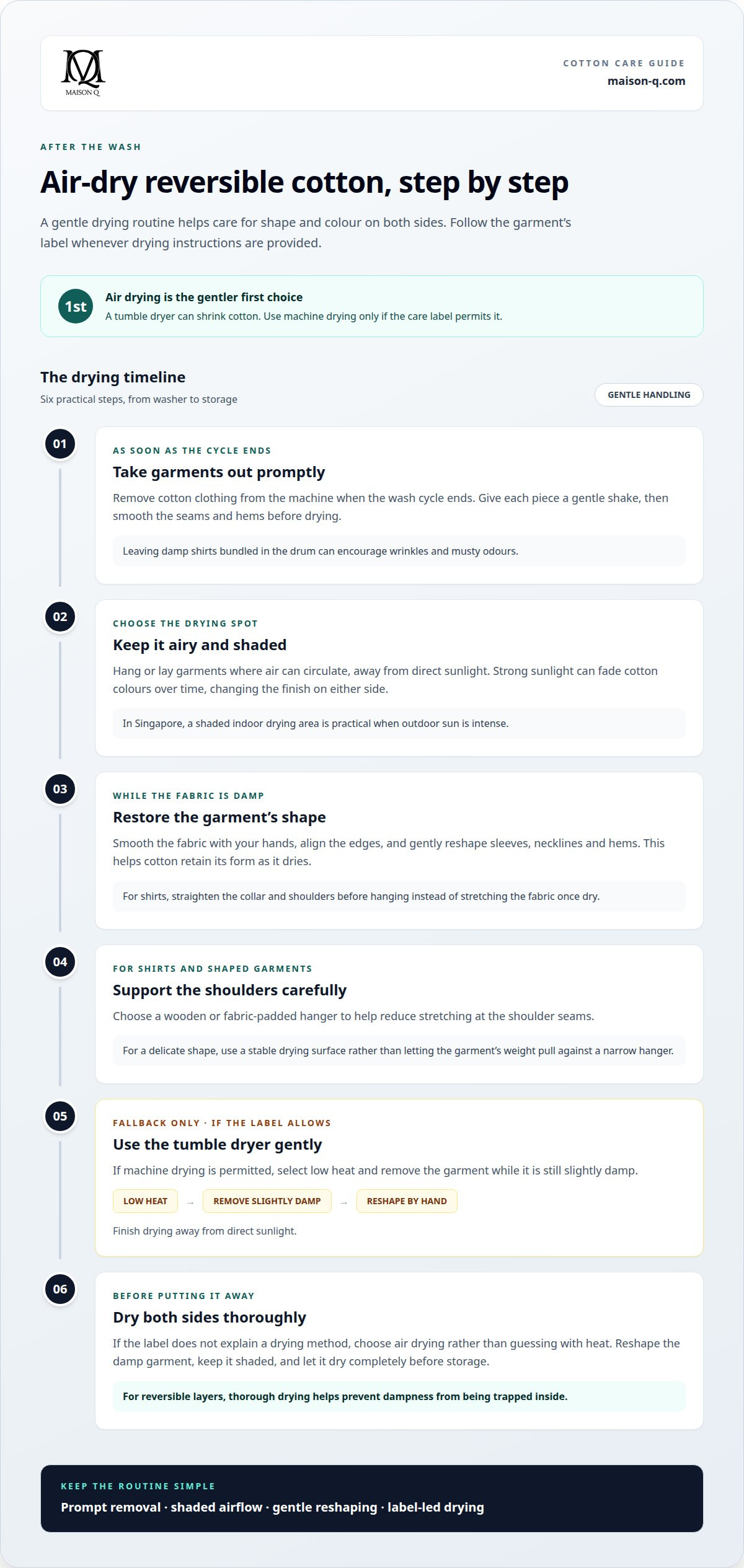
Air-drying reversible cotton clothing away from direct sunlight is a gentle way to dry it. Reshape each garment while it’s damp, then let it dry fully before putting it away.
- Take garments out promptly. Remove cotton clothing from the machine as soon as the wash cycle ends. Leaving damp shirts bundled in the drum can encourage wrinkles and musty odours. Give each piece a gentle shake, then smooth seams and hems before drying.
- Choose a shaded, airy spot. Hang or lay garments where air can circulate, but keep them out of direct sun. Strong sunlight can fade cotton colours over time, changing the finish on either side of a reversible piece. A shaded indoor drying area is a practical choice in Singapore when outdoor sun is intense.
- Restore the shape while damp. Smooth the garment with your hands, align its edges, and gently reshape sleeves, necklines and hems. This small step helps cotton retain its form as it dries. For shirts, straighten the collar and shoulders before hanging, rather than stretching the fabric once dry.
- Support shoulders carefully. Use a wooden or fabric-padded hanger for shirts and other shoulder-shaped garments. These supports can help reduce stretching at the shoulder seams. If a piece has a delicate shape, choose a stable drying surface instead of letting its weight pull against a narrow hanger.
- Treat machine drying as a fallback. A tumble dryer can shrink cotton, so air drying is the gentler first choice. If the care label permits machine drying, select low heat and remove the garment while it’s still slightly damp. Reshape it by hand, then finish drying it away from direct sunlight.
- Use the label when instructions are unclear. If the care label doesn’t explain a drying method, choose air drying rather than guessing with heat. Reshape the damp garment, keep it shaded, and allow it to dry completely before storage. Drying both sides thoroughly helps prevent dampness being trapped in reversible layers.
Checking garment care labels
To wash reversible cotton without harming either side, follow the care label’s washing and drying instructions, then turn the garment inside out. For cotton, a cool wash and gentle handling help limit fading, wear and shrinkage.
- Read every care instruction first. Check the label before washing, drying or ironing. A reversible shirt may have prints or colours on both sides, so follow the garment’s stated temperature and cycle rather than choosing settings by appearance. If the label gives different instructions for washing and drying, follow each one at its proper stage.
- Prepare the garment inside out. Turn cotton garments inside out before placing them in the washing machine. This reduces rubbing on the visible surfaces and helps protect colours during washing. Close fastenings and check pockets, then arrange the garment so sleeves and hems aren’t knotted together with other laundry.
- Use a cool wash to limit shrinkage. Cotton can shrink slightly during its first wash, including fabric that feels sturdy or breathable. A wash at 30°C or below can help reduce shrinkage and colour fading. If the label sets a different temperature, let that instruction guide the machine setting.
- Treat pre-shrunk fabric as cotton, not as wash-proof. Pre-shrinking doesn’t replace the care label or remove the need for gentle washing. Heat can still affect cotton fabric, so use the label’s drying guidance and avoid assuming the garment can withstand hot washing. Remember, a small first-wash change in fit is possible.
- Wash when the garment needs it. A cotton piece worn briefly indoors may be suitable for another wear if it’s clean and fresh. Washing only when needed means less time in the washing machine and less repeated friction against the fabric. For a visible mark, address the spot rather than automatically washing the whole garment.
Can all cotton clothes go in the washing machine?
Many everyday cotton garments can go in a washing machine, but delicate pieces may need hand washing or a mesh bag. For most cotton, 30°C or below is a gentle temperature that helps limit shrinkage and fading.
Choose a Wash Temperature and Cycle
Set the machine to 30°C or below for an everyday cotton wash. This cooler setting helps care for colours on both sides of reversible clothing. If you’re learning how to wash and care for reversible cotton clothing, start with the care label, then select a gentle cycle that suits its instructions. Avoid high temperatures, which can damage cotton fibres over time.
For delicate cotton garments, hand-wash them or place them in a mesh bag. These approaches can help reduce rubbing, stretching, and snagging during washing.
Select Detergent and Spin Speed
Choose mild detergent and avoid harsh formulas that can weaken cotton fibres. Liquid detergent dissolves readily in cold water, making it a practical option for cool washes. Measure it according to its label instead of adding extra. Excess detergent can leave residue in seams and folds between reversible layers.
Choose a low spin speed to help minimise stretching, and don’t overload the machine. Garments need room to move and rinse properly. A gentler cycle can also reduce friction against printed surfaces. These simple choices make a practical routine for how to wash and care for reversible cotton clothing while keeping both sides looking fresh.
Check Bleach and Stain Treatments
Check the care label before using bleach or stain remover. Avoid bleach and harsh chemicals, which can damage cotton fibres and affect the colours on either side. For a mark, gently apply mild laundry detergent to the stained area. Don’t scrub printed fabric or rub the two sides together.
Follow the stain-treatment product directions and rinse the spot thoroughly before machine washing to clear detergent residue from the fabric. If the care label rules out a treatment, skip it and choose a gentler method.
Should I wash sand-colored cotton garments separately?
Yes. Wash sand-coloured cotton separately, especially for its first wash, to reduce dye transfer. To limit shrinkage and fading, use cool water, sort colours carefully, and follow the garment’s care label.
- Separate sand shades for the first wash. Place sand-coloured garments in their own load, rather than washing them with whites or pale cotton. This helps prevent dye released during washing from marking lighter fabric. If the item has two visible sides, keep both protected by turning it inside out before washing.
- Sort the rest of the laundry by colour. Make separate groups for whites, bright colours and dark colours. For example, keep a vivid red shirt away from a white cotton top, since dye transfer can change the lighter garment’s appearance. Keep sand shades apart from these groups during their first wash, too.
- Separate fabrics that behave differently. Wash cotton apart from synthetic fabrics, because cotton can pick up lint and other particles. A cotton garment washed beside a fluffy synthetic item may collect visible fibres across its surface. Sorting by fabric type helps keep the finish neat and preserves the comfort of soft cotton.
- Match laundry by weight. Wash heavier items separately from lighter garments. A heavy pair of trousers can rub against a delicate cotton shirt during a machine cycle, adding friction and wear. Grouping similar weights gives lighter pieces room to move without being pressed beneath bulky laundry.
- Choose a cool setting after sorting. Water at 30°C or below can help reduce shrinkage and colour fading. Combine that setting with a gentle cycle, and don’t overload the machine. After washing, remove garments promptly and air dry them away from direct sunlight to protect their colours.
For a fresh reversible wardrobe, explore reversible clothing styles and keep each piece looking lovely with thoughtful sorting.
Maison Q
Maison Q designs reversible children’s clothing for families drawn to playful prints and practical versatility. If you’re choosing pieces to wear on both sides, its reversible shirts and reversible dresses are available for children aged 1Y-7Y, alongside baby onesies for 6M-1Y and single-side dresses for 8Y-16Y. Thoughtful washing and shaded air drying can help keep cotton garments ready for more little adventures, while the care label remains the guide for each piece.
Explore these options when you’re looking for children’s clothing that brings a fresh look with a simple turn. For questions about Maison Q’s reversible clothing, please contact Maison Q.
Make Everyday Care Part of the Story
Clothing care doesn’t need to feel like a separate chore from family life. A simple, repeatable routine can help make laundry day calmer and keep children’s favourite pieces in regular rotation. As you learn how to wash and care for reversible cotton clothing, notice which habits fit naturally into your home. That makes it easier to care for each piece without turning every wash into a project.
When choosing children’s clothing, consider care alongside comfort, design, and the moments a piece may accompany. Keep the routine gentle and practical, then let the clothes return to the adventures that make them special.
Contact Maison Q for clothing care help, and take your next step with confidence.
Frequently Asked Questions
How do you wash cotton the right way?
Wash cotton according to its care label, using a cycle and temperature suited to the garment. For an everyday cotton piece, choose a gentle wash at 30°C or below and use mild detergent. Sort colours before loading, and leave room for laundry to move freely. After the cycle, remove garments promptly and dry them as their care instructions direct.
Will cotton shrink when washed?
Yes, cotton can shrink slightly, particularly during its first wash. A 100% cotton garment may have 2-3% shrinkage. To reduce the risk, keep washing temperatures low and avoid high heat during drying. A pre-shrunk label doesn’t replace the care instructions, so continue to follow the garment’s washing and drying directions.
What care-label symbols and instructions should you follow for reversible cotton garments?
Follow the label’s instructions for washing, bleaching, drying, and ironing. A wash-tub symbol gives washing guidance, while dots inside symbols indicate temperature settings. A crossed-out symbol means avoid that treatment. If the label specifies a cycle or temperature, follow it instead of relying on general cotton advice. Check both the written instructions and symbols before treating a stain.
Should reversible cotton clothing be washed inside out or turned inside out before washing?
Turn reversible cotton clothing inside out before washing. This helps reduce friction on the outer surface and protect printed or coloured areas. For example, turn a reversible shirt so its most colourful side faces inward, and check that the sleeves aren’t twisted around the body. Turn it right side out after washing to inspect both sides before drying.
Which detergent and washing machine cycle are best for reversible cotton garments?
Choose mild detergent and a gentle or delicate machine cycle when the care label allows. Liquid detergent can dissolve readily in a cool wash, while a low spin helps limit fabric strain. Skip bleach and harsh detergent, which can affect cotton fibres and colour. Measure detergent according to its label, and don’t pack the drum tightly.
How should reversible cotton garments be ironed or steamed on both sides?
Use a steamer where possible, or iron cotton while it’s slightly damp. If ironing is needed, check the garment label for its heat setting, and use low or medium heat for cotton dresses. Turn the garment inside out and avoid pressing directly on prints or embellishments. For reversible pieces, treat each side gently and let the fabric cool before folding.