

How to Dress Active Toddlers for Formal Occasions with Comfort
A formal outfit can look polished without asking a toddler to stay still. To dress active toddlers for formal occasions, follow the event’s dress code and cultural cues, then choose soft, breathable clothes that fit comfortably and allow easy movement. A coordinated dress or shirt-and-shorts outfit can feel special without becoming fussy.
It’s natural to want your child to look respectful at family celebrations, ceremonies, and school events while still being able to sit, stretch, and play. Start with the invitation: note any requested colours, fabrics, or level of formality, then choose details suited to the occasion.
This guide shares practical ways to balance cultural consideration with comfort in Singapore’s warm weather. You’ll find tips for choosing a suitable fit, skin-friendly fabrics, and simple finishing touches, with ideas for girls’ dresses and boys’ coordinated outfits. The aim is a look that feels thoughtful in photographs and easy to wear throughout the event.
Key Takeaways
- Use the invitation’s dress code and cultural cues to guide your child’s outfit, including any requested colours or fabrics.
- Choose a comfortable fit that lets your toddler sit, stretch, and move through a long ceremony.
- Look for soft, breathable fabrics and sturdy construction to help an outfit feel good and hold up to active wear.
- Coordinate a dress or a shirt-and-shorts look with simple details for a polished style that still feels child-friendly.
1. How do I respect culture while keeping my child comfortable at formal events?
For active toddlers, a neat shirt with comfortable trousers or a dress with room to move suits many formal occasions. These choices look polished without requiring a stiff suit or elaborate layers. Knowing how to dress active toddlers for formal occasions starts with clothes your child can sit, walk, and play in.
Start with the invitation. Note the dress code, requested colours, and any fabric guidance, then choose an outfit that follows those cues. For a family wedding, coordinate with the requested palette rather than assuming every celebration calls for the same style. Follow the hosts’ guidance to show cultural respect and dress appropriately for the event.
Age can help shape the look. For children aged 2 to 4 years, simple pieces are often easier to wear than grown-up formalwear. Try a soft dress or a button-down shirt with smart trousers. A child who prefers casual clothes may feel comfortable in a familiar shape with one polished detail, such as a neat collar.
For a school presentation, follow the school’s dress code and consider how long your child will wear the outfit. A tidy shirt and trousers, or a comfortable dress, can look special without restricting movement on stage. At weddings and family dinners, consider the venue too: a garden gathering may suit lighter clothing, while a formal indoor ceremony may call for a more polished outfit.
For a versatile choice, look for an outfit your child can wear again to school celebrations or family gatherings. A classic design with thoughtful details can suit several special occasions. When deciding how to dress active toddlers for formal occasions, prioritise fit and comfort over decorative extras. Avoid clothes that feel too formal for your toddler to enjoy wearing.
2. What keeps kids comfy during long ceremonies?
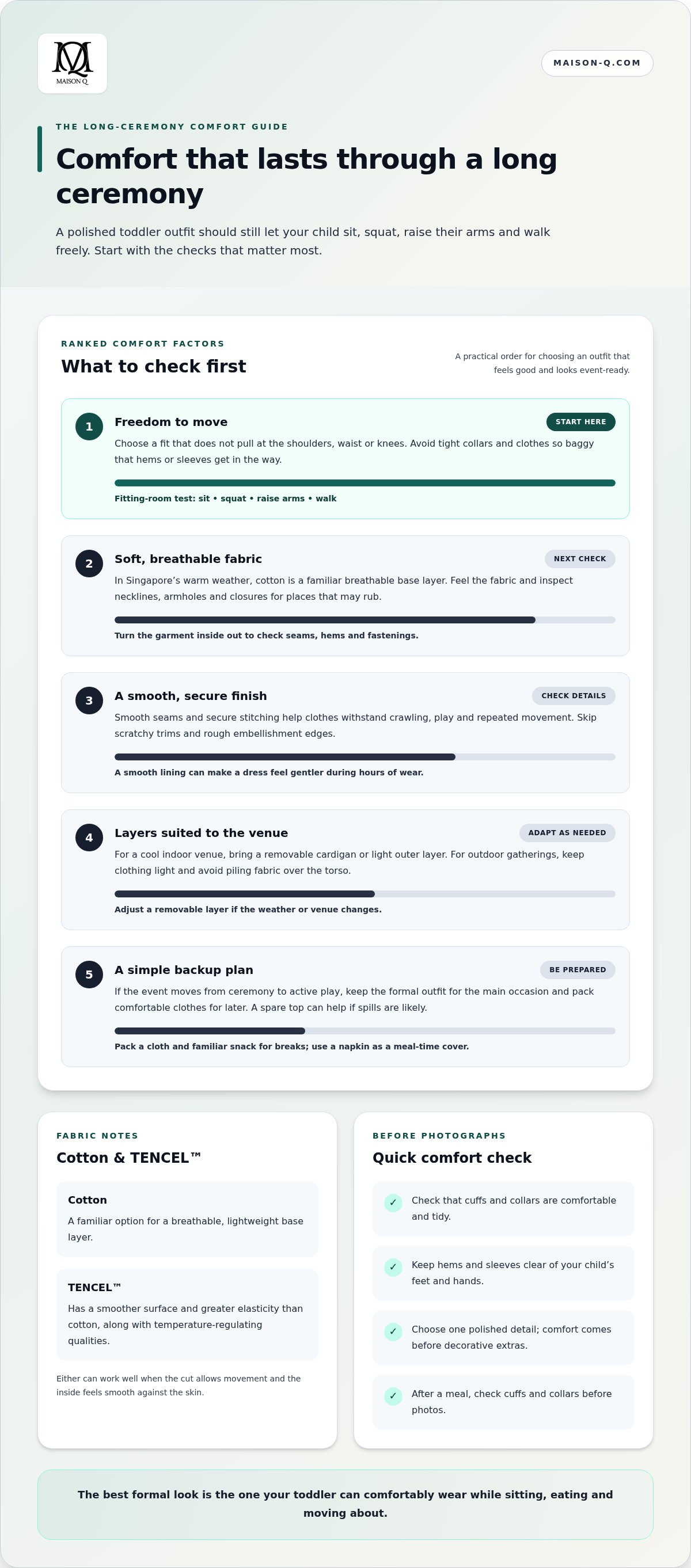
For a long ceremony, choose formal attire that fits without pulling at the shoulders, waist, or knees. Your toddler should be able to sit, squat, raise their arms, and walk freely. Try these movements during a fitting: a shirt that rides up or a skirt that tangles around the legs can become distracting before the event ends.
Choose fabrics and construction that feel gentle against the skin. Cotton is a familiar option for a breathable base layer in Singapore’s warm weather, while a light outer layer can help in a cool indoor venue. Run a hand over the inside of the garment to check seams, hems, and fastenings. Smooth finishes and secure stitching help clothes withstand crawling, play, and repeated movement.
Comfort also depends on the cut. A soft dress with room through the waist, or a shirt paired with flexible trousers, can look polished without feeling rigid. Avoid tight collars, scratchy details, and clothes that are too baggy. Choose a size that allows movement while keeping hems and sleeves clear of your child’s feet and hands.
Should toddlers wear formal outfits for the whole event or bring a change of clothes? For a ceremony followed by active play, keep the formal outfit on for the main occasion and pack comfortable clothes for later. A spare top is useful if food or spills are likely.
To help keep the outfit clean and comfortable, pack a cloth, spare clothing, and a familiar snack for breaks. At a meal, use a napkin as a simple cover, then check cuffs and collars before photographs. If the weather or venue changes, adjust a removable layer rather than adding bulky clothing. These small preparations help your toddler stay comfortable while sitting, eating, and moving about.
3. Choosing breathable, skin-friendly fabrics
For formal wear in Singapore, start with fabric that feels soft against the skin and allows airflow. Cotton is a familiar choice for a lightweight base, while a smooth lining can make a dress feel gentler during hours of wear. Rub a fabric sample between your fingers and check the inside seams when shopping.
Babies need especially soft pieces that let their skin breathe. Check labels and garment details for a comfortable feel, then inspect necklines, armholes, and closures where fabric may rub. A soft cotton layer can keep the base simple beneath special-occasion clothing. Avoid scratchy trims near the neck or waist, where movement can make irritation more noticeable.
Singapore’s warm, humid conditions call for lightweight clothing suited to the venue. For an indoor wedding with strong air-conditioning, bring a removable cardigan. For an outdoor gathering, choose a lighter layer and avoid piling fabric over your child’s torso. This keeps the outfit adaptable without making it bulky or uncomfortable during active play.
Fabric also affects how an outfit feels and moves. TENCEL™ has a smoother surface and greater elasticity than cotton, along with temperature-regulating qualities. Compare its feel with cotton when choosing clothes for active children. Either fabric can work well when the cut allows movement and the construction feels smooth against the skin.
Colour and texture add charm without heavy decoration. A soft pastel dress can feel polished at a family dinner, while a simple shirt in a deeper colour suits a formal wedding. Check embellishments for rough edges, and turn each garment inside out to inspect the seams. These steps help you choose breathable clothing for a special occasion.
4. Girls’ dresses and boys’ coordinated sets
A dress or coordinated shirt-and-shorts outfit can look formal without feeling like miniature adult clothing. For girls, choose a cut that allows walking, sitting, and bending; for boys, pair a neat shirt with trousers or smart shorts. Keep the design simple, then add one polished detail to make the outfit feel special for a wedding or family party.
Age can guide the silhouette. For girls aged 2 to 3 years who wear sizes 3 to 4 years, a baby-cut dress offers a younger-looking style. A matching diaper cover can add coverage when a child lifts her skirt or sits on the floor. Check the hem while the child moves, so the dress doesn’t drag or catch underfoot.
For boys, coordinate colours rather than matching every piece exactly. One example for an 8-year-old attending a communion or wedding is dusty rose linen shorts with a white mandarin-collar shirt. For an active toddler, adapt the idea with a comfortable shirt and bottoms that allow easy movement. The same colour palette can connect siblings’ attire without making either outfit feel identical.
Choose classic designs with thoughtful details instead of chasing short-lived trends. A soft collar, gentle pleats, or a subtle print can make children’s clothing feel polished without elaborate accessories. For babies, keep the outfit comfortable against the skin and easy to change. At an indoor Singapore event, a removable layer can help if the air-conditioning feels cool. Winter clothing is rarely a useful guide to dressing for local weather.
Before the occasion, have your child try on the full outfit and move around in it. Check that sleeves don’t cover the hands, waistbands don’t pinch, and skirts or shorts stay in place during play. This fitting helps you choose coordinated pieces that look celebratory in photographs and suit your child’s everyday movement.
Maison Q: Single Side Dresses (8Y-16Y)
Maison Q offers children’s occasionwear for families choosing a polished look with room for childhood movement. Its Single Side Dresses (8Y-16Y) suit older girls, while Reversible Dresses (1Y-7Y) and Reversible Shirts (1Y-7Y) offer options for younger children. Baby Onesies (6M-1Y) provide a simple base for baby outfits.
For a formal event, use the invitation’s dress code to guide colour and style, then choose clothes that feel comfortable for your child’s plans. A dress can bring a graceful finish to a celebration, while a reversible shirt offers two looks in one garment. Maison Q’s range includes options for different ages and outfit preferences, with comfort in mind.
Explore Maison Q’s children’s occasionwear for a look suited to your family’s celebration.
Make the next celebration feel like theirs
Let your toddler have a small say in the finishing touches. Choosing between two comfortable outfits or picking a favourite colour can make getting dressed feel like part of the celebration. A quick try-on before the event also gives your child time to get used to the clothes, helping the day begin more smoothly.
Deciding how to dress active toddlers for formal occasions is ultimately about making room for both the event and the child. Keep the invitation in mind as you make the final choice, and let your toddler’s comfort guide the details.
For outfit ideas, Maison Q offers Single Side Dresses (8Y-16Y), Reversible Dresses (1Y-7Y), and Reversible Shirts (1Y-7Y). Contact Maison Q for outfit advice as you choose a look for your next celebration.
May the photographs capture not just a polished outfit, but the bright, busy personality wearing it.
Frequently Asked Questions
How do I respect culture while keeping my child comfortable at formal events?
Respect cultural expectations by following the hosts’ guidance and asking a family member about customary attire before choosing details. If the event includes a traditional ceremony, choose an outfit that suits the setting while using a familiar cut your toddler can manage. For mixed-culture gatherings, a requested colour or modest styling can show consideration without uncomfortable layers or accessories.
What keeps kids comfy during long ceremonies?
Plan small comfort breaks before your toddler becomes restless. Before sitting down, offer a drink and a bathroom or nappy change; during a permitted pause, let your child stand and stretch. A quiet picture book or familiar small toy can keep little hands occupied without becoming part of the outfit. Keep these items with a caregiver, not loose in the aisle.
What should kids wear to weddings?
Choose wedding attire that reflects the invitation and lets your child take part comfortably. For a formal ceremony, consider a neat dress or a collared shirt with smart bottoms. If the couple requests a colour palette, echo one shade in a small detail rather than dressing your child head to toe in it. Skip accessories your toddler is likely to tug or chew.
How can you balance comfort and formality in toddler clothing?
Keep the outfit’s shape familiar, then make it occasion-ready with one considered detail, such as a neat collar or a gentle print. Let your toddler choose between two suitable options before the event; having a say can make getting dressed feel less like a negotiation. Avoid introducing a completely unfamiliar style on the day, especially if your child is sensitive to new textures.
What shoes are comfortable and appropriate for toddlers at formal events?
Choose supportive footwear your toddler has already worn comfortably rather than introducing stiff new shoes at a wedding or dinner. Check that each shoe stays secure while walking and doesn’t rub at the heel or toes. If the event includes dancing or outdoor time, let your child practise moving in the shoes at home. Pack familiar socks that fit smoothly inside them.
How should toddler formalwear fit to allow safe, easy movement?
Check the fit with your toddler’s usual nappy or underlayers in place, since these affect how clothes sit at the waist and seat. Fasten the outfit as it will be worn, then check for pulling across the back, tightness at the waist, or sleeves that cover the hands. Keep hems clear of the floor so fabric won’t trail as your child walks.