

How to Choose Toddler Clothes to Help Prevent Heat Rash
More layers don’t always mean more comfort: in Singapore’s heat and humidity, lightweight, loose clothing can help keep your toddler cooler. The best toddler clothing choices for preventing heat rash leave room for airflow, feel gentle against the skin and avoid unnecessary layers. Heat rash can form when sweat ducts become blocked and sweat gets trapped beneath the skin.
It’s natural to want your little one snug and protected, especially when moving between warm outdoors and air-conditioned spaces. But tight, non-breathable clothes can hold heat and moisture against the skin, while damp fabric may rub and irritate delicate skin.
Learn what heat rash can look and feel like, why hot, humid conditions and overdressing can contribute, and how to choose breathable outfits for play and rest. These practical clothing tips, from choosing a comfortable fit to limiting layers, can help your toddler stay cool and comfortable.
Key Takeaways
- Learn how trapped sweat can lead to heat rash, and where it may appear on your toddler’s skin.
- Choose light, breathable clothes with a relaxed fit to let air circulate and reduce rubbing.
- In Singapore’s warm, humid weather, skip unnecessary layers and change damp clothes to help keep skin comfortable.
- Explore simple ways to keep your toddler cool and dry during play, rest and outings.
What Is a Heat Rash?
Heat rash develops when blocked sweat ducts trap sweat beneath the skin. Seek medical attention if your child has a fever, eats less, becomes less active, or the rash worsens over 24 hours.
- After warm, humid weather or active play, check your toddler’s skin. Heat rash often appears on the neck or trunk, though it can affect other areas. Small bumps may feel prickly or itchy, or look red. Pay particular attention to areas covered by clothing, where airflow may be limited.
- Help keep skin cool and dry. On hot days, use a fan or air conditioning, and take breaks in shaded or air-conditioned spaces. If clothes feel damp after play, change them so sweat and wet fabric don’t remain against the skin and cause discomfort.
- After bathing, gently dry each skin fold, including the neck, armpits, elbow creases and leg creases, where sweat or drool can collect. Clean the folds, then pat them dry without rubbing. Lingering moisture can irritate skin and increase friction.
- Keep the diaper area clean and dry with frequent diaper changes. Change clothes when they become damp or soiled, too. During changes, check covered areas and skin folds for redness or small bumps, especially after a warm outing.
- Choose baby garments with snap closures rather than rough Velcro or metal buttons. These fasteners can reduce irritation or chafing where clothing touches sensitive skin. If a rash hasn’t gone away after 3 days of home care, contact a pediatrician; get help sooner if it worsens or looks infected, tender, or has pus.
Loose-fitting, lightweight clothing for heat rash prevention
In Singapore’s hot, humid weather, choose light clothes that let air circulate around your toddler’s skin. To help prevent heat rash, prioritize a relaxed fit and breathable fabric over extra coverage or tight layers.
-
Choose Loose, Breathable Clothing
Choose clothes with room to move, then check the fit at the neck, underarms, waist and leg openings. Fabric shouldn’t cling or leave tight marks: close-fitting clothes can trap sweat and rub sensitive skin. A looser fit allows airflow and reduces friction. Keep clothes safe for active play, without dangling fabric that could snag or tangle.
-
Select Lightweight Cotton Clothing
Choose lightweight cotton tops and bottoms for warm days. Breathable fabrics such as cotton can help keep skin cooler than tight, non-breathable clothing. Check seams and labels, too: rough seams or scratchy tags can rub, especially where sweat collects. If your toddler’s skin feels damp after play, change them into a dry outfit to limit lingering moisture.
-
Plan Loose Summer Outfits and Sleepwear
For a simple warm-weather outfit, try a loose short-sleeved shirt with comfortable shorts. Choose light, roomy sleepwear rather than snug, stretchy clothing. Babies and toddlers can sweat during rest as well as play, so check whether clothes feel damp or cling at the back, neck or waist. These quick checks can help keep prickly heat from becoming more uncomfortable.
-
Dress for Hot, Humid Outdoor Conditions
Before heading outdoors in Singapore, choose a breathable outfit that covers comfortably without binding. A loose shirt and longer shorts can reduce skin-on-skin rubbing while leaving room for airflow. For preventing heat rash, toddler clothing choices can adapt to the weather and your child’s comfort. After active play, change damp clothes promptly, since trapped sweat may irritate skin.
Avoiding extra layers and tightly wrapped blankets
In hot, humid weather, dress your toddler in as few clothes as practical, without unnecessary layers or tightly wrapped blankets. Lightweight cotton works well for everyday wear; moisture-wicking clothing may help during active play or long outdoor days.
- Start with one light outfit, then add a layer only if the setting feels cool. In Singapore, moving between outdoor heat and air-conditioned spaces may make an easy-to-remove layer useful. Remove it when your child feels warm or clothing becomes damp. Extra layers can hold heat and moisture against skin, contributing to the conditions in which heat rash develops.
- In hot, humid weather, choose breathable fabrics and avoid polyester or nylon, which can trap heat and moisture. Lightweight cotton is a practical everyday option. For active play or a long outdoor outing, moisture-wicking clothing may help reduce sweat buildup. Whatever the fabric, change damp clothes so wet material doesn’t stay against your toddler’s skin.
- On hot days, avoid long sleeves or itchy fabrics if they add unwanted coverage or irritation. Check that cuffs, waistbands and seams don’t feel tight or scratchy. A loose shirt with comfortable shorts allows more airflow than snug, stretchy clothing. These simple adjustments can reduce rubbing and help prevent irritation from worsening.
- Avoid tightly wrapped blankets in warm weather, and limit long stretches with your child strapped into a seat. A car seat or stroller can restrict airflow around covered areas. For a journey, dress your toddler lightly, then take a break in a cool, shaded place when practical. Check for damp clothes after travel and change them promptly.
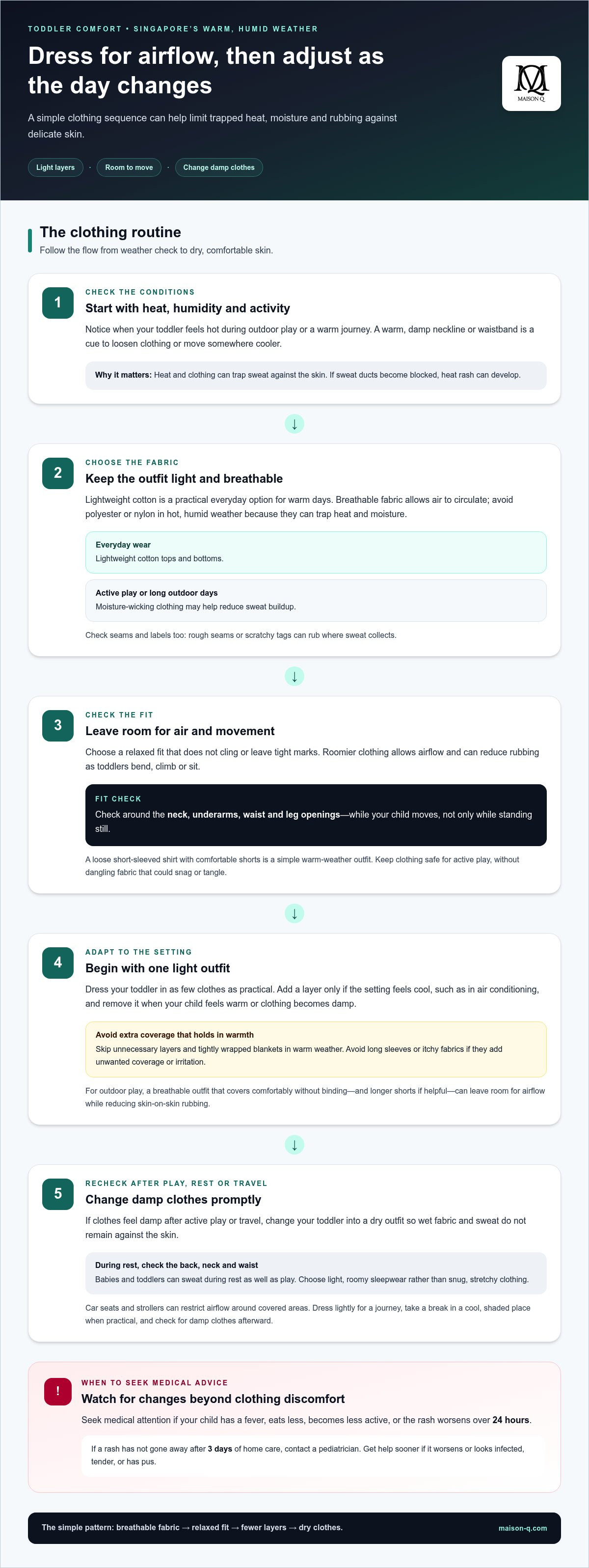
Heat, humidity, overdressing, and tight clothing
In Singapore’s humid weather, heat and clothing can trap sweat against the skin. The practical goal is to keep your toddler cool and comfortable, not heavily covered.
- Notice when your toddler gets hot during outdoor play or a warm journey. Sweat cools the body, but tight clothing can hold moisture against the skin. If sweat ducts become blocked, heat rash, also called miliaria, can develop. A warm, damp neckline or waistband is a cue to loosen clothing or move somewhere cooler.
- Check the fit while your child moves, not just while standing still. Tight waistbands, snug sleeves and close-fitting leg openings can rub as toddlers bend, climb or sit. Choose roomier cuts that allow air around the body and avoid pressure where clothing meets skin. Comfort in motion matters as much as light fabric.
- Use air conditioning or a fan to help keep skin cool after outdoor activity. A cool indoor break can ease the transition from humid outdoors, especially when your toddler feels warm or sweaty. Remove damp outer clothing and let the skin dry before dressing again. This reduces the time sweat stays trapped beneath fabric.
- Adjust clothing to the activity and setting instead of keeping the same layers on all day. A toddler running outdoors may need fewer layers than one resting in an air-conditioned room. Check the back, neck and waist for warmth or dampness, then add or remove a layer as needed. Avoid extended periods in warm, enclosed spaces.
- Choose ease and airflow when selecting an outfit for warm days. Explore lightweight outfit options and look for a comfortable fit that won’t cling during play. Clothing can help reduce heat and friction, but persistent, painful, worsening or infected rashes need medical assessment, including dermatology care.
In Singapore’s humid weather, keep toddlers cool and comfortable in lightweight, roomy clothing that allows airflow. Adjust layers to the activity and setting, and check the neck, back and waist for warmth or dampness.
Maison Q: Single Side Dresses (8Y-16Y)
Maison Q offers children’s clothing to explore once you’ve considered fit, fabric and the day’s weather. For older children, Single Side Dresses (8Y-16Y) offer a dress option; for younger ones, Reversible Dresses (1Y-7Y), Reversible Shirts (1Y-7Y) and Baby Onesies (6M-1Y) provide more choices across age ranges.
On warm, humid days, use the same practical checks with any outfit: choose a comfortable fit, avoid unnecessary layers and change damp clothing. Clothing isn’t a treatment or a guarantee against heat rash, so focus on how each piece feels and fits. Maison Q’s reversible and single-side children’s clothing offers options for everyday wear, play and family outings.
Visit maison-q.com to explore Maison Q’s children’s clothing.
Make Everyday Dressing Feel Easier
Let your toddler’s comfort guide everyday clothing choices. Each morning, consider the day’s settings, choose an outfit to suit them, and notice how your child responds during play and rest. Over time, these observations can make choosing clothes to help prevent heat rash feel less like a checklist and more like thoughtful care.
There’s room for practicality and personality in the same wardrobe. Choose pieces your child enjoys wearing, then let comfort lead when plans shift or the weather feels close and humid. If you’d like to explore clothing options for your family, contact Maison Q for help.
Everyday comfort comes from considered choices. Keep dressing simple, pay attention to your toddler’s cues and enjoy the little moments along the way.
Frequently Asked Questions
Sweat Rash, Friction Rash, and Irritation: What’s the Difference?
Heat rash develops when sweat becomes trapped beneath the skin. A friction rash, by contrast, follows repeated rubbing from skin, clothing or seams. Irritation is a broader reaction with different possible triggers, including scratchy fabric. The signs can overlap, so note where the rash appears and whether it follows sweating or rubbing. If it worsens, feels painful or looks infected, seek medical advice.
What Are Hot Weather Rashes?
Hot weather rashes are skin eruptions that develop or become more uncomfortable in heat, often alongside sweating. Heat rash, also called prickly heat, occurs when blocked sweat ducts trap sweat beneath the skin. A child may have small red bumps or prickly discomfort. After outdoor play, notice whether symptoms appear beneath clothing or where sweat gathers, then cool and dry the skin.
Where do heat rashes form?
Heat rash commonly appears on the neck or trunk, but it can occur elsewhere. Check clothing-covered areas and skin folds, where fabric, warmth or skin-to-skin contact can limit airflow. Look around the neckline, underarms and creases after a warm outing. The diaper area can also become damp, so include it in routine changes and gentle skin checks.
What fabrics are best for preventing heat rash in toddlers?
Lightweight cotton is a practical, breathable choice for everyday outfits. Linen and silk are other suggested options, but a fabric’s feel and fit matter, too. Choose clothes that don’t cling as your toddler moves, and avoid scratchy seams or tags that rub. For active outdoor play, moisture-wicking clothing may help manage dampness. Change it if it becomes sweaty or wet.
Should toddlers wear loose-fitting clothing to prevent heat rash?
Yes. A relaxed fit allows air to circulate and can limit rubbing as toddlers climb, run or sit. Check that sleeves and waistbands don’t leave tight marks, and make sure the garment won’t tangle during play. For example, a loose shirt with comfortable shorts gives your child room to move without snug fabric pressing against warm, damp skin.
How often should sweaty toddler clothes be changed?
Change clothes as soon as they become damp or soiled, such as after sweaty play or a wet outdoor activity. A daily routine may not be enough when Singapore’s humidity leaves clothes clammy against the skin. Change clothes as often as needed to keep your toddler comfortable and their skin cleaner and drier.