

Cotton On Kids alternatives for higher quality durable kids clothes
A durable children’s outfit is about more than the fibre on its label. If you’re exploring Cotton On Kids alternatives for higher-quality, durable kids’ clothes, consider sturdy cotton knits for everyday movement and cotton twill or denim for harder-wearing garments. The right choice depends on the weave, weight and feel, as well as Singapore’s warm weather.
It makes sense to look beyond a cute print: clothes for active children need to feel comfortable and handle frequent wear and washing. Organic cotton and classic styles can also help make a wardrobe more thoughtful and versatile, without sacrificing the joy of getting dressed.
This guide explains what to look for in children’s fabrics, how organic materials and garment care fit into the picture, and why classic cuts can stay useful as little ones grow. You’ll find practical ways to weigh softness, sturdiness and breathability when choosing everyday favourites.
Key Takeaways
- Choose fabric by its weave, weight and feel, not just its fibre name; breathable cotton can suit Singapore’s warm climate.
- Look for GOTS certification when prioritising organic textiles, and choose sturdy cotton knits, twill or denim for garments that see frequent wear.
- Match the fabric to the garment: soft jersey works well for relaxed basics, while twill and denim suit harder-wearing pieces.
- Follow care labels and pre-wash cotton clothes to help maintain their shape and quality through repeated laundering.
- Classic cuts and colours can make clothes easier to wear across occasions, while reversible designs offer more than one look in a garment.
Durable organic clothes for active children
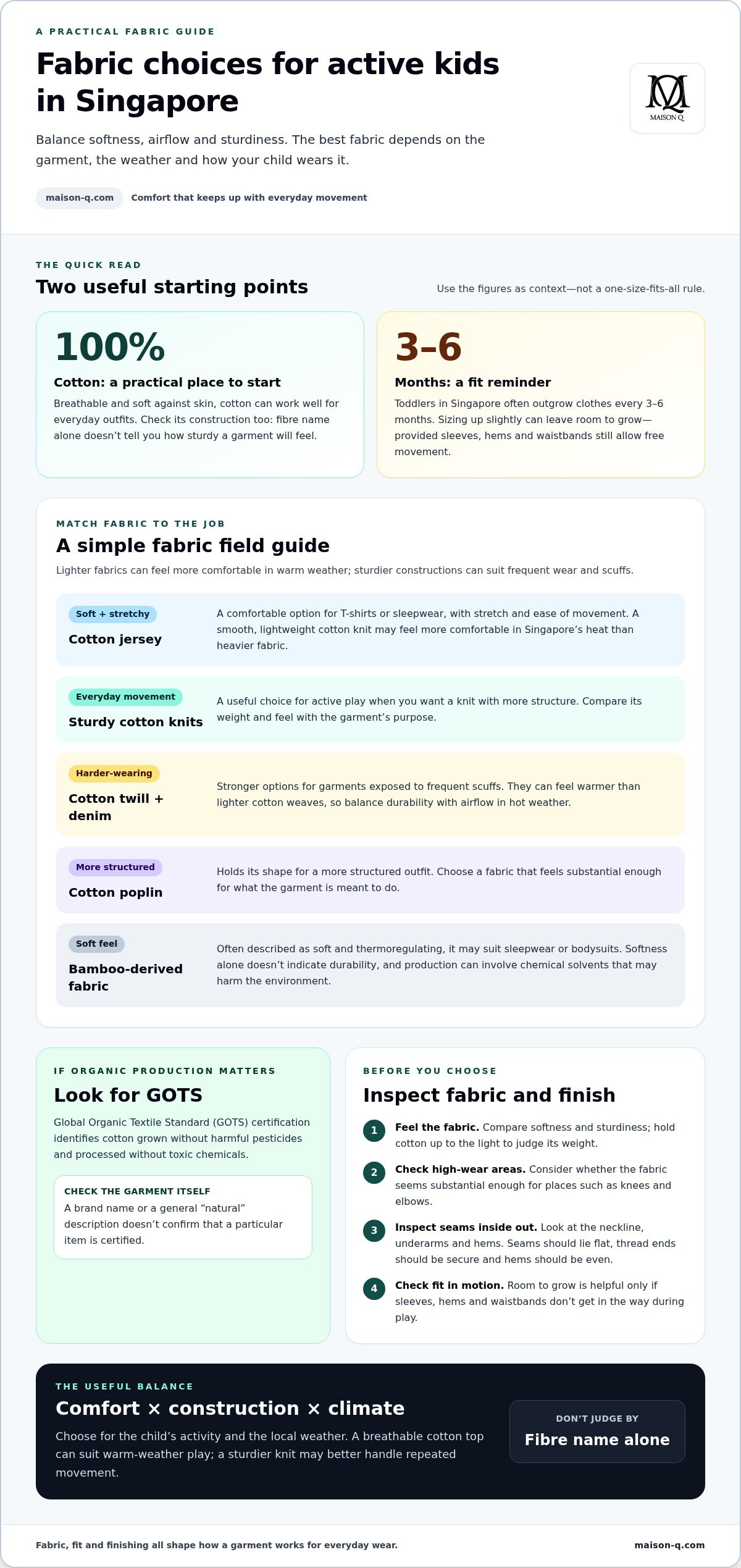
For children who climb, crawl and race through humid Singapore afternoons, fabric needs to feel comfortable and handle frequent wear. A useful starting point is 100% cotton: it’s breathable, soft against skin and practical for everyday outfits. Fabric construction still matters, so look beyond the fibre name before choosing clothes for active play.
Organic cotton is grown without synthetic fertilisers or toxic pesticides. Global Organic Textile Standard (GOTS) certification ensures cotton is grown without harmful pesticides and processed without toxic chemicals. If organic production is a priority, look for GOTS certification on the garment rather than relying on a general “natural” description.
Softness matters when children wear a garment for play, rest and repeated washing. Breathable fibres allow air to circulate, and a lightweight cotton top may feel more comfortable in Singapore’s warm weather than heavier denim. Choose fabric to suit the activity and setting.
Active children need clothes that allow them to move freely. Cotton jersey is soft and stretchy for T-shirts or sleepwear, while sturdy cotton knits can work well for everyday play. Twill and denim are stronger options for garments exposed to frequent scuffs, but feel warmer than lighter cotton weaves. In hot weather, balance durability with airflow.
Fit affects how long children can wear a garment comfortably. Toddlers in Singapore often outgrow clothes every 3-6 months, so a close fit may become restrictive quickly. Sizing up slightly can leave room to grow, but check that sleeves, hems and waistbands don’t interfere with movement. A roomy shirt should still stay in place during play.
When comparing Uniqlo, H&M, Zara and other kidswear brands in Singapore, assess individual garments rather than treating a brand name as a durability rating. Check the fibre content, feel the fabric for softness and sturdiness, and look for material that seems too flimsy for frequent wear.
Which kids’ clothing brands in Singapore offer organic cotton or sustainable materials? Look for individual garments carrying GOTS certification, which identifies cotton grown without harmful pesticides and processed without toxic chemicals. A brand name alone doesn’t tell you whether a particular item uses certified organic cotton, so check the garment’s own material and certification details.
For a practical comparison, hold a cotton garment up to the light and feel its weight. Thin, flimsy fabric may be less suited to energetic daily use than a sturdy knit. Organic certification relates to production; fabric weight, weave and fit help determine whether a finished garment suits a child’s routine.
These checks are especially useful before buying clothes for frequent wear. A breathable cotton top can suit warm-weather play, while a sturdier knit may better handle repeated movement. Consider the child’s activities, the local climate and room to grow together. This helps you choose comfortable clothes for everyday adventures.
What Makes a Good Fabric for Children's Clothing?
For Singapore’s warm, humid days, look for a balance of softness, airflow and sturdy construction. Fibre, weave, weight and stitching all affect how a garment feels and holds up.
Cotton Softness and Skin Comfort
Cotton’s soft feel makes it a comfortable choice against children’s skin, whether they’re wearing a T-shirt for school, play or rest. A smooth, lightweight cotton knit can feel more comfortable in Singapore’s heat than heavier fabric, while a sturdy knit offers more structure for active movement.
Bamboo-derived fabric is often described as soft and thermoregulating, making it an option for sleepwear or bodysuits. Softness alone does not indicate durability. Compare thickness and construction, then inspect seams and stress points before choosing clothes for frequent use.
Fabric Quality and Stitching Durability
Fabric quality and stitching both affect how well a garment withstands wear. Strong fabric can still fail at a weak seam, so check both. Feel the material for softness and sturdiness, then inspect the stitching around the neckline, underarms and hems.
There isn’t a reliable brand-wide ranking for Uniqlo, H&M, Zara or other kidswear labels based on the information available here. Compare individual garments by fabric weight, weave and seam finish rather than assuming a brand name guarantees durability.
Start by considering what the garment is for. Cotton jersey offers stretch and ease of movement in a child’s T-shirt. Cotton poplin holds its shape for a more structured outfit. The fabric should feel substantial enough for its purpose, especially at high-wear areas such as knees and elbows.
Production choices also matter when comparing fabrics. Global Organic Textile Standard (GOTS) certification ensures cotton is grown without harmful pesticides and processed without toxic chemicals. Bamboo-derived fabrics can feel soft, but their production can involve chemical solvents that may harm the environment. Fibre labels tell only part of the story.
Before buying, turn the garment inside out. Check that seams lie flat, thread ends are secure and hems are even. Then consider where the fabric will be worn: lightweight cotton suits warm-weather comfort, while a denser weave may suit garments exposed to more abrasion. These checks can help you look beyond first impressions.
For a playful look, children’s dresses can bring a little occasion-ready charm to a wardrobe, while fabric choice remains central to comfort and wear.
Parents can also weigh everyday care when comparing fabrics: cotton is easy to machine wash and dry, a practical benefit for children’s clothes that need frequent washing. Cotton is soft and gentle on children’s skin, reducing the risk of irritation or allergic reactions, but the fibre name alone does not describe a garment’s other qualities. Consider weave, weight and quality alongside the label. Linen becomes softer with every wash and more breathable in heat, making those qualities relevant when choosing warm-weather clothing.
Durable fabrics for high-wear kids’ clothing
For school, playgrounds and weekend outings, match the fabric to how the garment will be worn. Cotton twill, denim and sturdy cotton knits can suit clothes exposed to frequent movement or abrasion. If you’re comparing Cotton On Kids alternatives for higher-quality, durable kids’ clothes, fabric and construction are practical details to weigh.
Online and in-store shopping both offer ways to compare children’s clothes in Singapore. Online, read material descriptions and inspect close-up photos. In-store, feel the fabric and examine seams directly. A search for Cotton On Kids alternatives for higher-quality, durable kids’ clothes is more useful when you focus on garment features, not brand names alone.
Start with the care and fibre labels. For cotton garments, look for 100% cotton, then compare the stated fabric with the garment’s purpose. A sturdy cotton knit may suit an everyday top, while a lighter cotton fabric may feel gentler in warm weather. Labels identify fibre content, but don’t describe every detail of fabric quality.
To assess cotton, feel whether it is both soft and sturdy. Avoid thin, flimsy fabric for clothes likely to face frequent wear. Cotton quality varies between combed, carded and lower-grade fibres, so the word “cotton” alone doesn’t tell you how substantial a garment will feel. Compare fabrics directly when possible.
Choose a weave that suits the garment. Cotton twill resists abrasion and holds its shape through repeated washing and wear, making it a practical option for pants or skirts. Denim is durable and suits casual garments, though its heavier feel can be less comfortable in Singapore’s heat. Cotton poplin holds its shape for structured clothes, including school outfits.
A fabric swatch can help you assess a garment before buying. Check its colour in natural light, feel its softness and sturdiness, and compare its weight with the intended use. A swatch may reveal a flimsy feel that a product photograph does not make obvious.
Sustainable fabrics can involve different production processes, which affect costs. Organic cotton, for instance, follows farming and processing practices that differ from conventional cotton. Rather than judging value by a material’s name, consider its feel, construction and expected use. For a garment worn often, durability may matter more than delicate detailing.
To assess a garment’s construction, read the fibre content and inspect hems, seams and areas under tension, such as waistbands. Look for even stitching and loose threads. Match the fabric to the garment: twill or denim for hard-wearing pants, and a sturdy knit for everyday tops.
For school clothes, cotton poplin, cotton twill or other cotton fabrics can work well. For a special dress, consider its structure and how often it will be worn. These checks help you choose a comfortable fabric suited to repeated adventures.
Sustainable fashion and garment longevity
In Singapore, a more thoughtful children’s wardrobe starts with garments that stay useful. Cotton is renewable and biodegradable, and its production requires fewer chemicals than synthetic-fibre production. But a fibre’s environmental profile is only one part of the decision. How often a child wears a piece, how well it holds up, and whether it can be reused also matter.
Polyester and nylon are petroleum-derived synthetic materials that aren’t biodegradable. TENCEL™ Lyocell, by contrast, is made from sustainably harvested wood pulp using a closed-loop production process. These differences show why “sustainable” can describe several distinct choices. Compare material descriptions, then consider the garment’s intended use and expected lifespan.
Organic cotton offers another production distinction. Organic cotton farming uses 91% less water than conventional cotton farming. Hemp typically doesn’t require pesticides or herbicides, and its breathable fabric softens with each wash. These fibres can be part of a considered wardrobe, but comfort, durability and care still influence whether a garment remains in regular rotation.
Good care can help cotton clothes last. Follow each garment’s care label, since washing and drying instructions vary by fabric and construction. Cotton can shrink, so pre-washing a new garment before its first wear can help you see how it behaves. For example, wash a cotton top before adding it to a regular school rotation.
Fit matters too. Toddlers in Singapore often outgrow clothes every 3-6 months, so sizing up slightly can give a garment more time in the wardrobe. Leave enough room for movement, though; clothes that are too large may be awkward during play. A comfortable fit makes a piece easier to wear repeatedly.
Keeping clothes in use can reduce wardrobe turnover. When children outgrow garments, swapping them with other parents gives wearable pieces another chance to be enjoyed. Singapore has children’s clothing swap events and Telegram groups, offering practical ways to pass along clothes rather than discard them.
The scale of textile waste makes those small choices meaningful. The National Environment Agency estimates that over 160,000 tonnes of textile waste are discarded annually in Singapore. Buying for repeated wear, following care labels and passing on outgrown clothes are practical ways families can help keep garments in circulation.
Think of sustainable fashion as a set of connected choices, not a single fabric label. Organic cotton, hemp and TENCEL™ Lyocell have different production stories; careful washing and reuse extend a garment’s life. For a lightweight cotton piece, gentle care and a good fit can help it remain a favourite through everyday wear.
Buying clothes to last and choosing classic styles
For Singapore parents, a lasting wardrobe balances sturdy construction with designs children enjoy wearing. Classic cuts and neutral colours can work across seasons and occasions, while a playful print adds personality without making an outfit feel tied to one moment. Choose clothes that suit your child’s routine, from school days to weekend outings.
Which kids’ clothing brands offer the best value after repeated washing? There’s no dependable brand-wide answer: value depends on how an individual garment’s fabric and construction hold up. Compare fibre, weave, seam quality and care instructions, then favour pieces that stay comfortable and useful after regular laundering.
Start with versatility. A neutral top can pair with different bottoms, while a simple dress can suit family gatherings and everyday outings. In Singapore’s warm climate, lightweight cotton and breathable designs can feel more comfortable for daily wear than heavy layers. Classic colours also make it easier to pass wearable clothes between siblings.
Look for details that support movement, such as comfortable waistbands, secure hems and seams that lie flat. For children with sensitive skin, a soft fabric and smooth inside finish can make frequent wear more pleasant. Turn the garment inside out and feel along the neckline and underarms, where rough seams may rub.
Growth changes the cost-per-wear calculation. Toddlers in Singapore often outgrow clothes every 3-6 months, so parents may size up slightly for extra room. Make sure sleeves, hems and waistbands still allow safe, easy movement. A garment that fits comfortably now and leaves a little growing room can stay useful longer.
Choose durable fabric for the garment’s purpose. Cotton twill or denim can suit high-wear bottoms, while sturdy cotton knits work for everyday tops. Denim is durable but heavier and less breathable than lightweight cotton, so consider your child’s activities and Singapore’s heat before choosing it for frequent wear.
Care labels offer practical guidance for keeping garments in rotation. Follow each piece’s washing and drying instructions, and separate delicate designs from sturdier everyday clothes when doing laundry. A carefully washed cotton dress, for example, may remain suitable for special occasions, while a robust knit can take on regular play.
Buying fewer, more versatile pieces can make wardrobe choices simpler, especially when clothes suit several settings and can be handed down. Explore classic children’s clothing styles as you build a thoughtful wardrobe for everyday wear and special moments.
Before adding a piece, consider whether it works with clothes your child already wears and whether its cut suits the activities it needs to serve. Classic cuts and neutral colours can help children’s clothes work across seasons, but fit, fabric and your child’s preferences matter too. A classic design is useful when it gets worn, so choose familiar shapes and colours your child is happy to reach for. Then consider whether the garment works in more than one setting.
Maison Q: Single Side Dresses (8Y-16Y)
Maison Q offers a thoughtful next step for families seeking children’s clothes with a playful, considered feel. Its Single Side Dresses (8Y-16Y) suit older children, while Reversible Dresses (1Y-7Y) offer two looks in one garment for younger ones. Reversible Shirts (1Y-7Y) and Baby Onesies (6M-1Y) round out options for everyday dressing across early childhood.
Choose a single-side dress for one distinctive look, or consider a reversible design when you’d like more outfit variety. For a special occasion, Maison Q’s Fairy Tulle Dresses add a whimsical touch. These styles complement practical fabric and fit checks, helping you choose pieces for your child’s age, routine and wardrobe.
Explore Maison Q’s children’s clothing to find a style that feels right for your family.
Choose Pieces for the Stories Ahead
The best wardrobe choices are the ones children reach for again, whether they’re heading to a family celebration or enjoying an ordinary day. If you’re weighing Cotton On Kids alternatives for higher-quality, durable kids’ clothes, consider which pieces fit naturally into your child’s routine and feel special enough to treasure.
Maison Q offers Single Side Dresses (8Y-16Y), Reversible Shirts (1Y-7Y) and Reversible Dresses (1Y-7Y). These styles bring playful possibilities to dressing, with reversible designs offering a fresh look from the same garment. Choose the kind of piece your child will be delighted to wear, then let it become part of their everyday adventures and memorable occasions.
For help exploring Maison Q’s clothing, contact Maison Q for clothing advice. A thoughtful choice today can become a much-loved part of tomorrow’s stories.
Frequently Asked Questions
Which kids clothing brands have the best fabric quality and stitching durability?
There isn’t a reliable brand-wide ranking. Compare individual garments by fabric weight, weave and feel, and inspect stitching around the neckline, underarms and hems.
Where can I buy durable kids clothes in Singapore, online and in-store?
You can compare durable kids’ clothes both online and in-store in Singapore. Online, read material descriptions and inspect close-up photos; in-store, feel the fabric and examine the seams directly.