

4 clothing solutions for fussy toddlers who hate getting dressed
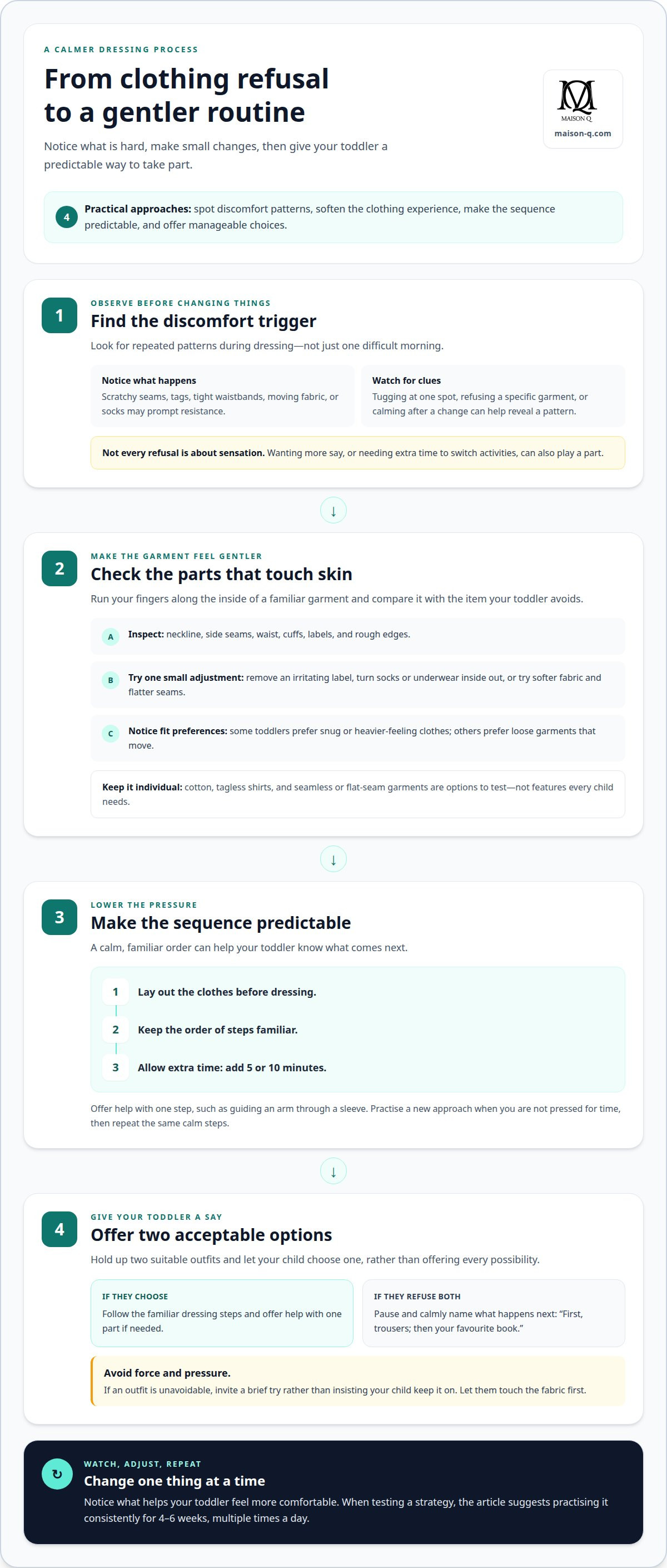
A dressing battle doesn’t automatically mean your toddler has sensory issues. Four clothing solutions for fussy toddlers who hate getting dressed are to notice discomfort triggers, choose softer garments, create a predictable routine, and offer manageable choices instead of forcing an outfit. Reactions to seams, tags, tightness, or fabric can offer clues, while wanting to choose may point to a different kind of resistance.
It’s understandable to wonder whether a favourite shirt or a strong dislike of socks is more than a passing preference. Clothing can feel distracting or uncomfortable, but toddlers may also resist because they want more say in what they wear or need extra time to switch activities.
Here, you’ll learn how to spot patterns in your child’s reactions, make clothes feel gentler against the skin, and ease the pressure around getting dressed. The four practical approaches also show how small changes to routines and choices can make the moment feel calmer and give your toddler room to feel comfortable.
Key Takeaways
- Notice which fabrics, seams, tags or fits prompt discomfort, and look for patterns rather than assuming every dressing refusal has the same cause.
- Check garments for scratchy labels and rough edges; softer fabrics and flatter seams may feel gentler against sensitive skin.
- Make getting dressed less rushed with a predictable routine and a choice between two suitable outfits.
- Strong clothing preferences can reflect a toddler’s growing wish for independence, not only sensory discomfort.
Recognising clothing-related sensory sensitivities
A toddler’s refusal can point to a particular sensation, not simply an outfit they dislike. Notice whether reactions follow scratchy seams, tags, tight waistbands, moving fabric, or socks; a child may tug at one spot, resist a specific garment, or calm down after changing. One parent described her son becoming fussy about clothes at about 3 ½ years old. A pattern across repeated dressing moments is more useful than one difficult morning.
Try one small adjustment at a time. Turn socks or underwear inside out to keep seams away from skin, remove irritating labels, and inspect rough edges. Wash clothes with unscented detergent and fabric softener. Some children prefer snug or heavier-feeling clothes, while others like loose garments that move and let air reach their skin. A tumble dryer or dehumidifier may soften stiff clothes.
For gradual exposure, introduce a challenging garment at home, when there’s less pressure to leave. Let your toddler touch it, wear it briefly, then take it off if discomfort rises. Try a wall press-up, star jump, or commando crawl before dressing; firm hand pressure may also suit a child who enjoys it. Practise one strategy consistently for 4-6 weeks, multiple times a day, and notice which changes help.
How much do sensory-friendly and adaptive toddler clothes cost in Singapore? Costs vary with fabric, construction, and features such as flat seams or tag-free finishes. Compare how a garment feels and its details with your child’s specific discomfort triggers rather than choosing by label alone.
What routines, choices, and dressing games encourage toddlers to cooperate? Keep the order predictable, then offer a choice between two acceptable outfits. Make dressing a simple game, such as finding the shirt’s front or racing a gentle song, without turning the moment into a contest.
What safety issues should caregivers consider with toddler clothing fasteners, cords, and loose accessories? Before dressing, inspect fasteners for damage and make sure cords or accessories aren’t loose. Choose simple garments that stay comfortably in place during play.
What are practical backup clothing strategies for daycare and outings in Singapore’s hot, humid weather? Pack a spare, lightweight outfit in a separate bag, including a familiar option your toddler already tolerates. For daycare handovers or outings, tell the caregiver which textures or features tend to cause discomfort.
2. Choosing seamless, tagless and soft clothing
Start with the garment’s inside, where small details can become persistent distractions. Check the neckline, side seams, waist, cuffs, and labels before dressing. A shirt that looks smooth on the outside may still have a raised seam or stiff printed label against the skin. Run your fingers along these areas, then compare them with a familiar garment your toddler already accepts.
Try sensory-friendly features one at a time so you can see what feels better. Seamless socks and underwear reduce contact with raised seams, while flat seams may feel less noticeable. Cotton fabrics may suit children who react to texture. Tagless shirts avoid sewn labels. If a label can be removed, trim it carefully and check for rough edges afterwards.
- Neck opening: A wider opening may make pulling a shirt over the head feel easier.
- Waist: An elastic waist can simplify pulling trousers up and down.
- Fasteners: Simple openings can reduce steps during dressing; try them with your child before relying on them.
These features are starting points, not a checklist every child needs. A snug fit may feel reassuring to one toddler, while another prefers looser clothes that move freely. Compare how fabrics feel after washing, since stiffness can affect comfort. In Singapore’s warm, humid weather, consider whether the garment feels comfortable against the skin during ordinary indoor activity, too.
Which toddler clothing features make dressing easier, such as wide necks, elastic waists, and magnetic fasteners? Wide necks and elastic waists can make garments easier to put on and take off. Treat magnetic fasteners as a specific design feature to inspect, rather than assuming every adaptive garment includes them.
Are tagless, seamless, or adaptive toddler clothes available in Singapore, and where can they be bought? Search children’s clothing retailers and online listings in Singapore using terms such as “tagless,” “flat seams,” and “seamless socks.” Read garment descriptions and inspect construction details; browsing children’s clothing styles can offer another design reference.
3. Avoiding force and pressure
A rushed dressing moment can turn a small snag into a struggle. Add 5 or 10 minutes to a morning or bedtime routine, so your toddler has time to try without being hurried. Lay out clothes before inviting them to dress, then offer help with one step, such as guiding an arm through a sleeve.
Give your child a say while keeping the choice manageable. Hold up two acceptable outfits and let them choose one, rather than opening the wardrobe to every possibility. If they reject both, pause and calmly name the next step: “First, trousers; then your favourite book.” A clear sequence keeps the decision small without turning it into a contest.
Try a new dressing approach when you’re not pressed for time. Practise at the end of the day, on a weekend, or during a school break. For example, practise pulling on a familiar shirt before bedtime, then use the same calm steps in the next morning’s routine. Repeating one approach helps your toddler learn what comes next.
Don’t force a child to wear clothes they find difficult to tolerate. If a particular outfit is unavoidable, invite a brief try rather than insisting they keep it on. Let them touch the fabric first, explain the next step, and pause if distress rises. A short attempt can offer useful clues about what feels uncomfortable without turning dressing into a battle.
Keep encouragement specific. Say, “You pulled one sleeve through,” rather than promising a reward for wearing the whole outfit. If your toddler stops, offer help with one task or return to an acceptable alternative. The aim is a calmer process, not a perfect outfit. Patience and clear choices help preserve your child’s sense of control.
4. Why toddlers resist getting dressed
Toddlers resist dressing for different reasons: discomfort, a wish for control, or difficulty switching activities. To spot sensory sensitivities, note which garment features trigger a reaction and whether changing that item helps. A refusal alone doesn’t establish a sensory issue; look for repeated patterns across dressing moments.
Age can shape the scene, too. One parent said her daughter became determined about her clothes when she turned 2 years old. At this stage, choosing an outfit can feel like an important way to practise independence. Another parent described a son insisting on jumpers two sizes too small for school. His strong preference mattered, but fit still needed a practical conversation.
Compare the signs rather than treating every protest alike. A toddler who repeatedly objects to one seam, pulls at a waistband, or rejects socks may be reacting to how clothes feel. A child whose preferences change from day to day, or who wants to choose every item, may be seeking control. Transitions can also spark resistance: playtime ends, dressing begins, and the child has little say in the sequence.
Try a simple observation routine over several dressing occasions. Note the garment, the specific moment distress starts, and what happens after you change one feature. For example, compare a familiar shirt with a new one, or offer the same trousers before and after play. Keep the rest of the routine steady so you can see whether fabric, fit, choice, or timing seems to matter most. Consistent routines help toddlers anticipate self-care steps. Dressing in one position can help a child who feels unbalanced when changing position.
For a playful outfit choice, explore children’s clothing styles and let your toddler point to a favourite.
Maison Q: Single Side Dresses (8Y-16Y)
Maison Q offers children’s clothing for families choosing outfits that feel joyful and inviting. For toddlers, Reversible Dresses (1Y-7Y) and Reversible Shirts (1Y-7Y) offer two sides to explore, giving little ones a simple way to take part in choosing what to wear. Baby Onesies (6M-1Y) suit younger children, while Single Side Dresses (8Y-16Y) are options for older girls and teens. These pieces can complement a thoughtful dressing routine, though comfort still depends on your child’s preferences for fit and feel. Let your child help select a favourite, then observe how they respond to the garment during everyday wear.
Visit Maison Q to explore the clothing styles.
Make the next morning a fresh start
Finding clothing solutions for fussy toddlers who hate getting dressed starts with curiosity, not a perfect outfit. Let your child’s reactions guide the next small experiment: notice what they reach for, what they avoid, and which part of dressing feels hardest. A favourite garment can be a useful starting point for understanding comfort and choice.
Keep expectations gentle and practical. Some mornings will still bring a pause or a change of plan, and that doesn’t erase your child’s progress. Each calm attempt offers another chance to build trust, confidence, and a little more independence around getting dressed.
If you’d like to explore clothing options for your family, contact Maison Q for help. A thoughtful next step can make room for more comfortable mornings and joyful everyday moments.
Frequently Asked Questions
Does my Child Have Sensory Issues with Clothing?
Clothing discomfort can be one sign of sensory sensitivity, but refusing an outfit alone doesn’t establish that. Practical clothing solutions for fussy toddlers who hate getting dressed start with noticing whether similar reactions to touch appear with towels, hair washing, or dressing after a bath. Note what happened before the refusal and what your child did next. A repeated pattern across situations offers clearer clues than one difficult outfit.
Why does my child have meltdowns about getting dressed?
A meltdown may happen when discomfort, a sudden change, or difficulty communicating builds into distress. Look at when it begins: does your child become upset when dressing is announced, when a garment touches them, or when help starts? After they settle, describe what you noticed and let them point, gesture, or say what felt difficult. That clue can shape your next attempt.
What clothing fabrics and seams are most comfortable for toddlers with sensory sensitivities?
Soft cotton, seamless construction, and flat seams are options to try, but comfort depends on your toddler’s preferences. Compare a familiar garment with a new one by checking fabric weight, surface feel, seam bulk, and elastic pressure. Wash a new item before wearing it, then check the inside again for stiffness or rough areas. Change one feature at a time to see what matters.
How can caregivers help a fussy toddler get dressed without arguments or force?
Make participation feel achievable by giving your toddler a small role, such as holding the shirt open or pulling one sleeve into place. Clothing solutions for fussy toddlers who hate getting dressed can also include explaining each step before helping and pausing for your child’s response. If tension rises, stop and offer a quiet reset rather than continuing the struggle. This keeps dressing collaborative.