

Two-in-One Reversible Kids Clothing: 7 Benefits for Everyday Life
What if one piece could bring two distinct looks to the school-week wardrobe without taking up space for two? It’s easy to see the appeal: children’s clothes can pile up quickly, while favourite outfits get worn again and again. The real two in one reversible kids clothing benefits, though, depend on whether both sides feel comfortable, suit your child’s taste and fit naturally into everyday routines.
In this guide, you’ll discover how reversible designs can add outfit variety, simplify packing and help a carefully chosen garment earn more regular wear, along with the practical limits to keep in mind. We’ll look at what makes the flip worthwhile, from easy-to-style sides to details that may affect comfort and convenience. Maison Q offers reversible shirts and dresses for children aged 1Y-7Y, illustrating how one thoughtful design can bring a little extra possibility to getting dressed. The key is choosing a piece your child will be happy to wear on either side.
Key Takeaways
- Two-in-one means one garment can be worn with either side facing out, creating two looks rather than two separate pieces.
- Reversible clothing can add outfit variety and simplify packing, provided both sides work for your child’s wardrobe and routine.
- Judge value by how often your child wears the garment, its care needs and its condition, not simply by its reversible design.
- Before choosing a piece, inspect both sides, consider your child’s preferences and review the care instructions.
- Maison Q offers reversible shirts and dresses for children aged 1Y-7Y, alongside single-side clothing.
What Does Two-in-One Reversible Kids Clothing Actually Mean?
Two-in-one reversible kids clothing is one garment designed to be worn with either side facing outward. Turn it inside out, and a second designed surface becomes the visible side. The shift may reveal a different print, colour or pattern, giving a child another way to wear the same piece. It’s a small wardrobe surprise, but the distinction matters: two sides offer two possible looks, not two separate garments or a promise that the garment will last longer.
The broader idea is captured by the term reversible garment, which describes clothing intended to be worn with either side showing. For children’s clothing, the practical test is whether the garment is designed for both orientations. An ordinary top turned inside out may expose seams or labels, while a reversible piece is made so either side can face out.
Reversible kids clothing is a single garment designed to be worn with either of its intended sides facing out.
How Is Reversible Clothing Different from Ordinary Kidswear?
With an ordinary garment, inside out usually means laundry day or a quick fix for a small mishap. With a reversible design, turning the piece inside out is part of how it’s meant to be worn. Its construction needs to make both sides suitable for showing, rather than leaving one side as a hidden interior.
That doesn’t mean every reversible style has the same finish. Fastenings, seams and fabrics can vary, so assess the actual garment rather than assuming every design has the same features. Check whether both sides look appealing and whether the construction seems comfortable and practical for your child.
What Can Two Sides Change About an Outfit?
The difference might be a lively print on one side and a calmer colour on the other, or two patterns that each give the garment a distinct mood. On a day when your child wants a quieter outfit, one side may pair easily with familiar bottoms. Turn it over another morning, and a brighter design can bring a more playful note.
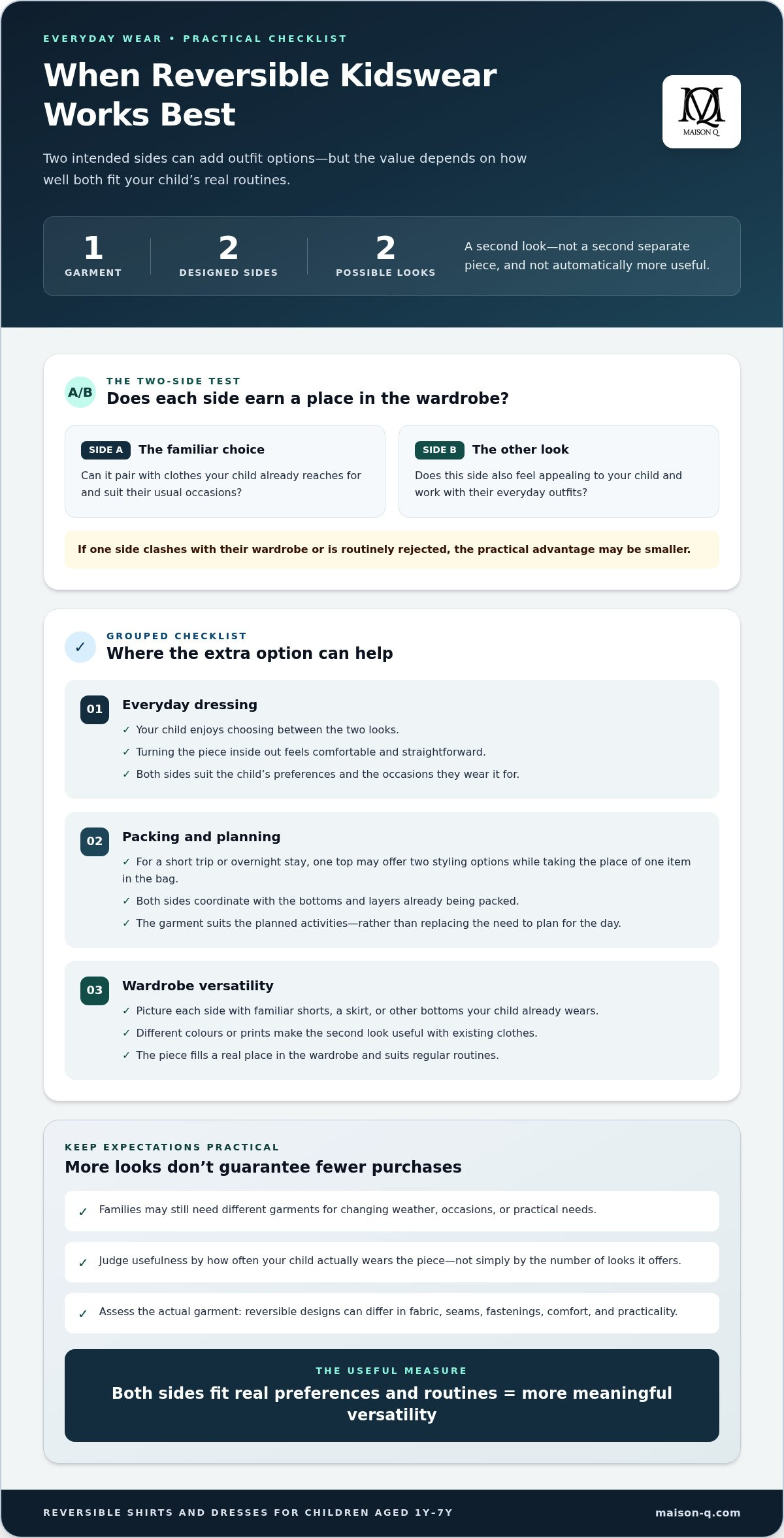
The choice only adds value if both looks work for your family. A side that clashes with clothes your child already wears, feels less appealing to them or suits few of their usual occasions may rarely leave the wardrobe. Let your child have a say where possible. Their enthusiasm can help you judge whether both sides will get worn.
That’s the heart of the two in one reversible kids clothing benefits: a reversible design can offer styling flexibility, but the second side isn’t automatically useful just because it exists. Think of the garment as one piece with two design options, then judge each option on its own. If both feel wearable in your child’s everyday life, the two-sided idea has real purpose. If only one side appeals, the practical advantage may be smaller than it first appears.
The Everyday Benefits of Two-in-One Reversible Kids Clothing
The appeal of reversible clothing is more than a fresh look in front of the mirror. A well-chosen piece can offer an extra outfit option without requiring a separate garment for each style. For busy family routines, that flexibility may be useful at home, while packing or planning clothes for the week. The benefit is practical, not automatic: both sides need to suit the child and the occasions they’ll be worn for.
Can Reversible Kidswear Make Everyday Dressing Easier?
On a school-free morning, a child might choose one side for play, then turn the piece over for a family outing later in the day. That gives them a choice between two looks without choosing a different garment. It can make getting dressed feel more playful, especially for children who enjoy having a say in what they wear.
Still, the ease depends on the child’s preferences and the garment’s design. If turning it inside out feels awkward, or one side is routinely rejected, the choice may not simplify the morning. Look for a piece your child can wear comfortably and happily in both ways, rather than assuming reversible automatically means easier.
Packing is another possible advantage. For a short trip or an overnight stay, a reversible top may give a child two styling options while taking the place of one item in the bag. For this to work, both sides should pair with the bottoms and layers you’re already bringing, and the garment should suit the planned activities. Treat it as a flexible option, not a reason to pack without considering the day.
Can Two Looks Help Build a More Versatile Wardrobe?
A reversible piece may coordinate with more of a child’s existing clothes if its two sides have different colours or prints. One side might work with familiar shorts, while the other pairs well with a skirt or another set of bottoms. Before choosing, picture each side with outfits your child already reaches for. That simple check helps distinguish genuine versatility from a second design that looks lovely but rarely gets worn.
More styling options don’t guarantee fewer clothing purchases. A family may still need different garments for changing weather, occasions or practical needs. The useful question is whether this particular piece fills a real place in the wardrobe. If both sides fit regular routines, it may earn more turns in the weekly rotation. If only one side gets chosen, its extra styling potential may remain just that: potential.
Useful versatility isn’t measured by how many looks a garment promises, but by how often your child actually wears it. That’s a grounded way to think about the two in one reversible kids clothing benefits: variety matters most when it fits a child’s real preferences and family routines. Maison Q offers reversible shirts and dresses for children aged 1Y-7Y.
Do Reversible Kids Clothes Really Offer Better Value or Sustainability?
Two designed sides can sound like twice the value, but that isn’t guaranteed. Reversibility creates the possibility of another look; it doesn’t automatically double how often a child wears the garment, extend its lifespan or prove that its overall impact is lower. A piece still needs to feel comfortable, suit the child’s routines and be cared for in a way that keeps it wearable.
Cost per wear offers one useful way to think about value: divide the purchase price by the number of times the garment is worn. The result depends on actual use. A second side could encourage more wear if it makes the piece easier to enjoy and style, but a little-used garment remains little-used, however clever its design. Care requirements and the garment’s condition also matter when considering how worthwhile it has been over time.
Real value comes from repeated use, not simply from having two designs.
When Does Reversible Clothing Feel Like Better Value?
Ask whether both sides are appealing and practical enough for your child to choose. Then think about how often the garment suits their usual activities and pairs with clothes they already wear. If one side feels too special for everyday routines, or your child consistently prefers the other, the second design may contribute less than expected. This is a more grounded assessment than treating reversibility as an automatic saving.
There’s no need to force a calculation before deciding. Consider the garment as a whole: its purchase price, how often you expect it to be worn, the care it needs and how it holds up through use. Families can weigh those details differently. Compare the garment’s likely place in your child’s wardrobe with what your family needs, rather than assuming it has an advantage over another item.
How Can Reversible Design Support More Considered Clothing Choices?
A two-sided design can prompt a useful question before buying: will this piece fit into more than one part of my child’s life? Thinking about both sides, existing outfits and likely occasions encourages a choice based on use rather than novelty alone. Maison Q emphasizes sustainable fashion through reversible pieces designed to grow with the child, while the value of any garment still depends on how it is used in everyday life.
Design potential and real-world impact aren’t the same thing. A reversible garment may be worn often, or one side may go mostly unused. Its overall footprint also depends on factors beyond the two visible designs, including how it’s made, how it’s cared for and what it replaces. The two sides alone don’t establish a specific reduction in waste, emissions or resource use.
So, approach the two in one reversible kids clothing benefits with curiosity and clear expectations. Versatility can support more considered buying when both sides suit the child and the family expects to use them. The thoughtful choice is the one that earns its place in the wardrobe through regular wear, not one that relies on a sustainability promise the design alone can’t prove.
How to Choose and Care for Reversible Clothing Your Child Will Wear
A reversible piece earns its place when both sides work beyond the product photo. Use this simple checklist: look closely at each side, think about your child’s preferences, then read the garment’s size and care information. It turns a clever design into a practical wardrobe choice, with fewer surprises after it arrives home.
- Inspect both sides. Compare the prints, colours and overall look. Picture each side with clothes your child already wears, and consider whether both suit the occasions you have in mind, from relaxed play to a family gathering.
- Consider your child’s preferences. Think about which colours and designs they’re drawn to. If age-appropriate, invite them to choose a favourite side or tell you whether they’d enjoy wearing both.
- Review the size and care information. Check the stated size against your child’s needs, then read the garment’s own care instructions. Don’t assume every reversible piece has the same washing requirements.
Check both sides, your child’s taste and the care label to judge whether a reversible piece will be useful day to day.
What Should Parents Check Before Choosing a Reversible Piece?
Give each side its own quick outfit test. Could you pair it with something already in the wardrobe? Would your child wear that look on an ordinary day, not just for a special occasion? If shopping online, study the available views and product details; if viewing a garment in person, look at both sides and how the piece is put together. Then use the stated size and care information to decide whether it suits your needs.
How Can Families Make Both Sides Part of the Routine?
Keep the choice light. A child might pick one design for a playdate and the other for a family outing, or simply choose a side in the morning. There’s no need to create a strict rotation. If one side works with a familiar outfit, remember that pairing for another day. Before laundering, check the garment’s care label and follow its guidance rather than applying a special rule based only on the reversible design.
The best test is ordinary use. After the garment has been worn a few times, notice whether your child reaches for both sides, whether each works with the rest of their wardrobe and whether the care routine feels manageable. If one side stays hidden, that’s useful information for future choices: look for designs that better match your child’s taste and everyday occasions. This practical approach helps make the two in one reversible kids clothing benefits meaningful for your family, rather than simply appealing in theory.
Maison Q offers reversible shirts and dresses for children aged 1Y-7Y. Explore Maison Q’s reversible clothing and consider which designs could suit your child’s everyday wardrobe.
Discover Maison Q’s Reversible Shirts and Dresses for Children
Maison Q designs reversible and single-side clothing for children. Its reversible range includes shirts and dresses for ages 1Y-7Y, giving families a chance to explore two-sided design in familiar wardrobe staples. The practical question remains the same for any reversible piece: do both sides feel wearable for your child’s everyday life?
A design can look charming at first glance, but the best fit is one that suits your child’s tastes and the occasions they actually dress for. As you browse, consider whether either side feels easy to imagine in their usual rotation, rather than choosing on the promise of variety alone. That keeps the idea of versatility rooted in real routines.
Which Reversible Kidswear Categories Does Maison Q Offer?
Maison Q offers reversible shirts and dresses for children aged 1Y-7Y. Reversible shirts bring two-sided design to a familiar clothing category, while reversible dresses offer the same concept in a one-piece outfit. For either, compare the two designs and picture how each might fit with your child’s existing wardrobe and daily occasions.
Maison Q also offers single-side clothing, so reversible design is one part of a wider children’s clothing selection. Choose a reversible style when both sides appeal and suit your needs; a single-side piece can be right when one considered design is what your child will wear. The aim isn’t to make every garment do more, but to find pieces that feel right for the child wearing them.
Find More Ideas for Versatile Children’s Style
Families exploring this subject can look for a reversible kids clothing guide to learn more about two-sided dressing, or a gender-neutral kids clothing guide for ideas on choosing styles around a child’s preferences. Use either as inspiration, then bring the decision back to your own wardrobe: both sides should feel comfortable to choose for real outfits and occasions.
The two in one reversible kids clothing benefits are most meaningful when a garment’s extra styling option suits a child’s real life. Maison Q’s reversible shirts and dresses offer families a way to explore that idea, alongside single-side clothing. Browse the range at your own pace and consider which designs your child would enjoy wearing. Explore Maison Q’s children’s clothing.
Make Room for More Joy in Getting Dressed
Let your child’s real routine be the guide. Notice which colours and patterns they reach for, what they feel comfortable wearing, and which pieces make getting dressed feel easy. A reversible garment doesn’t need to transform the whole wardrobe. Its charm is in offering another possibility, one your child can choose when it feels right.
That’s the most useful way to approach the two in one reversible kids clothing benefits: look beyond the clever idea and choose for the child who’ll wear it. When both sides feel like them, a simple flip can bring a little freshness to familiar outfits. And if one side becomes a favourite, that’s a lovely place to start.
Ready to find a piece that brings playful choice to everyday dressing? Explore Maison Q’s children’s clothing and discover a style your child will be excited to make their own.
Frequently Asked Questions
What does two-in-one reversible kids clothing mean?
It’s a garment purposefully designed to be worn with either side facing out. For example, a child can turn a reversible shirt inside out to show its other intended design, rather than an ordinary garment’s interior. The two sides may offer different prints or colours, but they remain part of one item. For the two in one reversible kids clothing benefits to matter, both sides should suit the child’s style.
Is reversible clothing practical for everyday wear?
It can be practical if both sides feel comfortable and suit the child’s daily activities. A reversible top, for instance, might work for a relaxed afternoon at home or a casual family visit, depending on its design and the child’s preferences. Check the garment’s size and details, and consider whether your child can manage turning it inside out. A feature that’s simple to use is more likely to fit naturally into routines.
Can reversible kids clothes really help reduce the number of outfits a child needs?
Not necessarily. Reversible clothing adds styling choices to one garment, but it can’t replace every outfit a child needs for different activities, weather or occasions. Think about a child’s weekly routine: a reversible piece may offer options for casual plans, but it won’t automatically take the place of clothes needed for other settings. Consider it one versatile wardrobe choice, rather than a promise that fewer garments will be enough.
Does reversible clothing last twice as long?
No. Having two wearable sides doesn’t mean a garment will last twice as long or remain the right size for longer. Its usable life depends on factors such as fit, condition, how often it’s worn and how it’s cared for. Children also grow, so a garment may be outgrown even if it’s still in good condition. Treat the second side as another design option, not a lifespan guarantee.
Is reversible kids clothing more sustainable?
Not automatically. A reversible design may encourage more considered use if a family regularly wears both sides, but that alone doesn’t establish a garment’s overall environmental impact. How it’s produced, cared for, worn and eventually replaced also matters. Choose clothing your child will genuinely use, rather than buying a piece solely because it’s described as versatile. Two designs alone don’t guarantee less waste or resource use.
How should I wash reversible children’s clothes?
Follow the care label on the specific garment. Reversible clothing doesn’t have one universal washing method, and fabric or construction can differ between pieces. Before laundering, read the label for its instructions and check that pockets are empty and fastenings are ready for washing, if applicable. Don’t assume the garment needs a special method simply because it can be worn inside out. The label is the best guide for its care.
What should I check before buying reversible clothing for a child?
Look at both sides, consider whether your child would choose each design, and picture them with clothes already in the wardrobe. Then review the stated size and product care information. Think about where the child might wear the garment, such as at home, for play or during a family outing. If shopping together, let your child share their preference. Their interest in both sides can help you judge whether the piece will be worn.