

Transitioning Baby Clothes to Siblings: A Practical Guide
If you’re wondering how to transition baby clothes to younger siblings, a mountain of tiny outfits can make the task feel sentimental and overwhelming. The goal isn’t to keep everything. It’s to choose clothes the next child can comfortably wear, while making space for their own needs and preferences.
A thoughtful hand-me-down wardrobe starts with fit and condition, not simply finding room in a cupboard. You don’t have to save every romper or sort the entire collection in one sitting. A few clear steps can help you create a manageable selection and make sure useful clothes are clean, easy to find, and ready when needed.
This guide explains how to sort garments by size and season, check for wear and comfort, and set aside pieces that aren’t suitable to pass on. You’ll also learn how to clean and store the keepers, with Singapore’s humidity in mind, then identify where a few considered additions could round out the wardrobe. The result is less clutter, fewer forgotten bundles, and a practical collection ready for its next chapter.
Key Takeaways
- Keep clothes that are comfortable and in good condition. Sentimental value doesn’t mean every piece needs to be passed on.
- Inspect size labels, closures, seams, fabric, stains, and overall wear before setting garments aside.
- Use age labels as a guide, then compare each garment with the younger sibling’s current fit and likely needs.
- Follow care labels, store clothes only when fully clean and dry, and label groups by size and garment type.
- To learn how to transition baby clothes to younger siblings, start with a short list of useful hand-me-downs, then identify genuine wardrobe gaps before adding anything.
Passing Baby Clothes to Siblings: A Thoughtful Handoff
A tiny sleepsuit can hold a whole season of memories: the first family outing, a sleepy afternoon, the moment your baby outgrew it. Sorting clothes for a younger sibling is therefore more than a practical job. It can bring up affection, nostalgia, and questions about what will be useful now.
Reusing suitable garments gives well-loved pieces another turn and can help you avoid buying things you already have. But a hand-me-down wardrobe doesn’t need to include every item your first child wore. The aim is a comfortable, useful selection for the next child, not a complete archive of matching outfits.
Think of how to transition baby clothes to younger siblings as a simple sequence: choose what to review, inspect its condition, consider the younger child’s likely fit and needs, care for the clothes you’re keeping, then organise them for easy access. This guide focuses on the clothing handoff itself, not on preparing an older child emotionally for a new sibling.
Start with a manageable hand-me-down plan
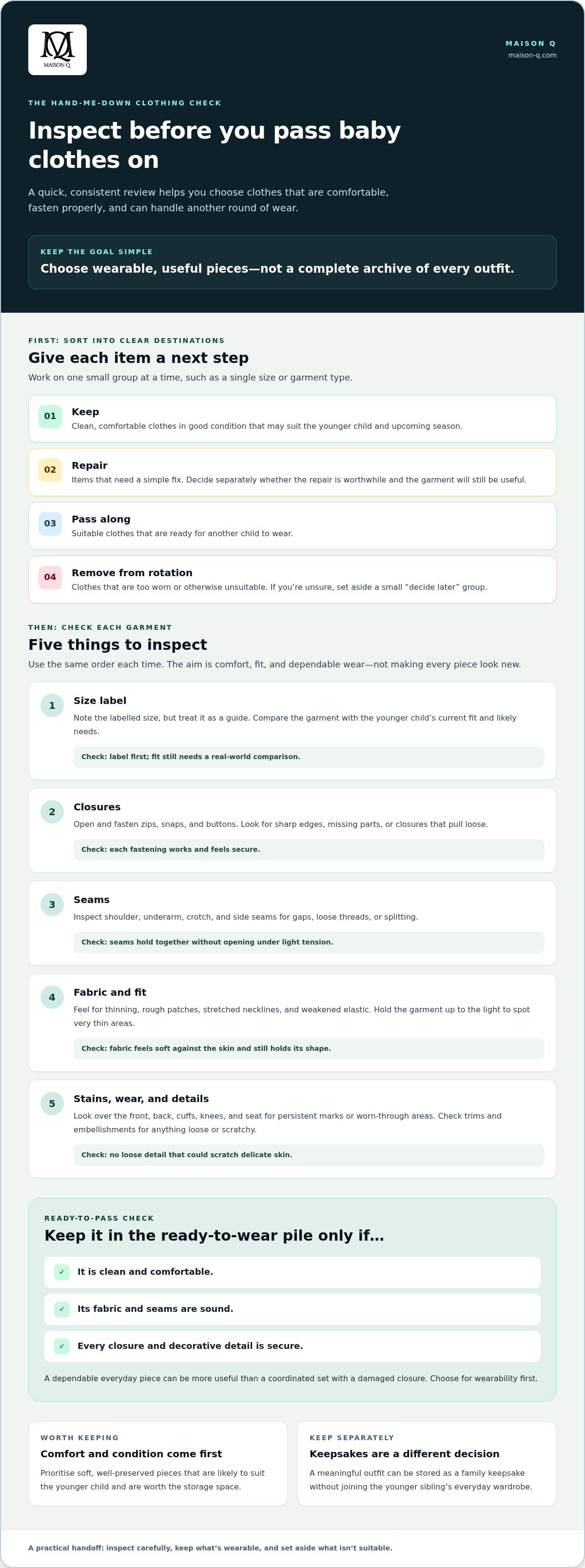
Choose one small sorting session instead of opening every box and drawer at once. You might begin with a single size or garment type, such as sleepsuits, and finish that group before moving on. Set up four destinations: keep, repair, pass along, and remove from rotation. Decide based on each garment’s condition, likely use, and suitability for the younger child, rather than pressure to save or use everything.
For example, keep a clean, comfortable piece if it may suit the upcoming season. Put an item that needs a simple fix in the repair group, then decide separately whether it’s worth mending. Set aside clothes that are too worn or otherwise unsuitable so they don’t drift back into the everyday pile. If you’re unsure, put the item in a small “decide later” group and revisit it after you’ve assessed what the wardrobe needs.
Make space for memories without keeping everything
Some garments matter for reasons beyond daily wear. Invite family members to choose a few meaningful keepsakes, such as a special first outfit, and store those separately from clothes intended for the younger sibling. A cherished piece can remain part of the family story without taking up space in the everyday wardrobe.
Sentimental value and wardrobe usefulness are different questions. A favourite outfit can be precious even if it’s stained, uncomfortable, or unlikely to suit the next child. No child should feel that their clothes are being taken away or that they must hand over a treasured item. Keep the conversation gentle and optional; adults can make the practical decisions.
Once you have a manageable group, assess each garment, compare its fit with the younger child’s needs, and prepare the keepers for storage. A clear handoff makes it easier to see what you already have and what, if anything, is missing.
How to sort and inspect baby clothes before passing them on
Give each garment a quick, consistent inspection. The aim isn’t to make every piece look new. It’s to decide whether it will feel comfortable, fasten properly, and hold up to another round of wear. A matching set is a bonus, but a dependable single garment is more useful than a coordinated outfit with a damaged closure.
Work through the checks in the same order each time:
- Size label: Note the labelled size, but treat it as a guide for the fit check.
- Closures: Open and fasten zips, snaps, and buttons. Look for sharp edges, missing parts, or closures that pull loose.
- Seams: Check shoulder, underarm, crotch, and side seams for gaps, loose threads, or splitting.
- Fabric: Feel for thinning, rough patches, stretched necklines, and weakened elastic that could affect comfort or fit.
- Stains and wear: Look over the front, back, cuffs, knees, and seat. Note persistent marks and areas that have worn through.
A garment is ready to pass on when it’s clean and comfortable, its fabric and seams are sound, and every closure or decorative detail is secure. Check small trims and embellishments, too. If anything feels loose or could scratch delicate skin, keep the item out of the ready-to-wear pile until it’s properly addressed.
Which baby clothes are worth keeping?
Prioritise pieces that feel soft against the skin and are in good working order. Give frequently worn clothes a closer look: repeated washing and movement can thin fabric, loosen elastic, stretch openings, or leave marks that don’t lift. Hold garments up to the light to spot very thin areas, and test fasteners gently. Keep pieces that are likely to suit the younger child and are worth the storage space.
A well-preserved outfit may still be less useful than a simple, comfortable everyday piece. Choose for wearability first, rather than trying to complete a set or keep every item from a particular size.
When should a garment leave the hand-me-down pile?
Set aside anything with damage that could affect comfort, fit, or reliable use. A broken zip, a seam that opens under light tension, or a loose decorative detail may make a garment unsuitable until repaired. Put repairable pieces in a separate pile, then decide whether the fix is straightforward and whether the item will still be useful afterwards. If it’s badly worn or the repair feels uncertain, remove it from the hand-me-down selection instead of storing it by default.
After the inspection, you’ll have a clearer view of what’s ready for another child. If you spot a gap in the baby’s everyday basics, Maison Q’s baby onesies in sizes 6M-1Y are one option to consider alongside the clothes you’re keeping.
Matching Hand-Me-Down Baby Clothes to Younger Siblings
A size label is a useful clue, not a promise that a garment will fit the next child the same way. Children grow at different rates, and clothes from different brands can have different shapes and proportions. Make the handoff practical by comparing each piece with something the younger child wears comfortably now, then checking how it sits and moves on their body.
Judge fit on the child, not the label alone: compare a hand-me-down with a garment that fits now, then check its length, openings, ease of movement, and comfort while the child sits, reaches, or crawls. Try clothes when it’s convenient, and don’t keep a piece in the active pile just because its tag suggests the right age.
Use fit and comfort rather than age labels alone
Start with a familiar outfit that fits the younger child well. Lay the hand-me-down beside it, or try the inherited piece on and look for tightness, excess fabric, or openings that gape. Check waistbands, necklines, sleeves, and leg openings. The garment should stay in place without pinching, restricting movement, or needing constant adjustment. If it fits comfortably today but may soon be outgrown, make a note to reassess rather than assuming it will follow the older sibling’s timeline.
| Garment type | Current fit check | Likely next use |
|---|---|---|
| Onesie | Check the body length, neckline, leg openings, and whether fasteners close without pulling. | Keep in the current rotation if it allows easy movement and comfortable changes. |
| Top or shirt | Check shoulder placement, sleeve length, and whether the neckline goes on and off comfortably. | Use for everyday dressing if it stays comfortable during play. |
| Bottoms or shorts | Check that the waistband sits securely without digging in and that the legs allow free movement. | Keep handy if the fit works with the child’s usual tops and routine. |
| Dress | Check the shoulders, chest, and openings, and make sure the child can move freely. | Set aside for suitable occasions if it’s comfortable but less practical for frequent changes. |
Plan around likely wear and wardrobe gaps
Once you’ve checked fit, group usable clothes by type and think about when they’ll be worn. Everyday pieces that are easy to change into may belong near the front of the drawer; a special outfit may be needed less often. Your family’s routine matters too. A garment that needs frequent adjusting or is awkward during changes may not be practical for daily wear, even if it fits.
Don’t assume the younger child will enjoy every colour, detail, or style the older sibling wore. Keep a balanced selection of comfortable, useful pieces, then notice what gets reached for over time. This lets the hand-me-down wardrobe reflect the new child’s needs rather than becoming a smaller copy of the first child’s.
How to clean, store, and organise baby clothes between siblings
Clean, thoughtfully stored clothes are easier to use when the next size is needed. Treat each garment’s care label as the guide for washing and drying. Fabric and construction vary, so a method that suits one piece may not suit another. Store clothes only when they’re completely dry, especially in Singapore’s humid climate, where trapped moisture can encourage mildew.
Prepare garments for storage
Wash each keeper according to its care label, then let it dry fully before folding. Before packing, check pockets for small items, fasten closures gently, and make sure size labels are readable. Keep anything awaiting repair out of the clean, ready-to-use group so it isn’t mistaken for something the baby can wear.
For longer storage, breathable fabric bags or boxes allow air to circulate. If you use a plastic container, lining it with acid-free tissue paper can help protect fabric from direct contact with the plastic. Avoid vacuum-sealing delicate pieces for long periods, as compression and limited airflow may affect the fibres. A dry, shaded storage spot is a practical choice.
Make the next handoff easy to retrieve
Sort ready-to-wear garments by the size shown on the label, then by type: onesies, tops, bottoms, and dresses. Add a clear label to each container, such as “6M-1Y, onesies” or “1Y-2Y, tops.” If a piece fits differently from its label, note that on a simple inventory rather than changing the original size information. Record useful details such as the garment type, labelled size, and any reason to reassess fit before wearing.
Store keepsakes separately from everyday clothes, so you won’t need to reopen them when looking for a practical outfit. Keep the next likely size near the front of the wardrobe or storage area, with later sizes behind it. This can save you from unpacking every container when the baby grows or the weather changes.
Choose breathable storage, keep labels visible, and return garments to their assigned group after checking them. A quick inventory can reveal where you already have plenty and where a useful piece is missing. For a versatile addition, Maison Q’s reversible children’s clothing gives you another option to consider alongside inherited clothes. Explore the reversible kids clothing guide for ideas on building a considered wardrobe.
How to build a younger sibling’s wardrobe from hand-me-downs and thoughtful additions
A useful wardrobe doesn’t need to be entirely inherited or entirely new. Start with the clothes you’ve sorted and make a short list of what’s ready to wear. This shifts the focus from the size of the pile to what the younger child can comfortably use in their everyday routine.
Group the keepers by garment type, then consider how each fits into a typical day. You might have plenty of tops but few bottoms that fit comfortably, or several special outfits but not enough easy-to-change-into pieces. Note the gap rather than shopping from memory. A useful addition is one that solves a real need in fit, function, or variety.
Decide what the hand-me-down wardrobe still needs
Compare the usable clothes with the child’s current routine: what gets worn often, what is comfortable for movement, and what is convenient for changes? Make a simple list of categories that feel short, such as everyday tops or well-fitting bottoms. Check the actual fit again before adding anything, since a stored garment may not suit the child as well as its label suggests.
Keep the plan flexible. As the younger sibling grows, their preferences and daily rhythm will become clearer. A piece that seems useful now may not become a favourite, while a previously overlooked garment may turn out to be just right. Add thoughtfully, then let real wear guide your next decisions.
Choose versatile additions with care
If a genuine gap remains, choose pieces that work alongside the inherited clothes rather than replacing them. Reversible clothing offers more than one look from a single piece, making it a versatile option for a considered wardrobe. Maison Q offers baby onesies in sizes 6M-1Y, along with reversible shirts and dresses in sizes 1Y-7Y. These pieces can complement hand-me-downs without needing to become the centre of the wardrobe.
For example, if the next size has comfortable everyday basics but few options for variety, one reversible piece may add another look while keeping the selection focused. If the inherited clothes already cover the child’s needs, there’s no reason to add more just to complete a set. The aim is a useful, personal wardrobe with room for well-loved hand-me-downs and only the additions that earn their place.
Maison Q’s reversible children’s clothing offers another way to extend wear and make considered fashion choices. If you’ve identified a genuine gap, explore Maison Q children’s clothing alongside the pieces you’re keeping.
Let the Next Chapter Take Shape
The first few weeks of dressing a younger sibling can teach you more than any carefully planned list. Notice which pieces are reached for, which feel comfortable through a busy day, and which stay folded away. Let those everyday observations shape the wardrobe over time. It doesn’t need to be complete before the baby arrives, and it doesn’t need to mirror an older sibling’s style.
That’s the heart of how to transition baby clothes to younger siblings: give useful pieces a new life while leaving space for the next child’s own rhythms and preferences to emerge. A thoughtful wardrobe can hold familiar favourites and a few fresh discoveries, chosen because they suit this child now.
If a considered addition would bring more choice to the drawer, explore Maison Q children’s clothing. Keep what works, add only what feels right, and enjoy watching this next little story unfold.
Frequently Asked Questions
Is it worth keeping baby clothes if another sibling is only a possibility?
Yes, if you have space and expect the clothes may be useful within a reasonable period. If you’re considering how to transition baby clothes to younger siblings, save a small selection of durable, versatile pieces rather than storing an entire wardrobe “just in case.” Label what you keep and choose a date to revisit the decision. If plans change, you can pass the garments on while they’re still in good condition.
Can siblings of different genders share baby clothes?
Yes. Clothes can be shared regardless of gender if they fit comfortably and suit the child’s needs. Consider the garment itself, not assumptions about who should wear a particular colour or print. A younger child may also have different preferences from their sibling, especially as they grow. Keep useful basics in rotation, and let the child’s comfort and taste guide which pieces become favourites.
What should I do with baby clothes that are too worn to pass on?
Don’t pass along clothes that are uncomfortable, badly damaged, or unreliable to wear. If a clean garment is made of sturdy fabric, you might cut it into household cleaning cloths; avoid using fabric with rough or loose details around babies. Otherwise, look for a textile recycling option that accepts clothing and follow its acceptance guidelines. If there’s no suitable route, dispose of it responsibly rather than donating it as wearable clothing.
How should I handle baby clothes with sentimental value?
Choose the pieces that hold the clearest memories and give them a purpose beyond sitting in a crowded drawer. You might photograph an outfit worn for a special occasion, write a short note about the moment, or display one cherished piece in a keepsake box. If the memory matters more than the garment itself, a photo and a few words can preserve the story without keeping every item.
How much of the older sibling’s baby wardrobe should I save?
There’s no fixed amount. Let your available storage and the younger child’s likely routine shape the selection. Think about whether you have enough suitable choices to dress the baby through an ordinary day, including a spare outfit, rather than aiming to preserve a particular percentage of the older child’s clothes. You can review the selection as the baby grows and learn which garment types your family reaches for most.
Can hand-me-down clothes make a thoughtful gift for a new baby?
Yes, a small, well-chosen group of hand-me-downs can be a personal and useful gift, especially when the clothes are clean, wearable, and clearly sorted. Ask the parents if they’d welcome pre-loved clothing, then include the labelled sizes and any helpful fit notes. A short card sharing a memory about one special piece can add warmth. Keep the gift focused, and leave out anything the recipient may not find useful.