

Scratch-Free Lining Dresses for Girls: 2026 Buying Guide
A pretty dress can still feel uncomfortable if seams, trims or a snug fit rub against the skin. When looking for scratch free inner lining dresses for girls, look beyond the fabric label and consider how the whole dress is made and how it moves.
Product photos rarely show every detail inside a dress. For a special occasion outfit she can enjoy wearing, check the construction as well as the style, and consider whether it will feel comfortable beyond the first try-on.
This guide explains how to compare lining materials, seams, fit and finishes, with practical checks to help you account for your child’s preferences and the occasion. As you browse Maison Q’s girls’ single-side dresses in sizes 8Y-16Y and fairy tulle dresses, use these comfort cues alongside the style that makes her feel most like herself.
Key Takeaways
- “Scratch-free” describes a personal comfort experience, not a guarantee based on a fabric label.
- Compare composition details and inside-view photos to assess lining, seams and trims, rather than relying on vague claims such as “soft.”
- When comparing scratch free inner lining dresses for girls, consider your child’s sensitivities and how the dress feels during movement.
- Balance comfort checks with the occasion, then explore Maison Q’s single-side dresses in sizes 8Y-16Y and fairy tulle dresses.
Scratch-Free Inner-Lining Dresses for Girls: What Comfort Really Means
“Scratch-free” describes how a dress feels to the child wearing it. It isn’t a standardised fabric guarantee. A dress may feel smooth in one area but bother a child where a seam, trim or edge touches the skin. Comfort depends on the garment’s overall construction and how it moves during sitting, walking and play.
The lining is the layer against the body wherever it covers. Its texture matters, as do the way its edges are finished and how it sits beneath the outer fabric. If the lining shifts, bunches or pulls as a child moves, it may feel different from one that lies smoothly. The general purpose of a lining is explained in Lining (sewing). For comfort, the garment’s construction and the wearer’s response matter most.
Seams can create raised ridges or exposed edges, while decorative trims may feel firm or rough against the skin. Fit matters, too. A close-fitting area can press a seam or embellishment against the body; a loose area may rub as the child moves. These details do not automatically make a dress uncomfortable, but they are worth considering together.
Why a lining can feel different from the outer fabric
The outer fabric gives a dress its look and structure, while the lining may be the layer felt most directly on covered areas. Differences in texture, seam placement and movement can make the inside feel very different from the outside. During a try-on, notice whether the lining stays in place and whether its edges or joins catch against the skin when your child bends, sits or lifts her arms.
What “scratch-free” can and cannot tell you
Think of “scratch-free” as a preference-led description, not a measurable certification or a promise that every child will find a dress comfortable. Composition details and clear inside-view photos can show useful clues about fabric and construction, but they cannot replace the child’s own feedback. That is especially important if she already dislikes particular textures, tags or close-fitting details.
Consider where your child tends to notice clothing first. She may be sensitive around the neckline, under the arms or at the waist, or especially aware of embroidery and decorative finishes. Preferences differ, so do not assume a fabric described as soft will feel the same to everyone.
- Look: Check whether seams and lining edges appear flat, neat and positioned away from areas your child finds sensitive.
- Notice: Consider where trims, fastenings or tags may touch the skin, not just how the dress looks from the front.
- Listen: Ask your child what feels pleasant or bothersome during a try-on. Her response is useful evidence.
“Soft” is an impression, not a guarantee of comfort against every child’s skin. When choosing scratch free inner lining dresses for girls, pair visible construction clues with your child’s known texture preferences. That is a more realistic starting point than relying on one label or an appealing product photo.
Which Dress-Lining Materials and Finishes Should Parents Compare?
A fibre name is a useful starting point, but it does not tell you everything. The way a lining is woven, finished and sewn into a dress can affect how it feels and moves. Treat cotton, polyester and satin as examples to compare, not as a universal comfort ranking or as specifications for any particular dress.
Look for specific fibre composition and care instructions in product descriptions. If a listing says only “soft lining,” it leaves important details unclear. A composition label tells you what the fabric is made from, while care guidance explains how to wash and maintain the garment.
| Example | Texture and breathability considerations | Questions to investigate |
|---|---|---|
| Cotton | Feel and airflow can vary with weave, weight and finish. | Is the lining composition specified? What care does it need? |
| Polyester | Surface feel and warmth can differ across fabric constructions. | Is the fabric lightweight or more substantial? How is it described? |
| Satin | Satin describes a weave, not a fibre. The surface may feel smooth, while fibre content and construction still matter. | Which fibre is used, and how does the lining sit against the skin? |
Fabric names alone cannot predict individual comfort. The same fibre may feel different in two garments, and children can have different texture preferences. Use the table to guide a closer look, rather than ruling a dress in or out based on its label alone.
How to compare fabric feel without assuming one fabric suits everyone
Compare the details available: fibre content, fabric description and care information. One child may like a smooth surface, while another prefers a different feel. Breathability also depends on the fabric’s construction and how the lining is used in the dress. If you can see or handle the garment, notice its weight and drape as well as its initial feel.
Seams, hems and trims: details hidden inside the dress
Look beyond the main lining panel. Raised seam allowances, label edges, hems and decorative trims can touch the skin as a child moves. An inside-view photo may show where these details sit and whether any areas look bulky or exposed. Check the neckline, underarms and waist, then compare what you see with your child’s known sensitivities.
These checks can make browsing Maison Q’s girls’ dress categories more considered. Compare the visible details with the occasion and your child’s preferences instead of relying on a fabric name or polished product description alone.
Does a “Soft” Lining Guarantee a Scratch-Free Dress?
No. “Soft” describes an impression, not every part of a garment or how it will feel to every child. A lining may feel smooth to the touch, yet a seam, label or trim could become noticeable against the skin. The word alone does not show how those details are finished or how the dress feels during a full afternoon of wear.
Online descriptions and photographs can still help you make a considered choice. Fibre composition gives more specific information than a general comfort adjective, while care instructions help you look after the garment. Inside-view photos may show where the lining meets the neckline, waist or decorative details. Together, these clues build a more complete picture, but they cannot replicate wearing the dress.
Which product details are useful when shopping online?
Start with the listed fibre composition and care information, then look for clear views of the garment’s interior. Check whether images show the neckline, waist seams and points where trims meet the lining. These views may help you spot details to consider for your child, although a photo cannot reveal every texture or show how the fabric moves when worn.
- Composition: Look for named fibre content rather than relying on “soft” or “comfortable” alone.
- Construction: See whether interior views reveal seam edges, labels and trim placement.
- Care: Read the washing instructions so you know how to maintain the garment.
If a listing does not include a close-up of the inside, that is not proof of poor construction. It simply means you have less visual information to assess. Use the details available, while remembering that limited photos are neither a guarantee nor a warning.
Why a child’s own preferences matter
Children can respond differently to the same fabric or finish. One may barely notice a decorative detail, while another may be bothered by a label or seam in the same spot. Think about what your child already enjoys wearing and which textures or clothing features she tends to avoid. Those familiar patterns can guide your choice more meaningfully than a claim that one material suits everyone.
Fit and movement add another layer. A seam that feels unobtrusive while standing may press or rub when a child sits, bends or raises her arms. A garment that shifts as she moves can also make a trim more noticeable. If possible, let her move naturally during a try-on and ask about specific areas, rather than only whether she likes the dress overall.
For scratch free inner lining dresses for girls, treat “soft” as one clue, not the final verdict. Combine product details you can observe with what your child says and how she moves in the dress. Online information can narrow the choices; her own comfort helps you decide which one feels right for her.
How to Choose a Comfortable Lined Dress for a Girl
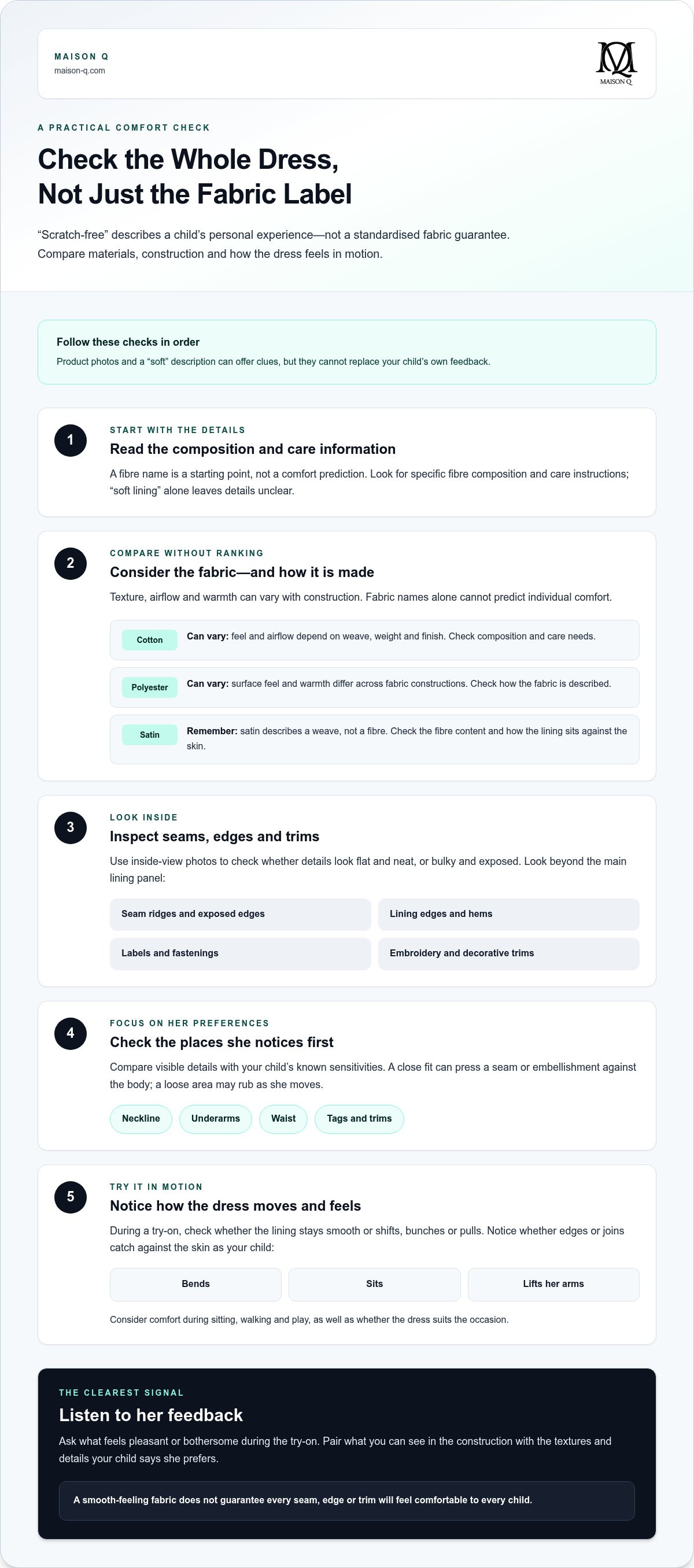
A simple process can make dress shopping feel less like guesswork. Start with what your child already finds comfortable, then review the garment, consider the fit and decide whether its style suits the occasion. This keeps practical needs in view while leaving room for the fun of choosing something special.
A quick comfort checklist before choosing
Use product details and available photos as clues, not as a substitute for wearing the dress. Review the listed fabric composition and care instructions, then look for views of the lining, seams, labels and decorative details. Consider how freely your child will need to move and how long she may wear the dress. A missing close-up does not prove there is a problem; it simply leaves that detail unseen.
- Note sensitivities. Think about what your child already avoids, such as labels, certain textures, close necklines or embellishments that brush against her skin. These familiar preferences are a useful starting point when comparing scratch free inner lining dresses for girls.
- Inspect the available details. Read the fabric and care information, and study any inside views. Check the neckline, underarms and waist, where seams or trims may sit close to the body. Photos show visible construction, but cannot reveal exactly how fabric feels.
- Consider fit and movement. Use the garment’s own size information rather than guessing from age alone. Compare any listed measurements with your child’s measurements, and follow the guidance provided for that dress. Sizing can differ between brands and styles. If she tries it on, check that she can sit, walk and raise her arms without feeling restricted.
- Match the occasion. Think about the setting, expected activities and likely wear time. A lively celebration may call for room to move, while a formal gathering may inspire a dressier silhouette. Comfort and appearance can work together when the dress suits both the child and the event.
Match the dress to the occasion and age range
A full skirt may suit a playful celebration, while a formal event might call for a more polished look. Keep your child’s comfort needs in mind whichever style you choose. For party inspiration, explore kids’ birthday party dresses. For older girls, teen girl formal dresses offer occasionwear ideas. Maison Q’s single-side dresses are offered in sizes 8Y-16Y, alongside fairy tulle dresses.
Put your checklist to work as you explore Maison Q girls’ dresses. Consider which styles may suit your child, her preferences and the occasion ahead.
Explore Maison Q Dresses with a Comfort-First Eye
A memorable dress brings together a little wonder and the ease to enjoy the moment. Maison Q offers girls’ single-side dresses and fairy tulle dresses. Its single-side dresses are available in sizes 8Y-16Y. These categories give families different looks to explore; the best choice depends on the child, the occasion and the garment details she finds comfortable.
Let her preferences guide the search. Perhaps she loves a skirt that moves when she twirls, or feels happiest in a simpler silhouette. Think about what the event involves, too. Sitting through a family gathering, moving around at a party or dressing up for a special celebration can call for different practical considerations. The loveliest choice is one she can enjoy wearing, not just admire in a photo.
Find a dress style that suits her moment
Fairy tulle dresses offer a special-occasion look, while the single-side dress category includes options for older girls in sizes 8Y-16Y. As you browse, bring your child’s comfort cues into the decision: which details does she enjoy, and what tends to distract her once she is dressed? Her answers can help narrow the choice without taking the magic out of it.
Consider the whole occasion, from how long she may wear the dress to whether she will be moving freely or sitting for much of the event. Choose a style that suits the celebration and her own idea of what makes an outfit special. Invite her into the decision where you can. A favourite look can feel even more meaningful when she has a say in it.
Bring the buying checklist to your final choice
Before deciding, gather the details rather than relying on one appealing adjective. Look for the listed fabric composition and any available information about the lining. Use interior views to examine visible seams, labels and places where trims meet the fabric. Then review the size information and consider how the fit may support her usual movement.
- Composition: Note which fibres are listed rather than assuming a general description tells the whole story.
- Construction: Use available inside views to inspect lining coverage, seams and decorative details.
- Fit: Follow the garment’s size information and think about how she will sit, walk and move.
- Preference: Remember that her response to a texture or finish is personal.
A product description can share useful clues, but it cannot guarantee an individual sensory experience. Keep that distinction in mind as you look for scratch free inner lining dresses for girls. The goal is not to expect perfect comfort from a label, but to make a thoughtful choice using the information available and the child’s own preferences.
For a dress for her next special moment, explore Maison Q dresses with this comfort-first checklist in mind. Paying attention to the details can help make the choice personal, considered and ready to become part of a happy memory.
Let Her Help Choose the Dress for the Moment
A dress can become part of the story she remembers: the celebration, the people around her and the moment she felt ready to twirl. Make the final choice a discovery you share. Invite her to pick the look that feels most like her, then give her space to say what feels comfortable as she moves and wears it.
Keep your search for scratch free inner lining dresses for girls grounded in her preferences, not a promise that any label or fabric will suit every child. The details you have learned to notice can help you make a thoughtful choice, while her voice makes it personal. Style should invite her to enjoy the occasion, not leave her adjusting a dress throughout the day.
Ready to find a look for her next special moment? Explore Maison Q dresses and discover a little occasion-day wonder.
Frequently Asked Questions
Does a soft lining mean a girl’s dress will feel scratch-free?
Not necessarily. “Soft” is a broad impression and does not account for every seam, trim, fit or child’s personal preference. Before choosing, check the listed fabric composition and any photos showing the inside of the dress. Compare those details with textures your child already enjoys, such as the feel of a favourite everyday top. A label offers a clue, but cannot guarantee how an individual child will experience the dress.
Can dress seams or labels feel scratchy even when the fabric is smooth?
Yes. Seams or labels may be noticeable to some children even if the main fabric feels smooth. A neckline edge, a hem near the waist or a decorative detail can touch the skin or shift as the child moves. Inside-view photos may help show where these features sit. Consider your child’s familiar sensitivities, too. Responses vary, so one construction detail cannot predict how every child will feel.
How can I check a dress lining when shopping online?
Read the fibre composition and care information, then look for clear images of the garment’s interior. Check whether the neckline, waist seams, hems and places where trims meet the lining are visible. If the listing does not show these areas, treat that as a limit on what the photos can tell you, not proof of a problem. Your child’s experience with similar textures can help you weigh the available information.
Are natural-fibre linings always more comfortable for children?
No fibre is automatically the most comfortable choice for every child or dress. A fabric’s texture and weave, the garment’s fit and the way its seams are finished can all affect how it feels. Compare the listed composition with your child’s past preferences. For example, notice whether she tends to choose or avoid similar-feeling clothes in her everyday wardrobe. A broad material label alone cannot promise that she will find a particular lining comfortable.
What should I look for in a dress for a child with sensitive skin?
Start with what your child already wears comfortably, then consider the composition, lining coverage, seams, labels and trims in a new dress. If she often notices tags, for example, pay attention to how they appear in the available product details. Photos can reveal some construction, but not how a garment feels when worn. Keep her involved where practical and choose with her particular preferences in mind. No single fabric or style suits every child.
Can I tell from a product photo whether a dress will feel comfortable?
A product photo can show clues such as lining coverage, seam placement and visible trims, but it cannot reliably reveal softness, flexibility or how the dress feels in motion. Treat images as helpful evidence, not proof. Pair what you can see with the written composition and care details, and consider whether the fit suits the planned occasion. Your child’s past reactions to similar clothing can help guide a more personal choice.