

How to Make Kids’ Clothes Last Longer Across Siblings
What if the clothes you carefully save are faded, misshapen, or outgrown by the time a younger sibling needs them? Learning how to make kids clothes last longer across siblings takes more than choosing sturdy pieces. Care, fit, and timing all matter.
It’s frustrating when a favourite outfit shrinks in the wash, a stain sets in, or a box of hand-me-downs sits forgotten until the clothes no longer fit. A simple routine can help keep everyday garments comfortable and ready for another turn.
This guide shares a practical system for choosing clothes with lasting details, washing and drying them gently, tackling small repairs, and sorting pieces worth keeping. You’ll also learn how to clean, label, and store hand-me-downs so they’re easier to find when the next child needs them. Reversible clothing can offer more styling flexibility, too, but care and a suitable fit still determine whether a garment is ready to pass along.
Key Takeaways
- Learn how to make kids clothes last longer across siblings by checking condition, comfort, fit, and the next child’s needs before passing a garment along.
- Use care-label instructions to create a wash-and-store routine that helps clothes stay ready for another season.
- Deal with stains and small repairs promptly, and reassess items rather than saving every garment automatically.
- Make hand-me-downs easier to find by sorting them into clear next steps and labelling stored pieces by size and season.
- Check fit and comfort again at handover, since a well-kept garment still needs to suit the child who’ll wear it.
How to Make Kids’ Clothes Last Longer Across Siblings: Start with Wear and Fit
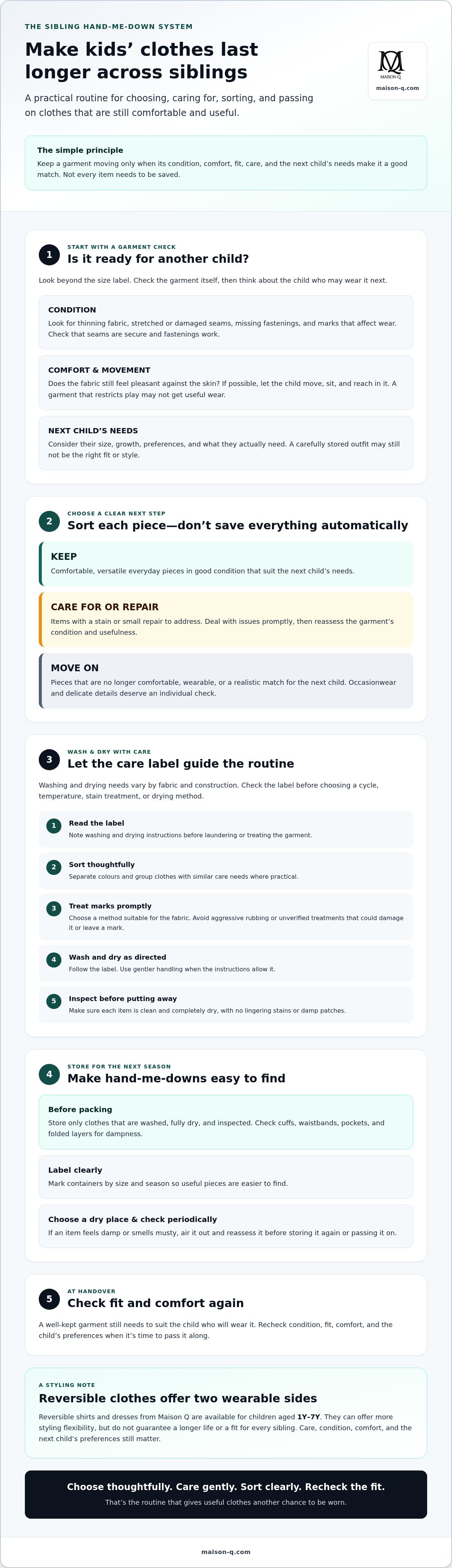
Kids’ clothes last longer across siblings when they stay comfortable, fit the next child, and remain in good enough condition for useful wear. The goal isn’t to keep every garment indefinitely. Let each piece serve one child while it fits, then decide whether it’s ready for another, needs attention, or should move on.
That decision depends on more than the size label. Check for thinning fabric, stretched or damaged seams, missing fastenings, and marks that affect wear. Then consider how the garment feels: does it allow easy movement, sit comfortably, and suit the next child’s needs? Siblings can differ in size, growth patterns, and preferences, so a carefully stored outfit may still not be the right hand-me-down.
Which kids’ clothes are most likely to work as hand-me-downs?
Start with versatile everyday pieces that are comfortable, easy to move in, and simple to layer. Before saving one, check that the seams are secure, fastenings work, and the fabric still feels pleasant against the skin. If possible, have the child move, sit, and reach in it. A garment that restricts play is less likely to get useful wear from its next owner.
Assess occasionwear and delicate details individually. A special dress may be in lovely condition but not suit the next child’s taste or an upcoming event. Keep it only if there’s a realistic use for it, rather than assuming every item belongs in the hand-me-down pile.
How can you make a garment easier to pass on?
Check the care label before the first wash, and keep its care information with the garment if the label may become hard to read. Follow the washing and drying instructions, since care needs vary by fabric and construction. Attend to stains promptly, but avoid aggressive rubbing or unverified treatments that could damage the material or leave a mark.
Thoughtful design can add styling flexibility, too. Reversible shirts and dresses from Maison Q, available for children aged 1Y-7Y, provide two wearable sides to choose from. That doesn’t guarantee a longer life or a fit for every sibling. Condition, comfort, care, and the next child’s preferences still matter. This balanced approach is central to how to make kids clothes last longer across siblings: choose with the next wearer in mind, then let the garment’s real condition guide its next step.
Wash, Dry, and Store Kids’ Clothes to Protect Them Between Siblings
Following the garment’s care label is the safest starting point because washing and drying needs vary by fabric and construction. A steady routine helps prevent avoidable wear and leaves each piece fresh for its next turn. For how to make kids clothes last longer across siblings, treat storage as part of garment care, not an afterthought.
How should you wash and dry clothes you plan to pass down?
Before laundry day, sort clothes by colour and care requirements where practical. Check each label before choosing a wash cycle, water temperature, or drying method. If the instructions allow gentler options, avoid unnecessary heat and rough handling that may affect a garment’s shape or finish.
Use this simple sequence:
- Read the label. Note the washing and drying instructions before treating or laundering the item.
- Sort thoughtfully. Separate colours and group garments with similar care needs where practical.
- Check for stains. Treat marks promptly using a method suitable for the fabric. The Texas A&M AgriLife Extension Service guide to Removing stains offers practical laundry advice. Check the garment label before trying a treatment.
- Wash and dry as directed. Follow the label, and choose gentler handling when the instructions allow it.
- Inspect before storing. Make sure the garment is clean and completely dry, with no lingering stains or damp patches.
How can you store hand-me-downs so they are ready to wear?
Only pack away clothes that have been washed, fully dried, and inspected. Damp garments can develop unwanted odours and fabric damage, so check cuffs, waistbands, pockets, and folded layers before putting clothes into clean, dry storage.
Label each container by size and season so you can find useful pieces without relying on memory. Keep it in a dry place, and check stored clothes periodically. If an item feels damp or smells musty, air it out and reassess it before it goes back into storage or on to a child.
Reversible shirts and dresses can offer extra styling flexibility, but they still need label-led care and a suitable fit to be passed down comfortably. If you’re considering reversible pieces for your family, explore Maison Q reversible clothing as one option alongside a thoughtful care routine.
Treat Stains and Small Repairs Before They Shorten a Garment’s Life
A small mark or loose thread can be easy to overlook during a busy day, but it may be harder to manage if left until laundry or storage time. A quick check before washing helps you choose a suitable next step without risking damage to the fabric. This kind of thoughtful upkeep is part of how to make kids clothes last longer across siblings.
What should you do when a child’s clothes get stained?
First, check the care label and identify the stain as best you can. The right approach depends on both the mark and the garment, so avoid applying a treatment simply because it worked on another item. If you’re considering an unfamiliar method, test it on a discreet area when appropriate and check for any change in colour or texture. Don’t rub aggressively, since that can stress delicate fibres or spread the mark.
Avoid using heat to dry or iron an untreated stain unless the garment’s care instructions support it, since heat may make some stains harder to remove. For general guidance on sorting laundry and reading care labels, the American Cleaning Institute’s laundry basics can be a helpful reference. Always let the garment label guide its care.
Which small clothing repairs are worth doing before handover?
Look over the garment in good light. A loose button, a seam that’s beginning to open, or a small section of hem coming undone may be manageable if you can repair it neatly and securely. Check fastenings, too, and make sure there are no sharp or loose parts that could make the garment uncomfortable or unsafe to wear.
Choose simple repairs only if you have the skill to complete them well. If damage is extensive, consider whether a professional repair is appropriate, or whether the garment should be passed on for responsible textile disposal instead. Don’t store an item in the hope that a future sibling will fix it.
Before packing a garment away, inspect:
- Stains or marks that still need attention
- Holes, thinning areas, or worn fabric
- Seams and hems that may need repair
- Buttons, zips, and other fastenings
- Comfort, including anything that could scratch, pinch, or restrict movement
A piece is ready for its next chapter when it’s clean, comfortable, and sound enough to wear. If you’re uncertain, set it aside to reassess rather than adding it to the hand-me-down box by default.
Build a Simple Sorting System for Clothes Your Next Child May Wear
A hand-me-down box is most useful when it contains clothes someone can realistically wear, not every piece the family has outgrown. Make decisions in small batches, such as one drawer or one size at a time. For each garment, consider its condition, likely fit, comfort, and whether the next child would enjoy wearing it. A sibling’s age or size can offer clues, but it can’t predict their preferences or exactly when they’ll need the item.
How do you decide what to keep, repair, or pass on?
Use three clear choices: keep for a sibling if the garment is clean, wearable, comfortable, and likely to fit; repair or reassess if a practical, safe repair could make it usable; or pass on responsibly if it’s still wearable but unlikely to suit the next child. If it’s badly damaged or uncomfortable, don’t keep it just because it once belonged to a sibling.
Try this quick checklist as you sort:
- ☐ Is it clean and in wearable condition?
- ☐ Are there any stains, holes, or loose seams to address?
- ☐ Do the fastenings work, and does the garment feel comfortable?
- ☐ Is the next child likely to wear it, given their expected fit and preferences?
- ☐ Should it be kept, set aside for repair, or passed on?
If you’re unsure about fit, set the item aside to check again closer to handover rather than assuming it will suit. This simple sorting habit makes how to make kids clothes last longer across siblings a manageable routine, not a growing pile of maybes.
How can you make stored clothes easy to find later?
Use clear labels that name the size, season, and garment category, such as “size 4, warm-weather tops.” Group similar items together and keep a short note on what’s inside each box. An inventory only helps if it’s easy to update, so a simple label or list is often more useful than a detailed catalogue. Recheck the contents before handover, since fit, comfort, and preference can change by the time a sibling is ready to wear them.
Versatile details can be part of your sorting decision, too. Reversible designs offer two sides for styling, but they still need good care and a suitable fit. For more on the idea, read this reversible kids’ clothes guide. If you’re exploring this design option, browse Maison Q reversible shirts and dresses.
Pass Kids’ Clothes to the Next Sibling at the Right Time
A garment is ready for its next wearer when it suits the child who needs it now, not simply because it has been stored in the right size box. Growth and handover timing can be unpredictable, so reassess each piece just before it moves from one wardrobe to another. A quick check helps you catch changes that storage alone can’t reveal.
What should you check before a sibling wears a hand-me-down?
Look over the garment in good light. Check the seams, buttons and other fastenings, any remaining stains, and whether the fabric has changed shape or feel. Then let the child try it on: sleeves and hems should sit comfortably, and the garment should allow easy movement without pinching or restricting play. A size label is a useful clue, but it isn’t a substitute for checking fit.
If the item has been stored for a while, wash it according to its care label and make sure it’s completely dry before wear. Recheck for a loose seam or fastening after washing. If it needs a small repair, make it before the garment enters the new wardrobe, rather than leaving the next child with a surprise task.
A well-timed hand-me-down can fill a wardrobe gap and may mean fewer replacement items are needed. That depends on what fits, feels comfortable, and is actually worn, so treat it as a possibility rather than a guaranteed saving.
How can reversible clothes fit into a sibling wardrobe?
When both sides are clean, comfortable, and wearable, reversible clothing offers two styling options in one garment. That flexibility can appeal to a new wearer, but it doesn’t guarantee the piece will fit a future sibling or suit their preferences. Check each side and the garment’s overall condition before passing it on.
For a closer look at the design idea, read this reversible kids’ clothes guide. Maison Q offers reversible shirts and dresses for children aged 1Y-7Y, alongside other children’s clothing. Explore the Maison Q online shop to see its clothing and reversible designs.
Ultimately, how to make kids clothes last longer across siblings is about choosing the right moment for each handover. Let condition, comfort, fit, and the child’s preferences guide the decision, and pass the garment along only when it’s ready for its next chapter.
Give Every Garment a Thoughtful Next Chapter
Learning how to make kids clothes last longer across siblings comes down to a few considered choices: follow each care label, deal with stains and small repairs before they worsen, and sort clothes by condition and likely fit. Before handover, check comfort and let the next child’s needs guide what stays in the family wardrobe.
Not every saved piece will suit every sibling, and that’s all right. Keeping only clothes that are wearable and welcome makes hand-me-downs easier to find and more likely to be worn. Reversible designs can bring extra styling flexibility, while care and fit still determine whether a garment is ready for another child.
Maison Q offers reversible shirts and dresses alongside single-side children’s clothing, with a range that spans baby onesies through dresses for older children. Explore Maison Q’s children’s clothing and reversible designs as you build a thoughtful wardrobe for your family.
Frequently Asked Questions
How do you keep children’s clothes in good condition for younger siblings?
Follow each garment’s care label, treat stains promptly with fabric-appropriate methods, and avoid heat or rough handling if the instructions advise against them. Repair small damage when it’s safe and practical. Before storage, wash and dry clothes fully, then label them by size and season. This routine supports how to make kids clothes last longer across siblings, but check fit, condition, and comfort again before each handover.
Should you wash hand-me-down clothes before storing them?
Yes, wash clothes before storing them so they’re clean and easier to inspect, following the care label for each item. Make sure every garment is completely dry before placing it in clean, dry storage. Label containers by size and season for easy sorting. When you bring clothes out again, look for marks, damage, odours, or changes in shape, then check that each piece fits comfortably before a child wears it.
How do you remove stains from kids’ clothes without damaging them?
Check the care label and identify the fabric and stain before choosing a treatment. Avoid using one method for every mark, rubbing aggressively, or applying heat unless the garment instructions support it. If you’re trying an unfamiliar product or technique, test it on a discreet area when appropriate. If the stain remains, pause before trying stronger treatments and consider seeking professional advice, especially for delicate fabrics or garments with special care instructions.
What clothes are best to save for a younger sibling?
Save clothes that are clean, comfortable, in good condition, and likely to suit the next child’s size and needs. Versatile everyday pieces that are easy to layer may be practical, while delicate details and occasionwear call for an individual assessment. Don’t keep an item simply because it once fit an older sibling. Check its condition and safety, then consider whether the next child is likely to feel comfortable and want to wear it.
Can reversible kids’ clothes be passed down to another sibling?
Yes, reversible clothes can be hand-me-downs if they’re in good condition and fit the next child comfortably. When both sides are wearable, the design offers two styling options. It doesn’t guarantee a longer lifespan or a suitable fit for another sibling. Before storing or passing on the garment, check its care instructions, seams, fastenings, and both sides, then let the next child try it on to assess comfort and movement.
How should you store kids’ clothes between siblings?
Wash and dry each item according to its care label, then inspect and sort clothes by size, season, or category. Store them clean and completely dry in a clean, dry place, and label each container clearly so you can find pieces later. Check stored garments periodically. Before handover, reassess their condition and fit, since time in storage and a child’s needs can change whether an item is ready to wear.
Is it worth repairing children’s clothes before passing them on?
A small repair can be worthwhile if the garment is otherwise wearable, comfortable, and likely to suit the next child. Check buttons, seams, hems, and fastenings, and repair them only if you can do so safely and securely. If the damage is extensive or the item is no longer comfortable or suitable to wear, don’t store it indefinitely. Consider a responsible alternative for the garment instead.