

How to Dress Baby for Humid Weather: The Complete 2026 Guide
Did you know an infant's body temperature climbs three to five times faster than an adult's when thick moisture hangs in the air? Figuring out how to dress baby for humid weather often feels like a delicate balancing act. One moment you are embracing the sun-drenched, balmy outdoors; the next, you are ducking into brisk, shivering air conditioning.
It's completely natural to worry about prickly heat rash flaring on soft skin or to second-guess how many layers your baby truly needs. You want featherlight, sweat-free days where your little adventurer stays blissfully content. This guide shares everything you need to maintain optimal body temperature and soothe tender skin through high humidity. Ahead, discover whisper-weight natural fabrics, clever everyday layering routines, and safe sleep attire designed to keep your little one calm, breezy, and comfortable from morning play to restful nights.
Key Takeaways
- Understand how heavy moisture impacts delicate cooling systems, and learn the subtle physical cues that signal when your infant needs immediate relief.
- Discover why featherlight, open-weave natural fabrics protect sensitive skin better than synthetics by encouraging continuous, refreshing airflow.
- Follow a clear step-by-step approach on how to dress baby for humid weather, from checking the daily heat index to choosing breezy minimalist layers.
- Seamlessly manage sudden indoor-outdoor temperature swings to prevent damp-skin chills when stepping into crisp air conditioning.
- Build a charming, fuss-free warm-weather capsule centered on soft baby onesies and lightweight essentials designed for easy play and comfort.
Understanding Baby Thermoregulation in High Humidity
High humidity transforms the atmosphere into a warm, invisible blanket. While a gentle breeze normally whisks perspiration away from the skin, saturated air halts this natural cooling process entirely. For little ones, whose sweat glands are still finding their rhythm, sticky afternoons present a unique physiological hurdle. Mastering how to dress baby for humid weather begins with understanding this delicate internal balance.
How Humidity Alters Infant Temperature Control
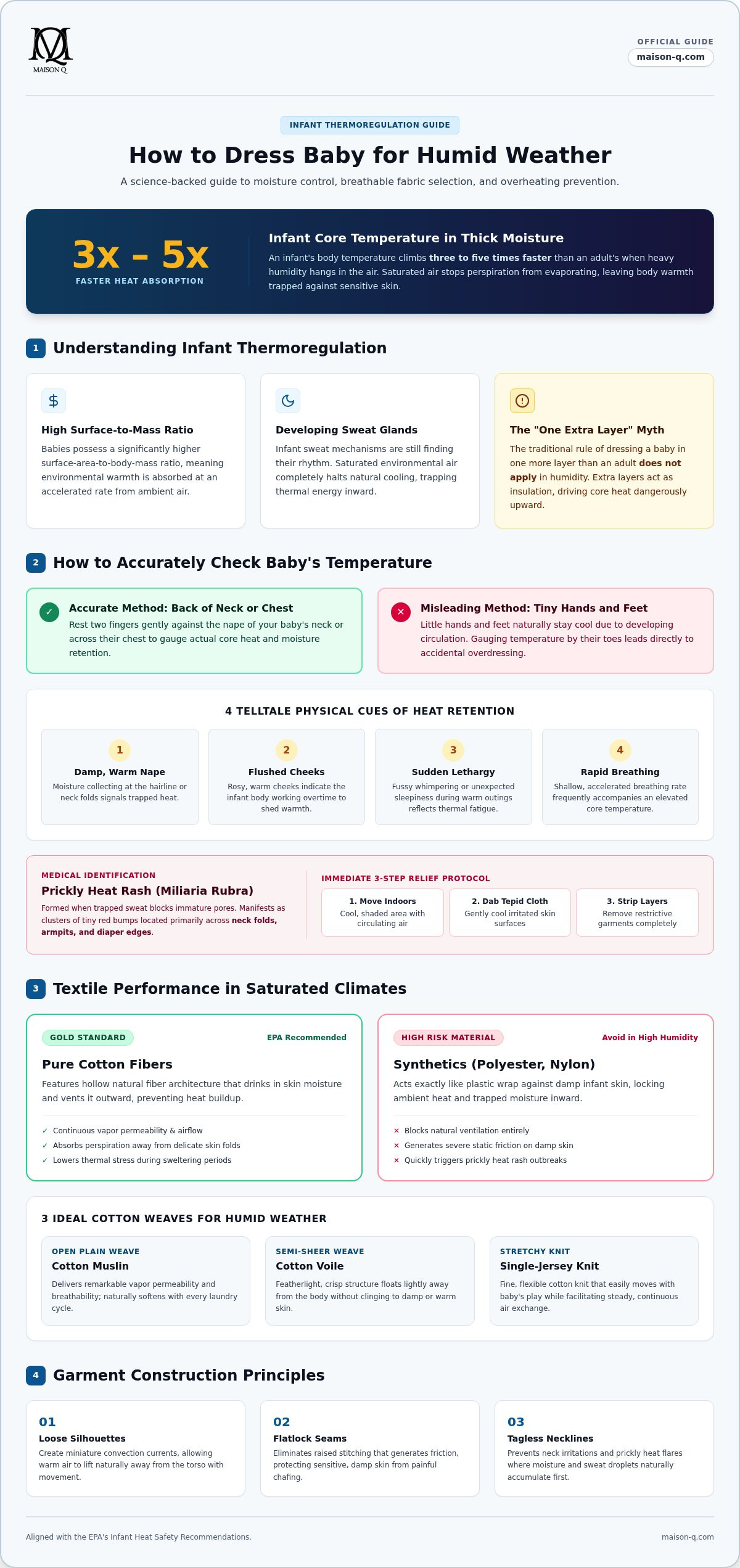
Adult bodies cool down effortlessly through perspiration. Understanding how thermoregulation works reveals why babies face a distinct disadvantage; when ambient air carries peak moisture, sweat cannot evaporate, leaving warmth trapped against their delicate skin. An infant's higher surface-area-to-body-mass ratio means they absorb environmental heat rapidly. When ambient moisture prevents heat dispersal, babies experience thermal stress, an uncomfortable state where core warmth builds up faster than their immature system can release it.
This reality completely upends the traditional parenting wisdom of dressing an infant in one more layer than an adult. In muggy climates, that extra layer acts like insulation, trapping humidity and driving internal temperatures upward. Simplicity is essential.
Spotting the Early Signs of Overheating and Heat Rash
Babies communicate their discomfort through quiet physical cues before tears ever arrive. Because tiny hands and feet often stay cool due to developing circulation, gauging comfort by tiny toes leads to accidental overdressing. Instead, rest two fingers gently against the back of your baby's neck or across their chest.
Watch for these telltale signals that heat is building up:
- A damp, warm nape: Moisture gathering at the hairline or neck folds indicates heat retention.
- Flushed cheeks: Rosy, warm cheeks often signal the body working overtime to shed warmth.
- Sudden lethargy or irritability: Fussy whimpering or unexpected sleepiness during warm outings suggests thermal fatigue.
- Rapid, shallow breathing: An increased respiratory rate often accompanies an elevated core temperature.
When trapped sweat blocks tiny, developing pores, prickly heat rash, also known as miliaria rubra, emerges as clusters of tiny red bumps. It commonly blossoms across the neck folds, armpits, and diaper edges. Knowing how to dress baby for humid weather means reacting promptly the moment these signs appear. Move your little one into a cool, shaded space with circulating air. Gently dab their skin with a tepid, damp cloth, and strip away restrictive garments to let their soft skin breathe freely.
Choosing the Best Breathable Fabrics for Humid Climates
Selecting the right textiles feels like choosing a cool summer breeze to wrap around your little explorer. When the air is thick with humidity, fabric composition alone isn't enough; the structure of the weave determines whether heat escapes or stays locked against silky skin. Knowing how to dress baby for humid weather means pairing the right fibers with airy, open textures.
Natural Fibers vs. Synthetic Fabrics
Pure cotton remains the gold standard for warm, damp days. Its hollow natural fibers drink in skin moisture and release it outward, keeping clammy discomfort at bay. In contrast, synthetic textiles like polyester and nylon act like plastic wrap. They block airflow, generate static friction against damp skin, and quickly trigger prickly heat flares. Aligning with the EPA's infant heat safety recommendations, dressing children in lightweight, unrestrictive natural materials helps prevent dangerous heat accumulation during sweltering periods.
Weave Weights and Garment Construction
Two garments made from the same fiber can behave entirely differently based on how the threads intertwine. Dense canvas or heavy interlock cottons choke off ventilation, whereas open weaves invite constant airflow:
- Cotton Muslin: An open, plain weave that gets softer with every wash, offering remarkable vapor permeability.
- Cotton Voile: Featherlight and crisp, this delicate semi-sheer weave floats away from the body without clinging.
- Single-Jersey Knit: A fine, stretchy cotton knit that moves effortlessly with baby while allowing steady air exchange.
Loose silhouettes are vital. They create miniature convection currents, allowing warm air to lift naturally away from the torso with every kick and roll. Look for thoughtful details like flatlock seams and soft tagless necklines. Damp skin is remarkably prone to chafing; raised stitching can turn an otherwise joyful outing into an itchy struggle.
For parents refining how to dress baby for humid weather, choosing premium natural staples like airy baby onesies crafted from breathable cotton ensures sensitive skin stays protected, sweat-free, and ready for imaginative play.
How to Dress Baby for Humid Weather: Step-by-Step Guide
Mornings in warm climates require a mindful routine. Before reaching into the nursery drawer, check the heat index rather than raw temperature alone. High relative humidity makes 84°F feel significantly hotter to a baby's sensitive system. Planning your routine around five clear steps simplifies how to dress baby for humid weather, keeping every day light and fuss-free.
Daytime Outfits: The Minimalist Base Layer Approach
Begin with a single, whisper-weight base layer. A breathable short-sleeve or sleeveless baby onesie crafted from soft natural cotton serves as the ultimate daytime essential. It protects tender skin from friction while leaving arms and legs exposed to cooling room breezes. On outdoor strolls, pair the onesie with airy unisex kids shorts featuring gentle, non-binding waistbands for effortless diaper changes and generous lower-body ventilation.
Skip socks and shoes entirely. Little feet contain dense vascular networks that radiate excess warmth away naturally. When stepping outdoors into indirect sunshine, top off the outfit with a breathable, wide-brimmed cotton sun hat featuring at least a three-inch brim to shade delicate faces and necks.
Dressing for Humid Naps and Overnight Sleep
Evening humidity can disrupt restful slumber if bedding holds onto moisture. If the nursery rests at or above 75°F (24°C), dress your little dreamer in an ultra-light 0.2 to 0.5 TOG sleep sack paired with only a diaper or short-sleeve bodysuit. In sultry spaces without climate control, a simple cotton onesie or diaper alone provides the safest, coolest sleep environment. Position a quiet fan across the room, angled toward a distant wall rather than directly at the crib, to keep stale air circulating gently through the night.
Stroller and Car Seat Travel Precautions
Outdoor outings call for extra vigilance. Never drape a muslin cloth or blanket across your stroller canopy; tests reveal this creates an accidental greenhouse effect, spiking temperatures by up to 21°F in just 20 minutes. Instead, use an adjustable clamp-on parasol and clip a small, baby-safe stroller fan to the frame.
Because dense car seat foam traps heat against a baby's back, place a breathable 100% cotton insert beneath them. If their clothing becomes damp with perspiration mid-journey, swap it immediately for a fresh one. A dry base layer is the best defense against midday chills and chafing.
Managing Humidity Swings: Transitioning Between Outdoors and Air Conditioning
Stepping from a balmy, mist-kissed afternoon directly into a crisp, air-conditioned cafe often feels like an icy shock. For little ones, this rapid shift poses a genuine comfort challenge. When moisture clings to fabric, chilled indoor air triggers rapid cooling against delicate skin. Mastering how to dress baby for humid weather requires navigating this everyday indoor-outdoor transition with grace and foresight.
The Hazard of the Cold-Shock Chill
Perspiration trapped in clothing cools rapidly under artificial air currents. That damp outfit turns cold against tender skin, triggering sudden shivering, mottled skin, and tearful fussiness. Prevent the chill with a simple transition routine. Before entering air-conditioned spaces, pause in the entryway. Use a soft cotton washcloth to pat your baby's back, chest, and neck folds dry.
Natural cotton fibers release moisture swiftly into circulating air, whereas synthetic blends hold dampness like a cold sponge. Skip heavy coats or stiff outerwear that trap dampness beneath them. Instead, loosely drape an airy cotton muslin blanket across your baby's lap to buffer against the indoor draft.
The Diaper Bag Humid Weather Checklist
A well-prepared day bag transforms an unpredictable, muggy outing into an easy adventure. Keeping simple swaps within arm's reach ensures your little traveler stays fresh through every temperature swing:
- Two spare baby onesies: Pack featherlight cotton backups so you can change out perspiration-damped garments immediately.
- An airy cotton swaddle cloth: Use it as a lightweight drape inside chilled dining spots or shops.
- A breathable fabric pouch: Store damp clothing in a natural cotton pouch rather than sealed plastic to allow moisture to escape and prevent odors.
When refining your approach on how to dress baby for humid weather, effortless wardrobe changes keep smiles bright. Discover thoughtful comfort for your little explorer and shop Maison Q's breathable baby onesies to keep tiny wardrobes light, fresh, and ready for every joyful transition.
Curating an Effortless Warm-Weather Wardrobe for Your Little One
Curating a baby's nursery wardrobe for muggy climates doesn't mean filling drawers with endless fast-fashion pieces. A thoughtful capsule wardrobe centered on breathable, mixable essentials keeps morning routines breezy and organized. When learning how to dress baby for humid weather, choosing fewer, better-crafted garments preserves delicate skin, simplifies daily laundering, and brings joyful ease to family life.
Essential Pieces for Warm-Climate Capsule Wardrobes
Building a warm-weather rotation requires focus on airy comfort and unfussy practicality. Instead of bulky sets that overwhelm small frames, select versatile garments that support freedom of movement:
- Five to seven cotton baby onesies: The true heroes of everyday dressing. Breathable single-layer onesies provide whisper-weight softness for daytime crawls and peaceful afternoon naps.
- Three to four pairs of unisex shorts: Cut with relaxed leg openings and elasticated, non-binding waistbands, loose shorts encourage cool airflow around tiny thighs.
- Lightweight rompers: Simple one-piece silhouettes make spontaneous strolls effortless while ensuring quick diaper checks throughout the day.
Opting for high-density natural weaves ensures every garment endures repeated laundering without losing its silky hand-feel or structural shape. It's a gentle investment that protects both delicate skin barriers and family serenity.
Thoughtful Design Meets Whimsical Comfort
Practical warm-climate dressing never requires sacrificing childhood charm. Artisanal prints, storybook motifs, and vibrant colors transform minimalist silhouettes into cheerful works of art. You get all the personality and delight of dress-up play without adding stiff collars, itchy ruffles, or restrictive linings that trap moisture.
Boutique craftsmanship shines brightest when clever engineering meets daily utility. Look for envelope necklines that slide smoothly over little ears, snap buttons designed for lightning-quick changes, and fabrics that dry briskly on sunny lines. When you're ready to refine your little one's rotation and master how to dress baby for humid weather, explore Maison Q. With a curated collection of breathable baby onesies and playful essentials, keeping your baby cool, vibrant, and blissfully content becomes second nature.
Step Into Every Balmy Afternoon with Breezy Confidence
Warm, misty days shouldn't keep you and your little one from enjoying the world outside. Navigating how to dress baby for humid weather simply comes down to honoring their natural rhythm: choosing whisper-light, open-weave cottons, keeping silhouettes loose and unencumbered, and staying prepared for brisk indoor air conditioning. When you strip away heavy synthetics and embrace breathable essentials, sticky afternoons turn into joyful invitations for fresh air and gentle discovery.
Explore our thoughtfully designed, delightfully printed baby onesies and warm-weather essentials, crafted from premium, skin-loving natural cotton that lets tender skin breathe without restriction. Tailored with breezy cuts for maximum airflow and effortless diaper changes, every piece balances charming boutique artistry with daily practicality. With the right foundation in place, your baby stays cool, dry, and delightfully content wherever your day wanders.
Frequently Asked Questions
Can my baby sleep in just a diaper when it is hot and humid?
Yes, sleeping in just a diaper is completely safe and often ideal when room temperatures climb above 75°F (24°C) with sticky humidity. If the nursery lacks climate control, leaving skin bare helps tiny bodies shed heat without restriction. If an overhead fan creates a slight breeze, dress them in a sleeveless, open-weave cotton onesie instead. This absorbs light perspiration while keeping their chest comfortably buffered throughout muggy nights.
How do I know if my baby is too hot or too cold in humid weather?
Check the temperature of your baby's chest, tummy, or the back of their neck rather than their hands and feet. Immature peripheral circulation often makes little fingers and toes feel brisk even when core temperatures run warm. If their neck feels clammy, flushed, or noticeably hot, your little one is overheating. In contrast, comfortable skin feels dry, calm, and gently warm to your touch.
What TOG rating sleep sack should a baby wear in high humidity?
A sleep sack rated between 0.2 and 0.5 TOG is ideal for high humidity and warm rooms. These ultra-lightweight, single-layer cotton garments provide a comforting cocoon without trapping rising body heat. Pair a 0.5 TOG sack with a soft diaper or short-sleeve bodysuit. If your indoor nursery runs cooler with continuous air conditioning, step up slightly to a 1.0 TOG sack to balance humidity and coolness.
How can I prevent heat rash when dressing my baby for humid days?
Prevent heat rash by dressing your infant in loose, single-layer garments made from breathable, natural cotton weaves. Tight clothing and synthetic textiles trap sweat against sensitive pores, sparking prickly red bumps across skin folds. When mastering how to dress baby for humid weather, prioritize airy baby onesies with tagless finishes and flat seams. Change damp clothes promptly after outdoor strolls, and skip heavy ointments so delicate pores breathe freely.
Should babies wear socks or shoes outside during humid weather?
No, babies should skip socks and footwear completely during warm, humid outings. Tiny feet act as natural cooling vents, releasing excess body warmth through dense vascular networks near the skin's surface. Bundling them in socks or rigid booties traps moisture, causing sweaty irritation and unnecessary heat buildup. Let their little toes wiggle freely in the air, pairing sun-safe shade with loose clothing for complete daytime comfort.
How many layers should a newborn wear in an air-conditioned room during humid weather?
In an air-conditioned room, a newborn typically needs one or two light, breathable cotton layers. If the room is maintained between 68°F and 72°F to cut muggy moisture, pair a short-sleeve baby onesie with soft unisex shorts or an airy cotton swaddle. Perfecting how to dress baby for humid weather means avoiding heavy synthetic fleece indoors; breathable natural knits insulate gently against the air-conditioner chill without locking in dampness.