

Best Fabrics for Sweaty Toddlers: 2026 Parent Guide
When choosing the best fabrics for sweaty active toddlers, the most impressive label is not always the most useful guide. After running, climbing or playground adventures, even a soft outfit can feel damp or clingy. In Singapore’s warm, humid weather, that can make getting dressed a daily puzzle.
Comfort depends on more than fibre. The fabric’s weave or knit, garment construction, fit and care routine all matter. A breathable material may feel pleasant, for example, but a tight cut or demanding wash instructions can make the garment less practical for everyday play.
This guide compares common fibres, including cotton, linen and synthetics, and explains what to check on garment labels. You’ll also find practical ways to match clothes to active days, changing temperatures and your family’s laundry routine. The aim is a comfortable, versatile toddler wardrobe, chosen by looking at the whole garment rather than relying on fabric claims alone.
Key Takeaways
- Compare cotton, linen and synthetics by how they feel and by the trade-offs each may involve.
- Look beyond the fibre label: weave or knit, garment weight and construction can all affect comfort during play.
- Check that clothes allow easy movement without feeling restrictive or bunching up.
- Choose clothes for the day’s activities and your toddler’s comfort, then follow the garment’s care label.
- Reversible clothing can add outfit options, but assess comfort and fabric performance separately.
Why the Best Fabrics for Sweaty Active Toddlers Are Only Part of the Answer
A quiet afternoon can quickly turn into a dash across the room or playground. Then come warm cheeks, damp hair and a shirt that clings at the back. It’s natural to wonder whether another material would feel better, but the best fabrics for sweaty active toddlers are only one part of the comfort picture.
Comfort depends on the fibre and how the fabric is made, along with fit, layers, activity and surroundings. A loose, airy garment can feel very different from a close-fitting one made from the same fibre. A child playing outdoors in Singapore’s warm, humid weather may also feel different from one wearing the same outfit in an air-conditioned room.
In plain English, “A breathable fabric allows air and water vapour to pass through it, though how it feels depends on its construction and the conditions.” Breathability doesn’t mean a garment will keep every child dry or cool. Moisture movement involves more than one property, as this overview of Moisture Management in Textiles explains.
What happens when toddlers sweat in their clothes?
Movement creates warmth, while extra layers and the surrounding environment can affect how warm a child feels. When sweat meets clothing, the fabric may absorb some moisture, hold it close or allow it to move through. A damp or clingy patch is a wear experience, not automatic proof that a garment is poor quality. How it feels can change with activity, fit and how much fabric touches the skin.
Notice the whole outfit rather than judging it by one damp spot. Is the neckline comfortable? Can your child move easily? Is a layer still needed after play slows down? If sweating or discomfort seems persistent or concerning, speak with a qualified health professional rather than relying on a fabric change alone.
Why there is no single best fabric for every toddler
A short outdoor play session may call for a light outfit that’s easy to move in. All-day wear asks for comfort across changing activities and temperatures, while indoor play may combine movement with air-conditioning. No single fibre promises the same feel in every setting. A fibre name alone doesn’t tell you the fabric’s thickness, weave or knit, fit, seams or care needs.
Comparing the best fabrics for sweaty active toddlers means looking beyond the label. First compare familiar fibre options, then assess garment details and care routines that affect daily use. The goal isn’t to find a magic material. It’s to choose thoughtfully for the child, the activity and the day ahead.
Cotton, Linen, and Synthetics: Comparing Fabrics for Active Toddlers
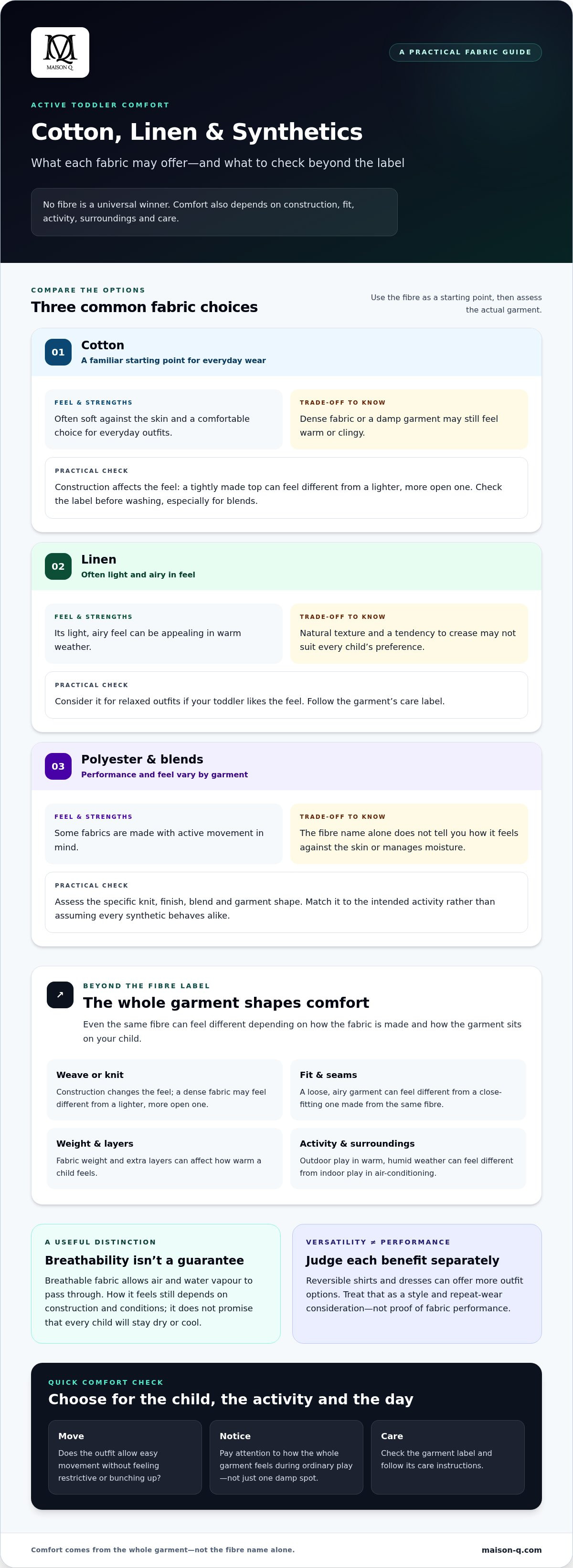
There’s no universal winner when looking for the best fabrics for sweaty active toddlers. Fibre is a starting point, not the whole story: yarn, knit or weave, fabric weight and garment design all shape how clothes feel. Use this comparison as a guide, then check the garment label for its actual composition and care instructions.
| Fabric | Feel and strengths | Trade-offs | Care and possible use |
|---|---|---|---|
| Cotton | Familiar, often soft against the skin and a comfortable choice for everyday wear. | A dense fabric or a damp garment may still feel warm or clingy. | Care varies with construction and any blended fibres. Consider it for daily outfits, while checking the label before washing. |
| Linen | Often light and airy in feel, which can be appealing in warm weather. | Its natural texture and tendency to crease may not suit every child’s preference. | Follow the garment’s care label. It may appeal for relaxed outfits, if your toddler likes the feel. |
| Polyester and blends | Feel and function vary; some fabrics are made with active movement in mind. | The fibre name alone doesn’t tell you how a garment will feel against the skin or manage moisture. | Check the care label and assess the specific knit, finish and blend. Consider the intended activity rather than assuming every synthetic behaves alike. |
When cotton or cotton blends may suit everyday play
Cotton’s familiar, soft hand-feel makes it a practical starting point for many everyday garments. But it doesn’t guarantee that a toddler will stay dry or comfortable through a burst of play. A tightly constructed cotton top can feel different from a lighter, more open one, and damp fabric may cling to the skin. Blends vary too, so don’t guess their composition by appearance or touch alone. Read the label, then consider how the garment feels during ordinary movement.
Where linen, polyester, and other blends differ
Linen may feel breezy, but its texture and tendency to crease may not suit a child who prefers a smoother feel. Polyester also varies: the knit, finish, fibre blend and garment shape influence how it feels and works. A fabric designed for active movement isn’t automatically the best choice for all-day wear, just as a natural fibre isn’t automatically more comfortable for every toddler. Match the garment to the child’s activity and preferences.
For an outfit with more than one look, Maison Q’s reversible shirts and dresses offer a wardrobe-versatility option. Treat that as a style and repeat-wear consideration, separate from fabric performance. Whatever you choose, follow the care label and judge comfort by how the whole garment feels in use.
How to Judge a Toddler Garment Beyond Its Fabric Label
A fibre label tells you what a garment is made from, but not exactly how it will feel during a busy day. To find the best fabrics for sweaty active toddlers, assess the finished piece: its fabric, construction, fit and intended use. The same soft fibre can feel different in a dense knit than in a lighter one, while seams or a snug waistband may affect comfort as much as the material.
Use this quick check before choosing or dressing your toddler:
- Read the label: Check fibre percentages and care symbols rather than relying on broad descriptions such as “soft” or “breathable.”
- Feel the fabric: Notice its weight and texture against your hand, then see whether your child finds it comfortable against their skin.
- Look at construction: Check seams, tags, hems and waistbands for bulky or scratchy details.
- Check the fit: Make sure your toddler can reach, bend and move without pulling or tugging at the garment.
- Match the activity: Consider whether the outfit is for active outdoor play, indoor wear or a mix of both.
What to check on the label and in the garment
Labels provide practical clues. Fibre percentages show whether a garment uses one fibre or a blend, while care instructions explain how to wash and dry it. Follow those instructions rather than assuming that garments with similar compositions can be cared for in the same way.
Then check the inside of the garment. Run a hand over seams and tags, and see whether the waistband sits comfortably without digging in. Children can respond differently to textures, so a fabric that feels smooth to you may still bother your toddler. If possible, let them try it on and notice whether they keep adjusting it or scratching at one spot.
How fit and fabric weight affect active play
A garment should allow easy movement without excess fabric trailing, bunching or catching during play. Close-fitting clothes are less likely to shift around, but may feel restrictive or hold fabric close to the skin. Looser clothes give room to move, yet too much fabric may gather at the waist or under a layer. Aim for comfortable ease rather than choosing the tightest or roomiest option.
Consider garment weight in context. A thick, substantial piece may feel cumbersome during energetic outdoor play in Singapore’s warm weather, while a lighter one may not offer the coverage you want in another setting. There’s no single ideal weight. Compare how the garment drapes, moves with your child and feels over the time they’ll wear it.
Fibre content matters, but the finished garment determines the wear experience. A knit or weave can change how airy a fabric feels, even within the same fibre family. Look at the whole piece, then use your toddler’s comfort during ordinary movement as the final guide.
Routine for Dressing and Caring for Sweaty Toddlers
A simple routine can make outfit decisions easier, especially on warm, humid days when play may shift between outdoors and air-conditioning. Instead of searching for one perfect fabric, dress for the activity, check how your child seems to feel, adjust if needed, then care for each garment according to its label.
Choosing clothes for play, outings, and rest
Start with the plan. For active outdoor play, choose comfortable coverage and a fit that lets your toddler climb, squat and run without constant tugging. A day moving between transport, childcare and indoor spaces may call for an outfit that feels comfortable across different settings. At rest time, your child may need a light layer if the room feels cool.
Layers can help with changing conditions, but there’s no set number every toddler needs. If you add a layer for an air-conditioned space, choose one that’s easy to remove when your child is active or warm. Watch for signs that an outfit needs adjusting, such as flushed skin, dampness or a child who seems uncomfortable. Make small changes rather than assuming one fabric works for every temperature.
For outings, childcare or extended play, pack a spare top and bottoms. A full change can help if clothes become noticeably damp, messy or uncomfortable. Keep the spare easy to reach and consider the activities ahead when deciding what to pack. A little preparation can make changing clothes calmer and quicker.
Managing damp clothes and everyday laundry
After sustained activity, change your toddler out of noticeably damp clothing when practical. Damp fabric may feel clingy, and a dry change can be more comfortable for the next part of the day. If a change isn’t immediately possible, loosen restrictive outer layers where appropriate and offer a change when you can.
At home, check the garment’s care label before washing or drying it. Instructions depend on the actual fibre composition and construction, so don’t assume similar-looking clothes need identical care. Follow the stated washing and drying guidance to help preserve the garment’s shape, colour and feel. Wash pieces as directed, and don’t add special treatments on the assumption they’ll prevent sweating. Clothing can support comfort, but it can’t stop a toddler from sweating during active play.
Keep the routine easy to repeat: dress for the activity, check comfort, change damp clothes when practical, and follow the care label. For a flexible wardrobe, Maison Q’s reversible shirts and dresses offer another way to think about repeat wear and outfit variety, separate from any fabric-performance claim.
Choosing Versatile Toddler Clothes With Maison Q
Choosing clothes for an active toddler means balancing comfort, suitability for the day, manageable care and versatility for repeat wear. Fabric matters, but no single answer to the best fabrics for sweaty active toddlers applies to every child and situation. Consider how the whole garment feels, what your toddler will be doing and whether its care fits your family’s routine.
Where reversible clothing fits into an everyday wardrobe
A reversible design gives you another styling option from one garment, adding flexibility when planning outfits. Maison Q offers reversible shirts and dresses for young children. That versatility is separate from fibre content or moisture performance: assess each garment’s label and construction on their own merits rather than assuming a reversible design will feel cooler, dry faster or suit every activity.
For example, a reversible shirt gives you another look to choose for a casual day out. The right choice still depends on what the child will be doing, how the garment fits and how its fabric feels against their skin. Versatility adds an outfit option, but doesn’t promise a particular fit or how long a garment will last.
If you’re looking for ideas for styling and choosing reversible kids clothes in Singapore, consider how a reversible piece could work with the clothes your child already wears. Use that as one part of your decision, alongside comfort and care. The label remains the guide to fibre details and washing instructions.
A calm final checklist before choosing
Before settling on an outfit, match it to the day ahead. Outdoor play, a long outing and indoor activity can call for different choices. In Singapore’s warm conditions, moving between outdoor heat and air-conditioned spaces may make a removable layer practical for some children. Let your toddler’s comfort guide adjustments rather than relying on one fabric as the answer.
- Activity and conditions: Think about movement, setting and whether the day includes temperature changes.
- Label and care: Read the fibre details and follow the garment’s washing and drying instructions.
- Construction and fit: Check seams, tags and waistbands, then make sure your child can move comfortably.
- Repeat wear: Consider whether the garment offers useful outfit options and fits into your everyday routine.
Comfort doesn’t need to be a guessing game. Choose thoughtfully, notice how your child responds and adjust as the day unfolds. Maison Q’s children’s clothing includes reversible designs that bring another styling option to the wardrobe.
Make the Next Outfit a Thoughtful Choice
Your toddler’s next busy day is a chance to notice what feels comfortable in real life. Let their movement and preferences guide you, and fine-tune clothing choices over time. The best fabrics for sweaty active toddlers aren’t a universal formula; they’re one part of a considered choice that suits your child and everyday routine.
As you refresh a wardrobe or plan for a new season of play, look for pieces that feel inviting to wear and easy to work into family life. A versatile design can bring more choice to getting dressed, whether the day holds a playground visit, a family outing or a quiet afternoon at home.
Maison Q’s children’s clothing includes reversible shirts and dresses, alongside other styles for young children. Explore the range for outfit inspiration, keeping fabric comfort and garment details in mind as you choose.
Explore Maison Q’s children’s clothing and find a versatile piece for your toddler’s wardrobe.
Frequently Asked Questions
Is cotton the best fabric for a toddler who sweats?
No, cotton isn’t automatically the best choice for every toddler or activity. When choosing between two cotton tops, compare their labels, thickness and feel rather than expecting the fibre name to predict comfort. A top worn for a short trip may feel fine but less pleasant after a longer stretch of energetic play. The best fabrics for sweaty active toddlers depend on the child and the garment together.
What fabric is best for toddlers in hot, humid weather?
There isn’t one fabric that suits every toddler in Singapore’s warm, humid conditions. Start with a simple outfit for the day, then consider whether your plans include active outdoor time, air-conditioned spaces or both. A child moving between settings may need an easy-to-remove layer, while another may be comfortable in one light outfit. Notice how your toddler responds and adjust if they seem uncomfortable or unusually warm.
Can polyester be comfortable for an active toddler?
Yes, polyester can feel comfortable, but the experience depends on the particular garment. A flexible top worn for a playground visit may feel quite different from a heavier polyester piece designed for another purpose. Check the label for blends and care guidance, then pay attention to the garment’s inside finish and how it moves with your child. Neither “synthetic” nor “moisture-managing” alone tells you exactly how it will feel.
How can I tell if toddler clothes are breathable?
You can’t confirm breathability from a fibre name or marketing phrase alone. Compare garments in person if possible: notice whether the fabric feels heavy, how it drapes and whether your child is comfortable wearing it during normal movement. Holding fabric up to the light isn’t a reliable verdict by itself, since appearance doesn’t show the full wear experience. Your toddler’s comfort during an ordinary play period is a more useful clue.
Should toddlers change out of sweaty clothes after playing?
If your child’s clothes are noticeably damp, a dry change may feel more comfortable, especially before settling down or moving into a cool indoor space. For a longer outing, pack a spare set in a separate bag so it’s easy to find. There’s no need to change solely because your toddler has been active if they seem comfortable. If sweating or warmth seems unusual or worries you, seek advice from a qualified health professional.
How should I wash clothes worn by sweaty toddlers?
Follow the care label, since garments with different fibres or finishes may need different washing and drying. After a busy day, take worn clothes out of a closed bag when practical rather than leaving them bundled until laundry time. Before washing, check pockets and fasten closures if the care instructions allow. Don’t assume stronger products or special treatments are needed; the garment’s care guidance is the best place to start.
Are natural fabrics always cooler than synthetic fabrics for toddlers?
No, a natural fibre isn’t automatically cooler than a synthetic one. Two tops worn for the same afternoon may feel different in weight or flexibility, regardless of their fibre category. Compare garments intended for similar use, and check their labels, construction and fit. Broad claims that natural is always cooler or synthetic is always clammy leave out the details that shape how a particular piece feels.