

Best Breathable Fabrics for Kids: 2026 Tropical Guide
Last Saturday, little Maya’s garden tea party ended early when her heavy synthetic dress became a sticky, itchy mess. A familiar scene in the midday heat. It’s a common heartbreak for parents searching for the best breathable fabrics for kids tropical climate, especially since children absorb environmental heat three to five times faster than adults. You want your children to explore the world with a sense of wonder. They shouldn't be held back by clothes that trap moisture and irritate delicate skin. Soft, growing bodies deserve better than heavy, non-breathable fibers that turn a playdate into a struggle.
We agree that dressing for the tropics shouldn't mean sacrificing style for comfort. This guide promises to show you how to curate a whimsical yet practical wardrobe that keeps your little ones cool, dry, and stylish even in 90 percent humidity. We'll preview the science of airy cotton weaves, the safety labels you need to know for 2026, and clever solutions like reversible dresses and shirts that handle sweat and stains with ease. A curated journey through charm and functionality awaits, ensuring every outdoor adventure remains light, airy, and full of joy.
Key Takeaways
- Understand why little ones absorb heat faster than adults and how to choose materials that prevent the discomfort of prickly heat.
- Master the art of selecting breathable fabrics for kids tropical climate, ensuring every piece feels like a gentle breeze against sensitive skin.
- Look beyond the label to find silhouettes that prioritize airflow, utilizing loose cuts and imaginative design to keep spirits high and temperatures low.
- Unlock the magic of a reversible wardrobe to effortlessly manage sweat, stains, and the sudden shock of air-conditioned spaces.
- Discover how to curate a sustainable, growing collection that balances the whimsy of childhood with the practical needs of equatorial living.
Understanding the Tropical Climate Challenge for Kids
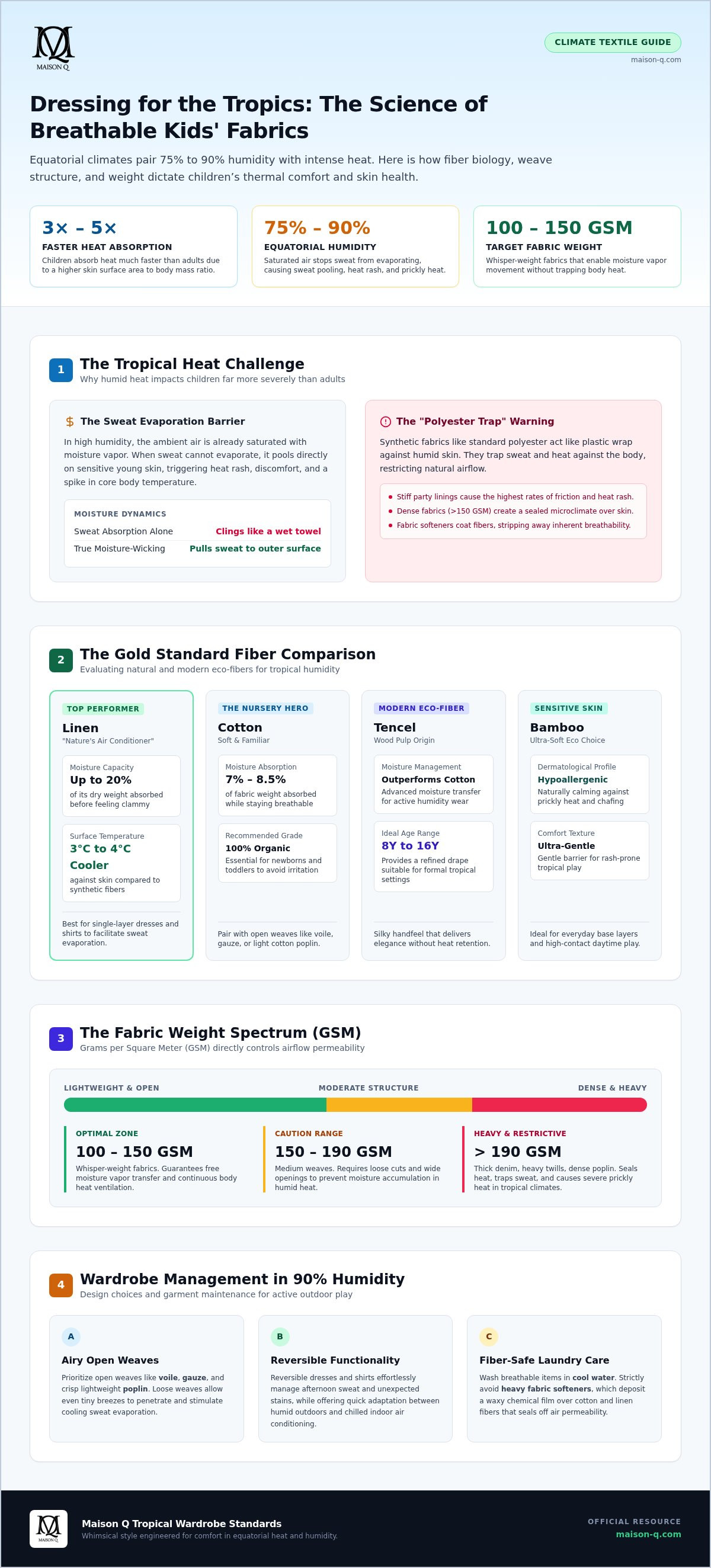
Tropical living is a dream of sun-drenched afternoons and lush greenery, yet the air often feels heavy, like a warm embrace that won't let go. Unlike the dry heat of a desert, an equatorial climate carries the weight of 75% to 90% humidity. For little ones, this moisture is more than just a nuisance; it's a barrier to play. When the air is saturated, sweat cannot evaporate easily. It pools on the skin, creating a "sticky factor" that leads to irritation and the dreaded sting of heat rash.
Children are little explorers with a unique biology. They absorb environmental heat 3 to 5 times faster than adults because of their higher ratio of skin surface area to body mass. This makes choosing breathable fabrics for kids tropical climate a necessity for daily comfort. Breathability is a fabric's clever ability to allow water vapor to escape from the skin to the external environment. This is why understanding breathability and moisture vapor transfer is so important; it explains how air permeability governs a child's thermal comfort in the humid heat.
The Science of Moisture-Wicking vs. Absorption
In high humidity, absorption alone isn't enough. A fabric that merely drinks up sweat becomes heavy and sodden, clinging to the body like a wet towel. Wicking fibers are the clever heroes of the wardrobe. They move moisture away from the skin to the fabric's surface, where even a slight breeze can encourage evaporation. This natural cooling cycle keeps a child's spirit light during a garden adventure. Without this movement, sweat traps heat against the body, causing the core temperature to rise quickly.
Common Fabric Mistakes Parents Make
Many parents fall into the 'Polyester Trap.' These cheap synthetics feel like plastic wrap against the skin, sealing in heat and dampness. Weight matters just as much as fiber. Even natural materials can fail if the weave is too dense. For the tropics, an ideal fabric weight sits between 100 and 150 GSM. Anything heavier, such as thick denim or dense poplin, restricts airflow and traps a saturated microclimate against the body. Watch out for hidden synthetics in festive wear; stiff linings often cause the most irritation during a party. Finding the right breathable fabrics for kids tropical climate means looking for whisper-weight materials that prioritize an open, airy construction.
The Gold Standard: Best Breathable Fabrics for Tropical Humidity
Finding the right breathable fabrics for kids tropical climate feels like discovering a secret garden of comfort. While many materials claim to be cool, only a few truly master the heavy humidity of 2026. Cotton remains the undisputed hero of the nursery and the playground. It's soft, familiar, and absorbs roughly 7 to 8.5 percent of its weight in moisture, allowing the skin to breathe during high-energy play. Selecting these breathable fabrics for kids tropical climate ensures that your little ones stay dry and happy from morning till dusk.
Linen is nature's air conditioner. It can absorb up to 20 percent of its dry weight in moisture before feeling clammy, making it nearly perfect for equatorial heat. Research shows linen sits roughly 3°C to 4°C cooler against the skin than synthetic alternatives. For parents following American Academy of Pediatrics heat safety recommendations, choosing single-layer linen or cotton pieces is a simple way to facilitate natural sweat evaporation and prevent overheating.
Organic Cotton: Why Quality and Weave Matter
Not all cotton is equal. A tight, heavy weave traps heat, while open weaves like voile and gauze invite the breeze. Cotton poplin offers a crisp, polished look for sophisticated single-side dresses while remaining light enough for a sunny garden party. For newborns and toddlers, 100 percent organic cotton is the safest choice to avoid chemical irritation on damp skin. To keep these pieces airy, wash them in cool water and avoid heavy fabric softeners that can coat the fibers and reduce their natural ability to move air.
Modern Eco-Fibers: Tencel and Bamboo
Tencel, a modern fiber made from wood pulp, is a revelation for older children in the 8Y to 16Y range who need a more tailored look for formal settings. It manages moisture even better than cotton and has a silky drape that feels premium yet practical. Bamboo is another favorite for its hypoallergenic properties, making it a gentle choice for skin prone to prickly heat. These eco-fibers are as kind to the planet as they are to your child's skin, offering a sustainable path to a cooler, more whimsical summer wardrobe.
Beyond Fiber: Design Features That Enhance Airflow
While fiber choice is the foundation of comfort, the architecture of a garment determines how much air actually reaches the skin. Designers call the space between fabric and body "ease." In equatorial heat, ease is a child's best friend. Loose silhouettes create a natural chimney effect, allowing warm air to rise and escape through necklines and armholes. This constant movement of air is vital for preventing heat rash in hot, humid climates, where trapped sweat quickly leads to blocked ducts and skin irritation. Clever construction like smocking, tiered skirts, and open-back designs doesn't just look charming; it adds vital surface area for cooling.
It might seem counterintuitive to use two layers of breathable fabrics for kids tropical climate, but the physics of reversibility is brilliant. When two layers of whisper-weight cotton poplin are paired, they create a thin micro-ventilation chamber. This pocket of air acts as a buffer against external heat while allowing moisture to pass through both layers. It’s a sophisticated solution that offers double the style without the weight of heavy, single-layer synthetics. To ensure total comfort, look for flat seams and tagless designs. Friction from scratchy polyester labels or bulky interior seams can cause significant distress when skin is damp from humidity.
Silhouettes That Breathe
Flowing A-line dresses provide much more airflow than fitted styles, which often feel restrictive when the humidity climbs. For active play, unisex kids shorts offer the freedom to climb and run without the fabric bunching or clinging to the legs. Reversible Shirts are designed with this same philosophy, providing a polished look that remains incredibly light. By utilizing high-grade cotton weaves, these pieces offer durability for daily adventures while maintaining the airy feel necessary for an active tropical lifestyle.
Special Occasion Comfort: Tulle and Formal Wear
Celebrations shouldn't be dampened by itchy, heavy outfits. When choosing Fairy Tulle Dresses, the secret lies in the lining. A premium cotton lining ensures that the tulle never touches the skin directly, keeping the experience soft and magical. These breathable fabrics for kids tropical climate allow for voluminous, whimsical designs that don't trap heat. For boys, smart-casual options using structured cotton-linen blends mimic the look of formal suits. These pieces maintain a sophisticated edge while feeling as light as a breeze, allowing children to stay focused on the joy of the party rather than the heat of the room.
Tropical Wardrobe Management: Tips for Active Kids
A sun-drenched morning at the park often transitions into a cool, air-conditioned lunch. This shift from 32°C outdoors to a crisp 22°C indoors can be a shock to a child’s system, especially when their clothes are damp with perspiration. Managing these transitions requires a thoughtful approach to the wardrobe. Choosing breathable fabrics for kids tropical climate is the first step. The second is mastering the art of the quick change. Keeping a dry, lightweight layer or a fresh shirt on hand ensures that the sudden chill of a mall or restaurant doesn't lead to discomfort.
Sun protection is another vital piece of the puzzle. While heavy fabrics block UV rays, they also trap heat. The secret lies in light-colored, high-weave natural fibers that reflect the sun’s intensity while allowing air to circulate. This holistic approach, combined with consistent hydration, keeps your little ones safe and spirited under the equatorial sun. Selecting the right breathable fabrics for kids tropical climate helps maintain this delicate balance between protection and cooling.
Managing Stains and Sweat
Natural fibers like cotton and linen are remarkably resilient. They release salt and sweat stains much more easily than synthetic blends, which tend to trap odors and oils. For busy parents, the "Flip and Go" benefit of reversible kids clothes is a lifesaver. A midday spill or a sweaty back doesn't have to mean an immediate trip home. Simply flip the garment to reveal a fresh, clean side. To preserve the airy quality of these pieces, avoid high heat in the dryer. Air drying in the shade keeps the fibers supple and maintains the fabric’s natural ability to breathe.
Curating a Capsule Wardrobe
A 2026 tropical capsule should be a collection of joy and utility. Focus on a few high-quality essentials: a handful of Reversible Shirts, a couple of airy Fairy Tulle Dresses for celebrations, and several pairs of Unisex Shorts. Mixing playful prints with sophisticated solids allows for endless combinations. Look for pieces that "grow" with your child, such as dresses that transition into tunics or shirts with generous hems. This sustainable mindset ensures your child stays comfortable while the wardrobe evolves with their adventures. You can explore our curated collections to find the perfect foundation for your child's tropical wardrobe.
The Maison Q Approach: Whimsical Style Meets Tropical Comfort
At Maison Q, we believe that childhood is a series of magical discoveries. Our designs reflect this wonder through playful prints and silhouettes that respect the reality of equatorial life. Sourcing the right breathable fabrics for kids tropical climate is at the heart of our creative process. We select only the finest 100% premium lightweight cotton weaves, like our signature cotton poplin, to ensure every piece feels like a gentle breeze. From our softest Baby Onesies to sophisticated Single Side Dresses for teens, each garment is engineered to endure the persistent humidity of 2026 without losing its charm.
The magic of our reversible collections lies in their clever utility. Tropical parenting often involves managing unexpected spills or midday perspiration. Our Reversible Shirts and Reversible Dresses offer a quick, elegant solution. By providing two looks in one, we reduce the need for bulky bags and cluttered closets. This approach treats clothing not just as a product, but as a vessel for joy and effortless play. It's a design philosophy that values the practical needs of daily life as much as the beauty of imaginative play.
Craftsmanship and Sustainability
Our story began in 2015 with a vision to create a sustainable, growing wardrobe. We manufacture our collections at our own family-owned atelier, ensuring every stitch meets our high standards of boutique craftsmanship. By prioritizing natural fibers that feel like a second skin, we create garments that stay twice as cool. These pieces are designed to last, resisting the wear and tear of frequent tropical washing. It’s our commitment to quality that allows our Fairy Tulle Dresses and Unisex Shorts to be passed down through families, carrying stories of play from one sibling to the next. Choosing these breathable fabrics for kids tropical climate ensures that your investment in quality also protects your child's comfort.
Finding the Perfect Fit
Choosing the right size is essential for maintaining that vital layer of ease. Our sizing architecture spans from 6M for infants to 16Y for older youth. For the most comfortable experience, we recommend a fit that allows for movement and airflow. Our Reversible Shirts and Dresses (1Y-7Y) are cut to be versatile, while our Single Side Dresses (8Y-16Y) offer a more polished silhouette for growing girls. Every piece is designed with tagless heat-press labels and flat interior seams to prevent skin friction in the heat. Explore our latest collection of breathable reversible fashion today to find the perfect foundation for your child's next adventure.
Crafting Your Child's Whimsical Tropical Wardrobe
Choosing the right pieces for your little explorer is about more than just aesthetics. It’s a thoughtful blend of textile science and imaginative design. By prioritizing high-quality natural fibers and airy silhouettes, you ensure that every garden adventure remains light and joyful. Remember that the best breathable fabrics for kids tropical climate are those that move with the body, allowing heat to escape while protecting sensitive skin. Whether it’s the clever micro-ventilation of a reversible dress or the whisper-weight feel of premium cotton, these choices create a foundation for endless, comfortable play.
Maison Q has been a dedicated guide for families since 2015, offering boutique craftsmanship that honors the whimsy of youth. Our innovative reversible designs provide double the value and utility, making them the ultimate solution for the reality of tropical living. We invite you to Discover Maison Q's Whimsical and Breathable Collections today. Let’s turn every sunny day into a curated journey of charm and effortless comfort. Your child’s next magical discovery is just a breezy outfit away.
Frequently Asked Questions
What is the single most breathable fabric for a child in a tropical climate?
Linen is widely considered the most breathable choice because it can absorb up to 20 percent of its weight in moisture before feeling damp. It sits several degrees cooler against the skin than synthetic fibers. However, 100 percent premium cotton in an open weave is a close second. Both allow maximum airflow, making them essential breathable fabrics for kids tropical climate. They ensure your little one stays comfortable during outdoor play.
Is bamboo better than cotton for kids who sweat a lot?
Bamboo is exceptionally absorbent and soft, which is wonderful for sensitive skin. It often feels cooler to the touch initially. However, high-quality cotton remains a classic choice because it is durable and maintains its shape through countless washes. For active kids who sweat heavily, both fibers perform beautifully. The choice often comes down to the specific weave and your child's tactile preference for their daily adventures in the sun.
How can I tell if a fabric is truly breathable before I buy it?
You can check breathability by holding the fabric up to the light. A visible, open weave suggests better airflow. Another practical tip is to look for a fabric weight between 100 and 150 GSM. Heavier materials often trap heat regardless of the fiber type. If the garment feels light and airy in your hands, it’s likely to keep your child cool in the midday humidity without causing skin irritation.
Does reversible clothing make my child hotter because of the two layers?
Not when the garment is crafted from whisper-weight, premium cotton. Our Reversible Shirts and Reversible Dresses use two thin layers that actually create a micro-ventilation effect. This tiny pocket of air acts as a buffer against external heat while allowing moisture to pass through easily. It provides double the style and utility without the heavy, stifling feel of a single layer of thick or synthetic fabric that clings to the skin.
What are the best types of shorts for kids to wear in high humidity?
Loose-fitting Unisex Shorts made from natural fibers are the ideal choice for high humidity. Silhouettes that offer plenty of ease allow air to circulate around the legs, preventing the fabric from clinging to sweaty skin. Look for elasticated waists and soft, flat seams that won't cause friction during active play. These design features ensure your child can run and climb while staying remarkably cool and dry throughout the day.
Can my child wear tulle dresses in the heat without getting a rash?
Yes, your child can enjoy the magic of Fairy Tulle Dresses even in the heat. The secret is a high-quality cotton lining that acts as a soft barrier between the tulle and the skin. This prevents the scratchy friction that often leads to heat rash in humid weather. By choosing tulle designs that prioritize a breathable interior, you allow your little one to feel like royalty without any of the discomfort.
How do I wash natural fiber clothes to make sure they stay breathable?
To keep breathable fabrics for kids tropical climate performing their best, wash them in cool water with a gentle detergent. Avoid using heavy fabric softeners, as these can coat the natural fibers and clog the tiny pores that allow air to pass through. Air drying in a shaded spot is the best way to preserve the fabric's integrity. It keeps the pieces supple and ready for another day of whimsical discovery.
Is linen too high-maintenance for active children?
Linen is surprisingly durable and becomes softer with every wash, making it perfect for active play. While it does wrinkle, many parents find the lived-in look is part of its boutique charm. If you prefer a smoother finish, a quick steam is all it takes. Its ability to keep kids several degrees cooler makes it well worth the minimal extra care required for such premium comfort during the hottest months.