

A Sustainable Alternative to Fast Fashion Childrenswear: A Parent’s Guide
What if the best sustainable alternative to fast fashion childrenswear isn’t a new fabric, but a longer useful life for every little outfit? Children can outgrow clothes before they wear out, making the cycle of buying, wearing and passing on feel both wasteful and relentless. Parents need pieces that are comfortable, charming and ready for everyday adventures, not just clothes with a reassuring label.
This guide compares practical options, from buying second-hand and choosing durable designs to caring for clothes so they’re easier to hand down. It also explains how to look beyond broad sustainability claims and assess details that matter in daily life: fit, construction, care needs, versatility and the chance of reuse. Reversible clothing, for example, offers two ways to wear one garment, but that feature alone doesn’t prove a specific environmental saving. With a few considered choices, you can build a wardrobe that sees more play, more wears and perhaps more than one owner.
Key Takeaways
- A sustainable alternative to fast fashion childrenswear can start with making each garment useful for longer, rather than replacing one shopping habit with another.
- Compare new durable clothing, second-hand finds, hand-me-downs, repairs and versatile designs by how well they fit your family’s needs.
- Use a simple routine: check what still fits, identify genuine gaps, choose for repeat wear and plan what happens to clothes next.
- Look beyond broad sustainability claims by considering a garment’s design, care needs and potential for reuse.
- Explore how reversible shirts and dresses for ages 1Y-7Y offer styling flexibility as one thoughtful design approach.
Why fast-fashion childrenswear can be hard to outgrow responsibly
A favourite shirt can be outgrown before it’s worn thin. For parents, that creates a familiar tension: children need clothes that fit comfortably now, but frequent replacement can leave perfectly wearable pieces with no obvious next home. The challenge isn’t simply buying clothes. It’s making thoughtful choices in a cycle shaped by growing bodies, busy routines and changing needs.
Fast fashion describes a model of producing and selling trend-led clothing at a rapid pace, often with styles changing quickly to encourage frequent new purchases. It doesn’t describe the entire clothing market, and it doesn’t mean every affordable garment is automatically short-lived. The concern is the pattern that can follow: an item gets little wear, is quickly replaced and may be discarded before another child has a chance to use it. For a wider overview of the ideas behind sustainable fashion, including its environmental and social dimensions, see Wikipedia’s summary.
What makes childrenswear’s use cycle different?
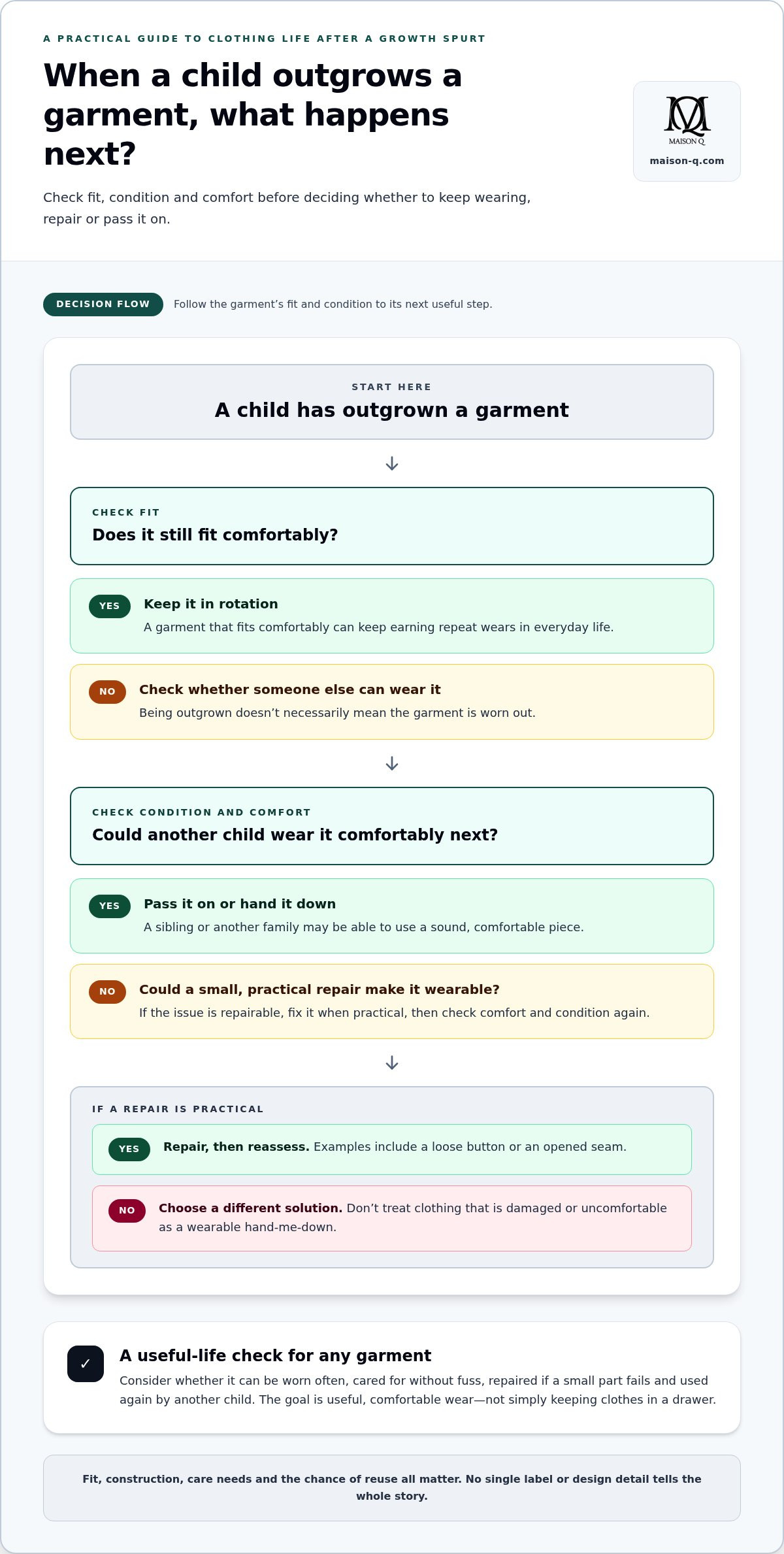
Children can move into a new size while a garment is still in good condition. Sleeves may become short, a waistband snug, or a dress too brief, even when the fabric and seams remain sound. That’s different from an item that’s damaged, uncomfortable or unsuitable for the child. Each situation calls for a different decision: repair a loose seam, pass on a sound outgrown piece, or retire clothing that can’t be comfortably worn.
Think of a sibling hand-me-down: an older child may be ready for a new size just as a younger child can wear the shirt they’ve outgrown. The same dynamic applies to milestone-specific garments such as swaddles and sleep sacks, where practical advice from Baby Loves Sleep highlights how choosing the right fit for each developmental stage ensures items remain comfortable, safe and ready to pass down. A special-occasion dress might see fewer outings than everyday shorts, but could still be passed along for another celebration. Ask not only, “Does it fit today?” but also, “Could someone wear it comfortably next?”
What does a sustainable alternative mean in practice?
A sustainable choice isn’t proven by one fabric label or a clever detail alone. Consider the garment’s likely useful life: can it be worn often, cared for without fuss, repaired if a small part fails, and used again by another child? These practical questions help you assess the whole garment rather than rely on a single claim. They also leave room for different approaches, from buying fewer new pieces to making better use of clothes already in the family.
A more sustainable childrenswear choice is one that stays comfortable and useful through repeat wears, good care and, where possible, continued use by another child. Design can support that aim. A reversible garment may offer more styling flexibility, for example, but that feature alone doesn’t establish a quantified environmental benefit. What matters is whether it works for the child and family, and whether the piece is worn and kept in use. A sustainable alternative to fast fashion childrenswear is therefore a series of considered decisions, not a magic label or one perfect purchase.
Where childrenswear’s impact builds across a garment’s useful life
A garment’s story begins before it reaches a child’s wardrobe. Design choices influence what it’s made from, how it’s put together and whether it suits everyday routines. Production and transport also form part of the picture. Then come the months of dressing, washing, drying and mending, followed by what happens when the garment no longer fits. No single moment tells the whole story.
EARTHDAY.ORG’s overview of the environmental impact of fast fashion discusses concerns such as pollution and pressure on natural resources. Those broad industry issues provide context, but they don’t calculate the impact of a particular child’s shirt or dress. For families, a useful way to connect the wider picture to everyday decisions is to consider whether a garment is worn often, cared for and used again.
How wear and replacement shape the picture
Cost per wear can be a helpful comparison: consider what a garment costs, then how many times it’s actually worn. It’s a practical prompt, not a complete sustainability score. It doesn’t account for everything involved in making and caring for clothing, and a low cost per wear doesn’t by itself prove a garment is environmentally preferable.
Usefulness matters. A child is more likely to reach for a piece that fits comfortably, feels good to move in and works for more than one occasion. Construction matters too: a garment that handles ordinary wear may stay in rotation longer, while a cherished outfit that pinches or restricts movement may remain untouched. A longer-lasting item isn’t simply one kept in a drawer for years. It’s one that gets worn.
What care and continued use can change
Everyday care helps clothes remain wearable. Follow the care label and any fabric-specific instructions, and mend small issues such as a loose button or opened seam when practical. Gentle handling can help a garment stay ready for another round of play, school or family outings. Laundering and repair don’t erase the impacts connected with production, however, and no care routine can promise a particular environmental saving.
When a child outgrows an item, check its condition and comfort before deciding what comes next. A sound garment might suit a younger sibling, be passed to another family, or be kept for a future occasion if it still fits the intended wearer. Anything damaged or uncomfortable needs a different solution. Continued use can make the garment’s original work go further, though it doesn’t make its wider footprint disappear.
Extending a garment’s useful life is a practical consideration because each comfortable, repeat wear helps make better use of the clothing already made. That’s one way to think about a sustainable alternative to fast fashion childrenswear: not as a perfect item, but as clothing chosen and cared for with its whole use cycle in mind. For one example of design focused on continued use, explore reversible childrenswear designed to grow with the child.
Compare sustainable alternatives to fast-fashion childrenswear
There isn’t one right route for every family. Buying fewer new clothes, choosing pre-loved pieces, passing garments between siblings or repairing a favourite can all be sensible choices. The best fit depends on what your child will wear, what’s already available and how much time you can give to finding or caring for each piece. Use this comparison as a starting point, not a sustainability scorecard.
| Option | Accessibility | Repeat-use potential | Effort | Best suited to |
|---|---|---|---|---|
| New durable clothing | Available through retailers, with choice varying by size and style | Can be worn often if it fits well and suits daily life | Moderate: choose carefully and follow care guidance | Genuine wardrobe gaps or a hard-working everyday staple |
| Second-hand | Depends on what’s available in the right size and condition | Gives a wearable garment another turn in a child’s wardrobe | Can take time to find a good fit and inspect condition | Families open to pre-loved pieces and flexible about choice |
| Hand-me-downs | Most accessible when family or friends have suitable clothes | Can keep a garment in use across more than one child | Low to moderate: sort by fit, comfort and condition | Siblings or families sharing sizes and styles |
| Repair | Depends on the damage and whether it’s practical to mend | May return a sound, much-loved piece to regular wear | Requires time, skill or help with the repair | Small, fixable issues such as a loose button or seam |
| Versatile design | Depends on whether the design suits the child and routine | More styling options may encourage repeat wear | Usually part of choosing the garment; care still matters | Families who value flexibility from a single piece |
When second-hand, swaps, and hand-me-downs make sense
Pre-loved clothing can be a practical choice when it fits comfortably, feels right to the child and is in wearable condition. At a swap or when sorting family hand-me-downs, look beyond the label size: check how the garment sits, moves and fastens. Hand-me-downs can keep clothes in circulation, but there’s no need to keep a piece that’s damaged, uncomfortable or unlikely to be worn. Reuse is a helpful option, not a guarantee of a specific environmental saving.
When versatile or reversible design may help
Versatility and durability solve different problems. A sturdy garment may stand up to frequent wear, while a versatile one offers more ways to style it. Reversible shirts and dresses, for example, provide two sides to wear. Whether that flexibility proves useful depends on fit, comfort and your child’s preferences. For a closer look at how the idea works in practice, explore the guide to reversible kids clothes.
For a sustainable alternative to fast fashion childrenswear, think about the whole wardrobe rather than seeking one perfect purchase. A second-hand find may be ideal for one child; a new everyday staple may suit another. Choose what’s likely to be worn, cared for and, when appropriate, passed on.
Build a more thoughtful childrenswear routine for families in Singapore
A calmer wardrobe starts with a quick check, not a shopping list. Children’s sizes change, school and play needs shift, and a drawer can hide clothes that still have plenty of life in them. This simple routine helps families spot what’s genuinely needed, make use of what they already own and decide what to do when a garment is outgrown.
A simple wardrobe check before buying
Before adding anything, sort clothes into four clear groups: fits now, can be passed on, needs repair, and no longer usable. Try on borderline pieces and let your child move around in them. A shirt that technically fits but feels scratchy or restricts movement may not earn repeat wears. Set aside clothes that need a small fix, such as a loose button, rather than mixing them back into the everyday drawer.
Next, look at the family calendar and the clothes already in rotation. Is there a genuine gap for school days, play or an upcoming occasion? Can an existing top work with more than one bottom? Prioritise comfort, fit and likely repeat wear over a fleeting trend. A useful addition should earn its place in the wardrobe, not simply look appealing on the hanger.
Keep garments useful for longer
Care can become part of the household rhythm. Follow each garment’s care label and fabric instructions, and mend small, manageable damage when practical. Before storing clothes for a younger sibling or future hand-me-down, make sure they’re clean and fully dry. Keep wearable items together by size so they’re easy to find when needed instead of forgotten at the back of a cupboard.
For pieces your child has outgrown, consider whether they’re comfortable and in good condition before passing them on, offering them for a swap or choosing another reuse route. If an item is no longer usable, check the latest National Environment Agency (NEA) guidance for textile collection and disposal options. Textiles aren’t accepted in Singapore’s blue commingled recycling bins, so don’t place clothing in them. Check current NEA information for the appropriate next step rather than assuming a general recycling bin can take garments.
Small habits make the routine easier to repeat: keep a labelled space for outgrown clothes, mend a simple fault before it worsens, and review the wardrobe before buying for a new season or activity. There’s no need to replace everything at once. A sustainable alternative to fast fashion childrenswear can be built through practical choices that suit your family, including making existing clothes work harder and selecting new pieces with repeat wear in mind.
If you’re looking for a considered addition, explore reversible shirts and dresses for children, designed to grow with the child and offer two sides to wear.
How Maison Q makes reversible design part of a considered choice
After weighing options such as second-hand clothing, hand-me-downs and repair, thoughtful design is another part of the picture. Singapore-founded Maison Q offers reversible shirts and dresses for children aged 1Y-7Y, designed to grow with the child. The range also includes single-side dresses and baby onesies. Reversibility is a design choice, not proof on its own of a particular environmental benefit, but it can offer families another way to think about everyday wear.
What reversible clothing can offer families
Two sides give one garment more than one way to wear it. That can add styling flexibility when getting a child dressed, whether for an ordinary day or a family occasion. It doesn’t mean a family will necessarily buy fewer clothes, or that both sides will suit every child’s taste. The practical value depends on whether the garment is comfortable, fits well and works with pieces already in the wardrobe.
Consider how your child actually gets dressed. Do they reach for familiar favourites, or enjoy changing up their look? Would both sides suit the activities they do? These small questions connect a design detail to real use. Reversible clothing may support repeat styling, but versatility and durability aren’t interchangeable: a garment still needs to be comfortable, cared for appropriately and worn to remain useful.
Maison Q’s reversible pieces are designed to grow with the child. That makes them an example of design intended to respond to children’s changing needs, while the best choice for any family still comes down to fit, comfort and wearing habits. A sustainable alternative to fast fashion childrenswear isn’t defined by a single feature. It’s shaped by choices that make sense for the child and the garment’s life in the family wardrobe.
Explore Maison Q’s children’s clothing
Maison Q’s childrenswear includes reversible shirts and dresses for ages 1Y-7Y, single-side dresses for ages 8Y-16Y, and baby onesies for ages 6M-1Y. Families can shop online or find the brand through listed stockists. These categories offer options for different stages, from baby dressing to the more independent style preferences of older children.
As you browse, keep your wardrobe criteria close: look for clothing that suits your child’s comfort, fits the occasion and feels likely to be worn. Reversible design may bring extra choice to getting dressed, while thoughtful selection and continued use remain part of the wider decision.
Ready to discover the pieces? Explore Maison Q’s childrenswear and find a style that feels right for your family.
Make the next wardrobe choice count
A child’s wardrobe doesn’t need to be transformed overnight. Let the next decision be a thoughtful one: choose a piece your child feels good in, that suits the days ahead and that you can imagine staying useful beyond its first owner. That’s a practical way to make a sustainable alternative to fast fashion childrenswear part of family life, without expecting every purchase to be perfect.
Design can bring more possibility to getting dressed, too. Maison Q’s reversible clothing is made with growing children in mind, offering a considered option for families who value flexibility alongside everyday wearability.
Explore Maison Q’s children’s clothing and discover pieces to bring into your family’s wardrobe. Choose a style that suits your child and make your next wardrobe addition a considered one.
Frequently Asked Questions
Is organic cotton always more sustainable for childrenswear?
No. Organic status describes how the cotton is grown, but it doesn’t tell you everything about the finished garment’s impact, production conditions, durability or journey to the shop. Nor does it show how often a child will wear it. Treat the label as one piece of information, then consider the garment as a whole. Compare what’s documented about its materials and construction with whether it suits your child’s everyday needs.
Are recycled fabrics always a better choice for children’s clothes?
Not always. Recycled content can be useful information, but it doesn’t by itself explain how a garment will perform or what happens to it later. Look for a precise description of which material is recycled and how much of the garment the claim covers. Then consider practical details: will the child wear it comfortably, and can you follow its care instructions? The label matters, but so does whether the garment has a place in real family life.
How can I spot greenwashing in childrenswear claims?
Be cautious if phrases such as “conscious” or “planet-friendly” appear without a clear explanation. Look for claims tied to a specific product or process, and note what they don’t cover. A statement about one material, for instance, shouldn’t be taken as evidence about every stage of a garment’s life. If a brand cites a certification or statistic, check that the source identifies what was assessed and applies to the item you’re considering.
Does buying from a Singapore-based children’s clothing brand automatically make a garment sustainable?
No. A brand’s location alone can’t tell you how a garment was made, what it contains or how long it will remain useful. A Singapore-based brand may feel like a meaningful choice for your family, but assess the individual garment too. Look for clear product information and consider whether its design suits your child’s needs. The phrase sustainable alternative to fast fashion childrenswear should describe more than where a brand is based.
Can fast-fashion childrenswear still be used more sustainably once it is already owned?
Yes. If an item is safe, comfortable and still fits, keep it in the regular rotation rather than replacing it because its style feels out of date. A child’s favourite shorts can remain useful for play even if they’re no longer the newest look. If the garment becomes too small, consider whether another child could wear it. The most immediate step may simply be making use of what’s already in the wardrobe.
What should I look for in a clothing brand’s sustainability information?
Look for information that connects a clear claim to a particular product or practice. A useful description might explain a design feature or provide care guidance, rather than make a broad promise about an entire range. Check whether the claim is limited to a material, a production step or another specific aspect. If a statistic or certification is mentioned, trace it to its source and see exactly what it covers before drawing conclusions.